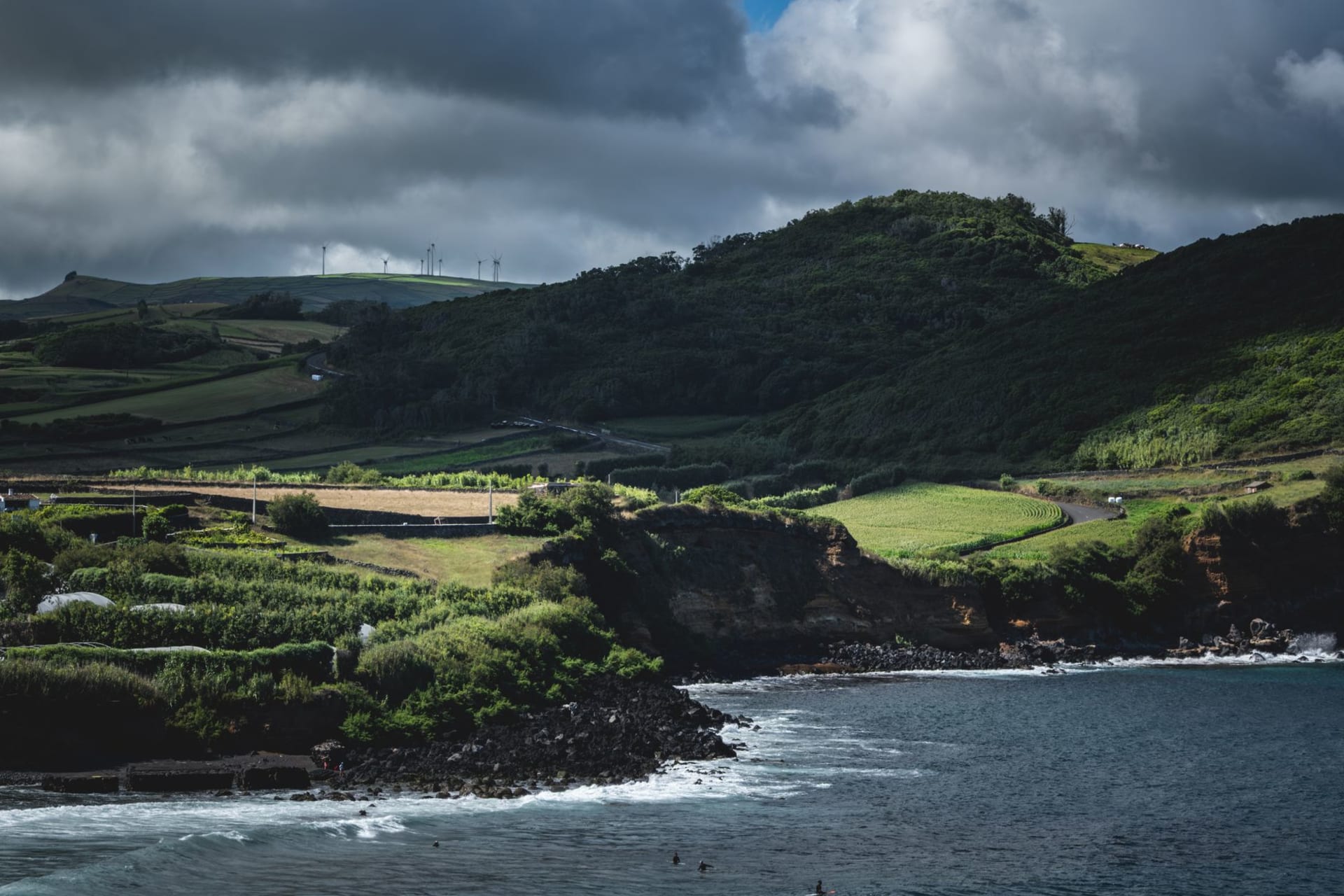
There are only two flights a week to Flores from São Miguel, which is part of why it feels the way it does. I landed on a Tuesday afternoon on a tiny prop plane that banked over cliffs so vertical they looked painted, and the landing strip is short enough that you feel every metre of runway. The taxi driver who met me was also, it turned out, the person who ran the guesthouse where I was staying. It is that kind of island.
Flores is the westernmost inhabited point of Europe — a fact that sounds like a tourist board boast but actually means something on the ground. Standing on the western sea cliffs at Ponta da Albarnaz and watching the Atlantic push itself in from a direction where the next land is Newfoundland some three thousand kilometres away, you feel a particular kind of edge-of-the-world gravity. It’s not dramatic. It’s quiet and certain, the way things are when they’re simply true.

The waterfalls are what most people come for, and they’re real. Flores has perhaps fifteen significant falls, several of which drop directly into the sea from heights that make the sound arrive before the visual makes sense. Poço do Bacalhau is the most famous — a cascade into an emerald pool surrounded by rock walls — but I preferred the smaller ones you find by walking the levada paths inland, where you come upon them accidentally in dense fern forest, the water so clear it looks like air with a colour added. I ate lunch sitting next to one, a sandwich I’d bought at the single café in Lajes das Flores, listening to the sound of falling water while a chaffinch hopped along the rocks.
The island’s interior is a series of volcanic lakes and valleys — Lagoa Funda, Lagoa Rasa — ringed by hydrangeas in quantities that stop making sense. I drove the main ring road one morning and counted fifteen shades of blue between Lajes and Santa Cruz. The roads are barely roads in places: single lane, steep, occasionally interrupted by a cow. I parked twice to let cows make their decisions. Neither was rushed.

In two days on Flores I saw perhaps six other tourists, one of whom was German and had a hiking GPS and seemed to be treating the island as a routing problem to be solved. Everyone else I encountered was local — farmers, fishermen, a woman hanging laundry on a line strung between two lemon trees. The guesthouse served dinner at seven, one dish, whatever had been caught or grown that day. On my first night it was grilled grouper with roasted sweet potato. On my second it was rabbit in red wine. I didn’t ask for either and would not have chosen differently.
When to go: June through September for stable weather and accessible hiking trails. The waterfalls are strongest after winter rain — March and April see the highest flow but weather is less predictable. Book accommodation and transport well in advance; the island has limited capacity and flights fill.