
Faial Island
"Every boat in this marina has a story. Most of them involve the Atlantic winning a round."
Horta is the kind of port town that makes sense only when you know what comes in off the water. For centuries it was a reprovisioning stop for Atlantic crossings — whalers, clippers, and more recently the yachts and sailboats that use the Azores as the midpoint between the Americas and Europe. The tradition in Horta marina is that any skipper who passes through must paint something on the harbour wall — name, home port, a design, a date — or face bad luck on the continuation. The wall has been accumulating these paintings for decades, and it is now an extraordinary accidental archive, layers of paint and intention going back to the 1950s, every centimetre of concrete covered.
I spent a morning walking the wall slowly, reading the names. Boats from New Zealand, from Brazil, from Hamburg, from New Orleans. Some had careful paintings — dolphins, self-portraits, detailed ship renderings. Others were just a name and a year, the minimum required. One from 1978 was barely legible, faded to a ghost of white on grey. I tried to imagine the person who had painted it and where they’d been going.
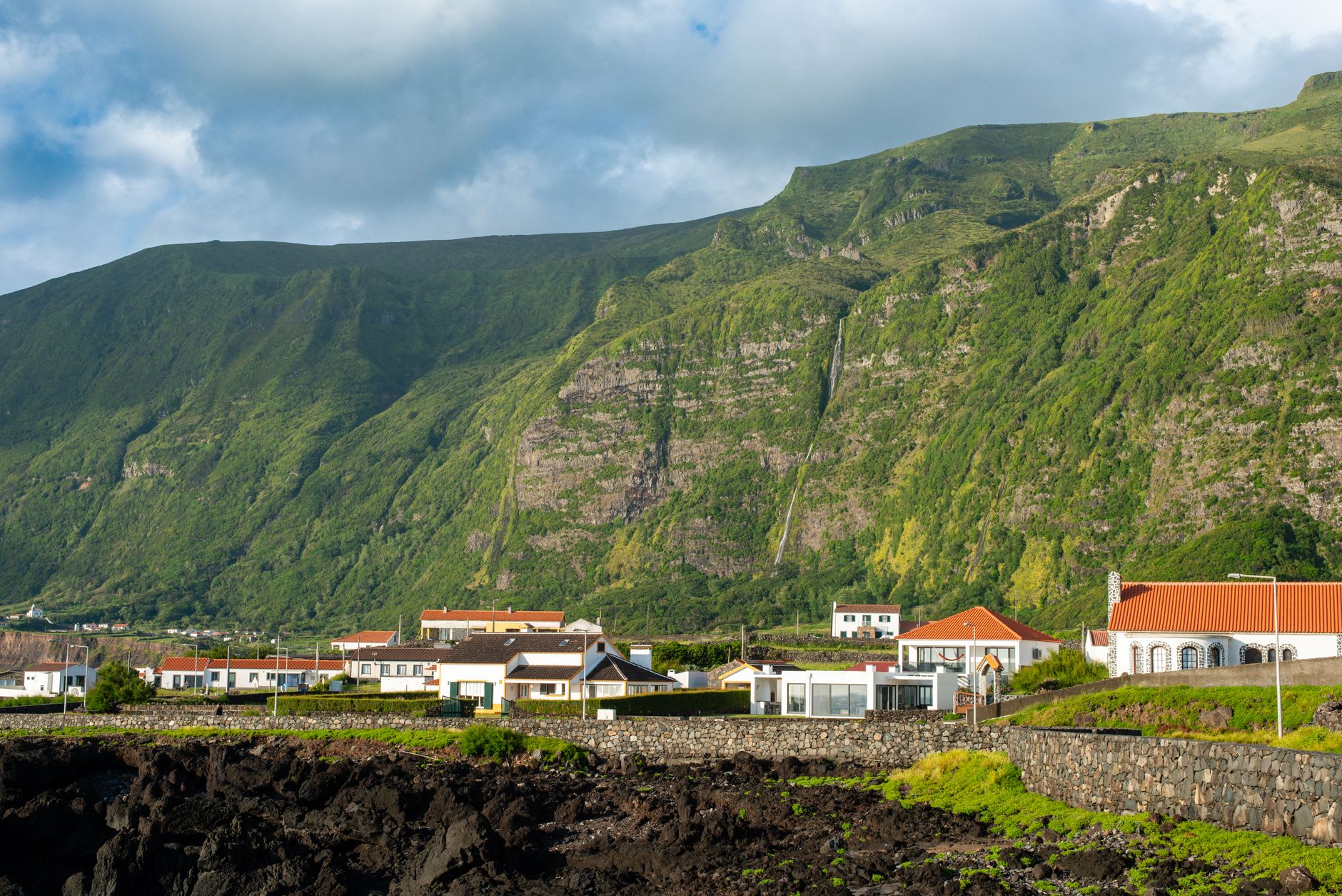
Faial is called the blue island for its hydrangeas, which in June and July line every road in such density that driving across the island feels like moving through a blue-walled corridor. The colour is not subtle. It is the kind of blue that makes you suspicious — too vivid, too even, too much. I drove the road toward the caldeira and the hedges went on for kilometres, broken only by the occasional stone wall or farmhouse. At one point I stopped the car and just sat with the window down, watching bees work the flowers in the morning light.
The Caldeira de Faial is a dramatic flat-bottomed volcanic crater about two kilometres across, cloaked in ancient laurel forest and permanently in its own microclimate — cooler, windier, often wrapped in cloud even on clear days. I walked the rim trail in a half-hour of sunshine followed by a wall of mist that reduced visibility to about fifteen metres. Through the mist I could hear birds I couldn’t see, and the trees were draped in moss and lichen thick enough to feel like upholstery. It was beautiful in the way unsettling things sometimes are.
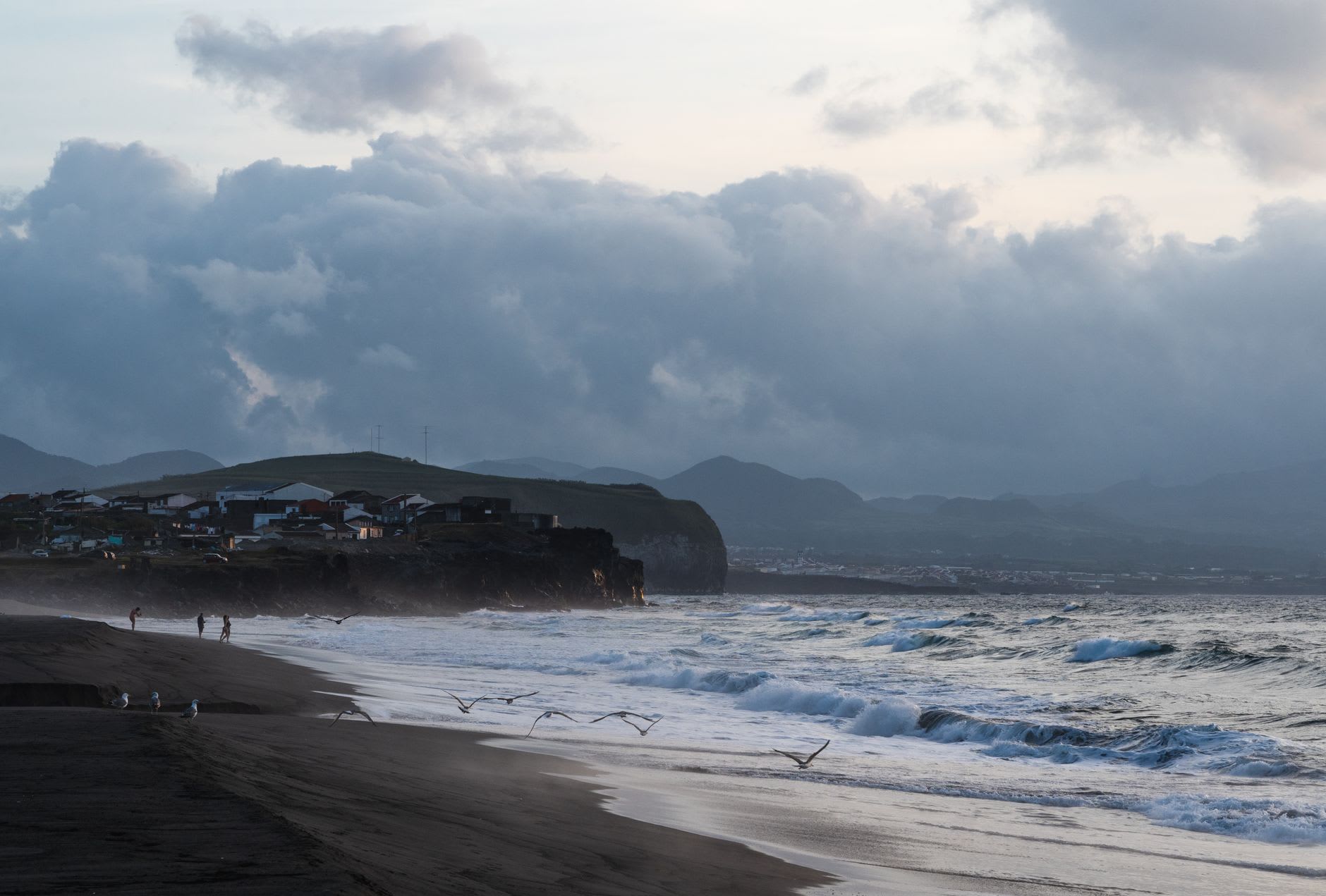
The Capelinhos volcano on the western tip of the island is where Faial reveals its geological youth. An eruption in 1957–58 added nearly a square kilometre of new land to the island, buried a lighthouse to its upper windows in ash, and forced the evacuation of the surrounding village. The lighthouse still stands — a surreal grey monolith half-buried — and the new land is raw black lava, barely vegetated, the kind of terrain that reminds you that the Azores are still being made. The interpretation centre built underground here is excellent: honest, detailed, and structured around the story of the families who were displaced. Some went to the United States and never came back. Others came back to a coastline that had moved.
When to go: June and July for peak hydrangea bloom. Year-round for the marina wall. Whale watching season follows Pico’s — May through October, with the channel between Faial and Pico being one of the best locations in the archipelago.