Ateshgah Fire Temple (Surakhani)
"Baku's whole identity is fire, and here I finally understood why."
A pentagonal fire-worship temple outside Baku where traders once prayed beside flames that burned straight out of the earth.
We took a shared taxi out to Surakhani on our third day in Baku, past the oil pumps nodding along the Absheron Peninsula like they’d been doing it forever, and honestly that drive told me almost as much about this place as the temple did. Thirty kilometers of gas flares and rigs, and then this small pentagonal fortress appears, walled in sandstone, looking nothing like anything else on the peninsula. Lia had read that Ateshgah means “home of fire” in Persian, and standing at the gate I could feel why: this ground has been leaking natural gas for so long that people were coming here to pray around it centuries before anyone built walls.
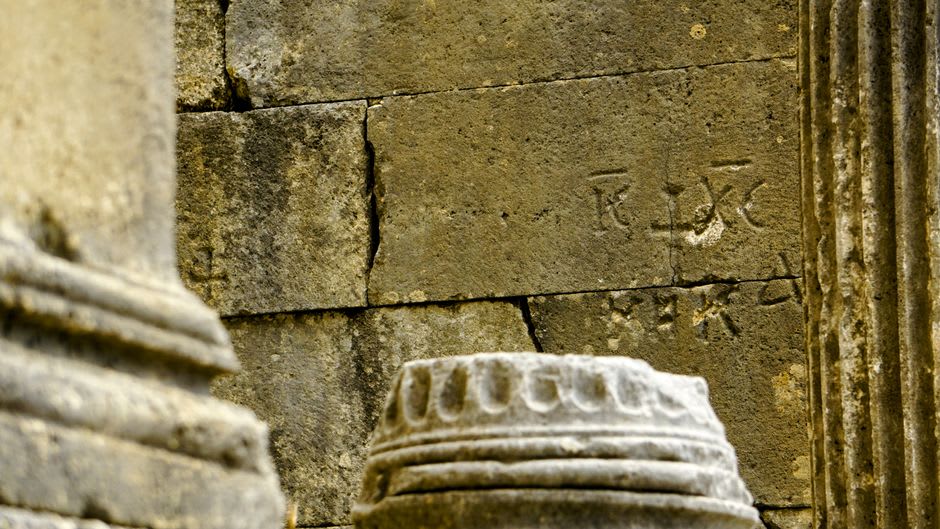
The traders who actually built what we see today were Hindu and Sikh merchants from India, passing through on the routes between Central Asia and the Caucasus in the 17th and 18th centuries, and you feel their presence immediately in the cells ringing the courtyard. We ducked into a few of them, low stone rooms where these men lived and traded and worshipped, and some of the walls still carry Sanskrit and Punjabi inscriptions scratched in by pilgrims who never made it home. There’s something quietly moving about reading a stranger’s prayer in a script you can’t decipher, six thousand kilometers from where he was born.
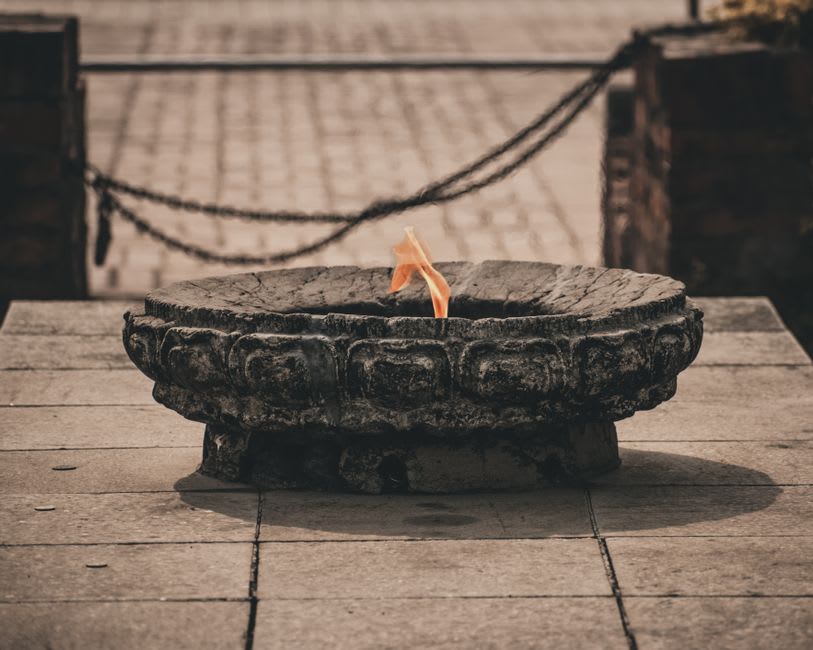
The altar at the center is the part that stays with me, though. For a long time the flame there just burned on its own, fed by gas vents right under the stone, no fuel, no maintenance, just the earth doing what it does. Lia asked our guide when it stopped and got an answer that deflated us both a little: 1969, once decades of oil and gas extraction around Surakhani had drained the underground pressure dry. What burns there now comes piped in from Baku’s gas network, artificial but still hypnotic to watch, flickering against the sandstone in exactly the shape it always would have. I stood there longer than I meant to, thinking about how a sacred flame can survive its own extinction if you’re willing to fake the miracle.
Ateshgah became a protected state reserve in 1975 and now sits on UNESCO’s tentative list, and walking out past the gift kiosk back toward the taxi stand, I understood why it hasn’t pushed for full inscription yet, or maybe why it doesn’t need to. It’s a strange, quiet, slightly melancholic place, more about absence than spectacle, and it rewards you more if you’re not rushing through on a checklist.
When to go: We went in early autumn and the mild Absheron air made the walk around the courtyard genuinely pleasant; anytime from April to October should treat you well, and it works easily as a half-day trip out of Baku any time of year.
Keep exploring
More from Azerbaijan
 azerbaijan
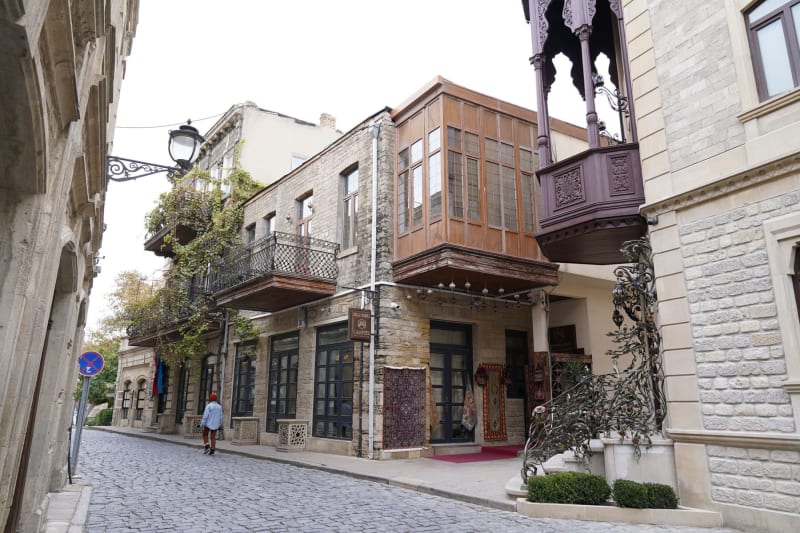
 Baku Old City
Icheri Sheher — Baku's walled medieval inner city, a UNESCO labyrinth of caravanserais and narrow stone alleys.
Explore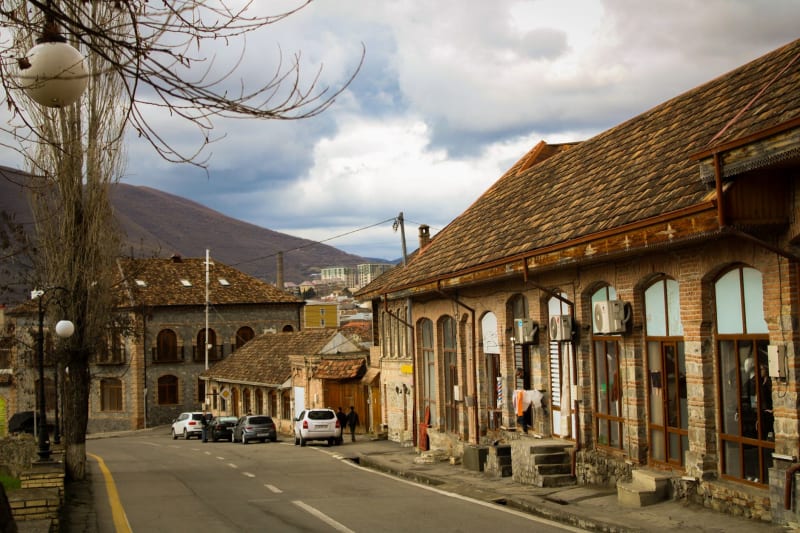 azerbaijan
 Gabala
A mountain resort town nestled in hazelnut orchards at the foot of the Caucasus, where Soviet-era sanatoriums and pine-scented air still draw Azerbaijanis seeking something slower.
Explore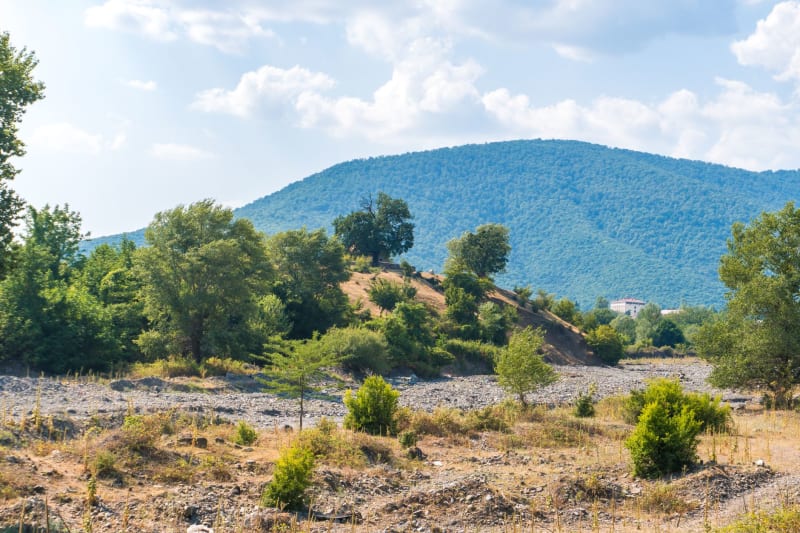 azerbaijan
 Ganja
Azerbaijan's second city carries the name of its most famous son — the medieval poet Nizami — with quiet pride, offering plane-tree boulevards, a functioning shrine complex, and a pace that Baku has long since abandoned.
Explore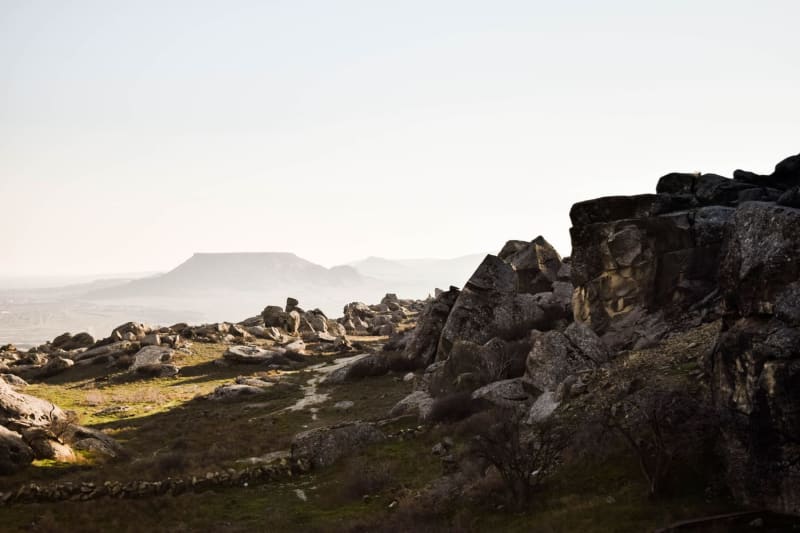 azerbaijan
 Gobustan
20,000-year-old rock carvings and bubbling mud volcanoes in a lunar landscape south of Baku.
Explore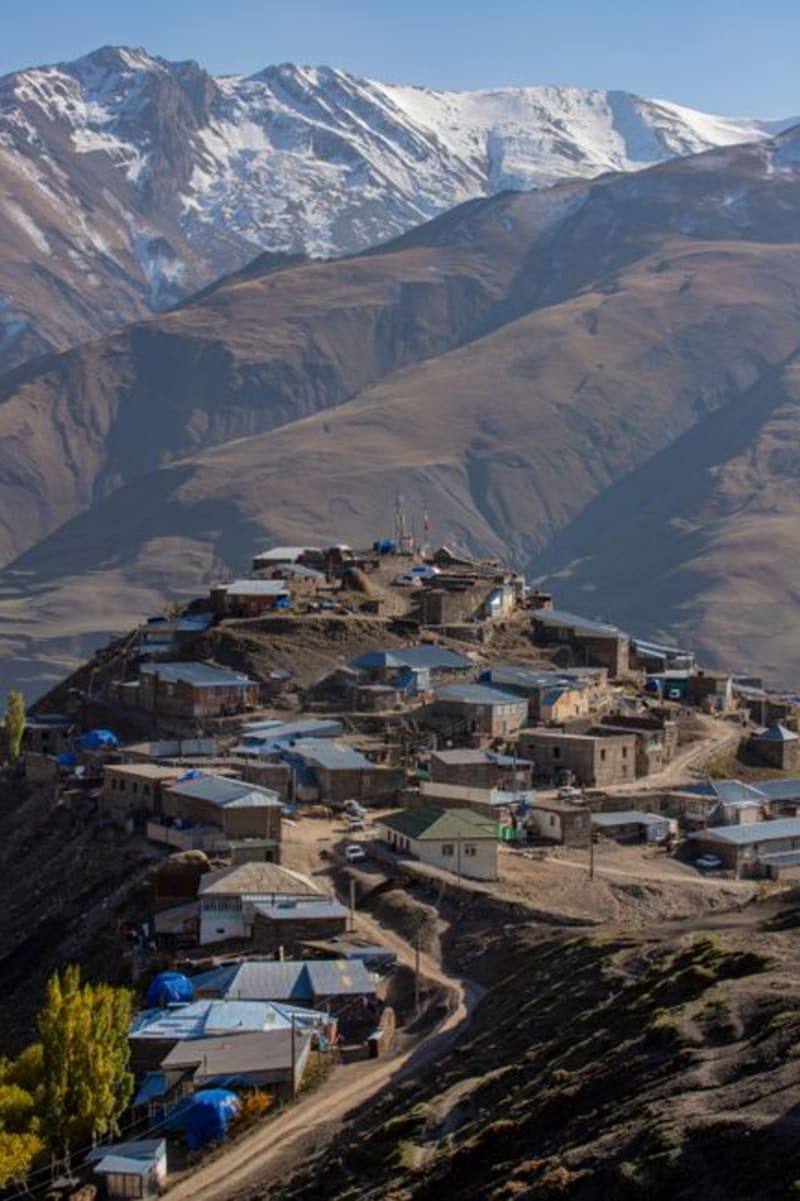 azerbaijan
 Khinalug (Xinaliq)
A stone village clinging to the Caucasus at 2,300 meters, where a language spoken by no one else on earth still fills the streets.
Explore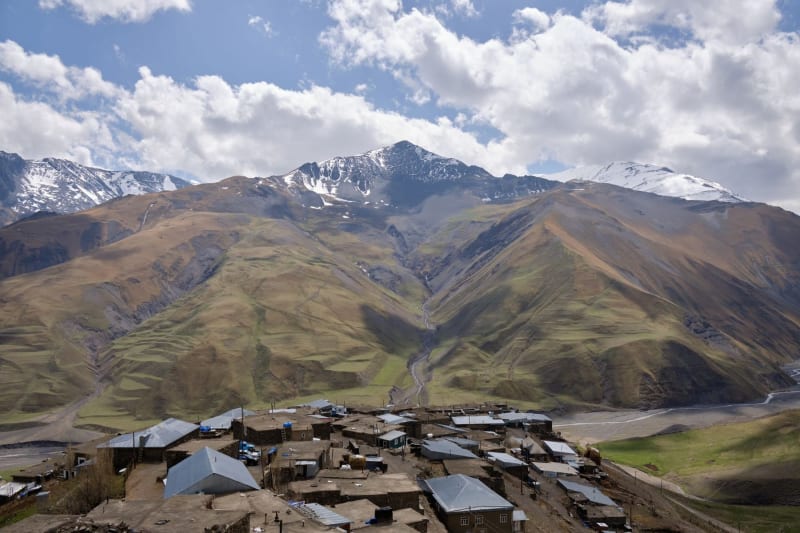 azerbaijan
 Lahij Village
A medieval cobblestone village in the Caucasus where coppersmiths still work by hand using ancient techniques.
Explore