Tannheim Valley (Tannheimer Tal)
"The valley where the road just stops, and everything gets quieter because of it."
A hushed alpine valley near the Bavarian border where ten villages share one road, ringed by jagged limestone peaks.
Lia found Tannheimer Tal on a map almost by accident, tracing her finger along the Austrian-Bavarian border looking for somewhere that wasn’t Zillertal or Ötztal for the hundredth time. We’d both had enough of ski towns that felt like airports with lifts. What we didn’t fully register until we arrived was the geography that makes this valley different: no through road connects it to the rest of Tyrol in winter, so the only way in is from the Bavarian side. That single fact changes the whole mood of the place. There’s no transit traffic, no buses full of people heading somewhere else. It’s a dead end, and a dead end at 1,100 meters surrounded by the Tannheim Mountains turns out to be exactly what we wanted.
We stayed in Tannheim itself, one of the ten villages the valley is named for, though after a few days we’d also wandered through Zöblen and Grän, which are really just clusters of farmhouses and a church strung along the same valley road. Lia kept saying it felt like the ten villages were really one long village that occasionally remembered to put a sign up. Our guesthouse owner, an older man who’d grown up skinning up the Gimpel before dawn, drew us a rough map of the Loipe network on a paper napkin over breakfast and told us, not entirely joking, that if we skied it end to end we could put in a full week without repeating a single kilometer of trail.
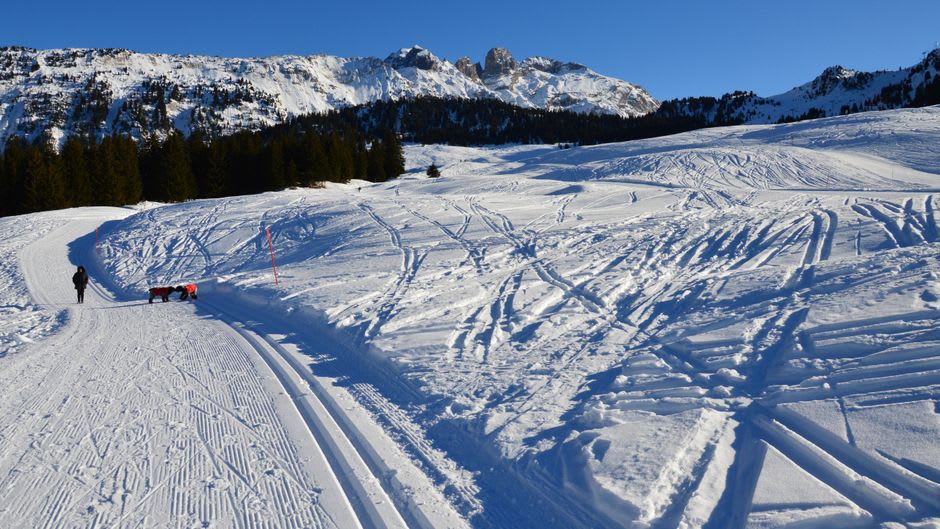
That’s the thing that stuck with me most: 140-something kilometers of prepared cross-country trails, which is an absurd number until you’re actually out there and realize the valley floor is wide and flat enough to hold them all. I’m a mediocre skate-skier at best, but gliding along with the Rote Flüh’s limestone face going pink at sunset, I didn’t care about my technique. Lia, who’s better at this than me, kept disappearing ahead and circling back grinning, saying it was the first time she’d skied somewhere that felt built for the sport rather than tolerating it alongside downhill runs.
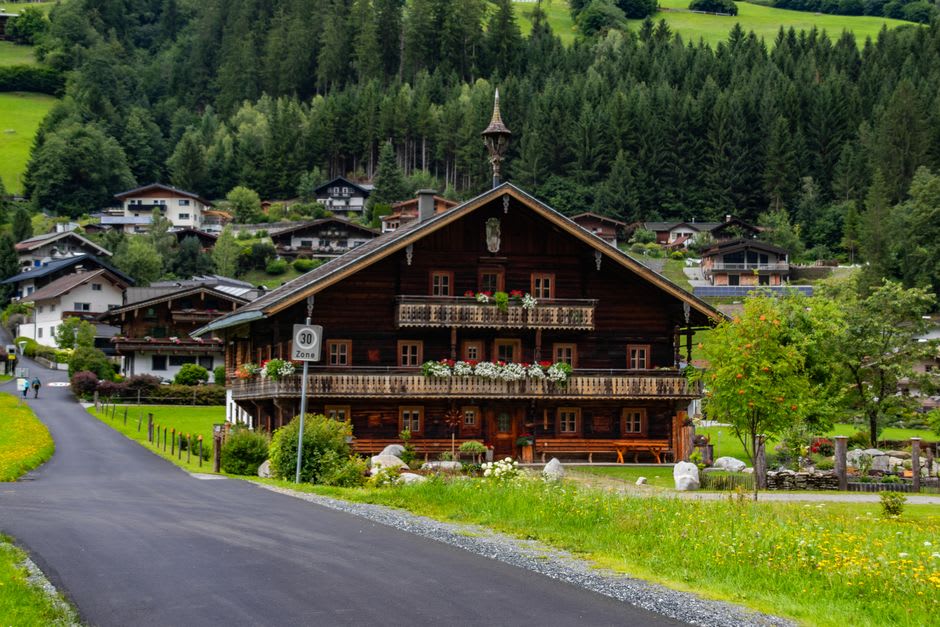
We came back that August, mostly for the hiking and, if I’m honest, mostly for the cheese. There’s a Bergkäse trail that loops between alpine dairies where you can taste the mountain cheese practically at the source, and after a morning walk up toward the Gimpel with views back down over the whole string of villages, we ate our way through more wedges of it than I’d like to admit at a picnic table outside one of the Almhütten. It’s a different valley in summer, greener and slower, but that same sense of being tucked away from everything never left.
When to go: Come in winter, December through March, for the cross-country skiing that the valley is genuinely built for, or between June and September for hiking and following the Bergkäse cheese trail between the alpine dairies.
Keep exploring
More from Austrian Tyrol
 austrian-tyrol
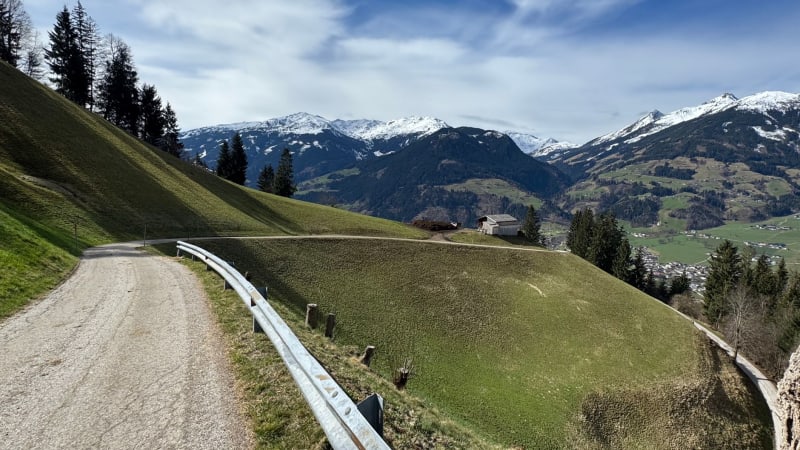
 Zillertal
A valley that runs on folk music, steam trains, and the particular energy of a place that has always known how to celebrate itself.
Explore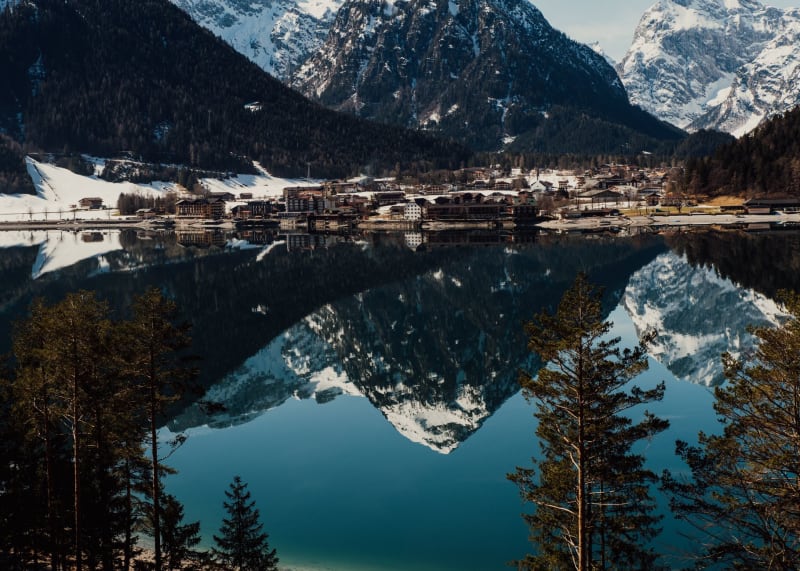 austrian-tyrol
 Achensee
Tyrol's largest lake, reached by a steam rack railway from 1889 that climbs through the pines as if time simply did not apply here.
Explore austrian-tyrol
 Alpbach
The village that wins 'most beautiful in Austria' so reliably it has started to seem less like a competition and more like a fact.
Explore austrian-tyrol
 Hall in Tirol
A perfectly preserved medieval salt-trading town twelve minutes from Innsbruck that most visitors to the region never think to visit.
Explore austrian-tyrol
 Innsbruck
A medieval capital where the Alps crowd the end of every street like a painting someone forgot to remove.
Explore austrian-tyrol
 Kitzbühel
A medieval market town that became one of the world's most famous ski resorts and somehow kept its cobblestones and its dignity.
Explore