One of Earth's last true wildernesses — billion-year-old gorges, ancient Aboriginal rock art, and the Bungle Bungles.
There is a particular quality to silence in the Kimberley. Not the absence of sound — the spinifex rustles, a black kite calls somewhere above the gorge wall — but a silence underneath all of that, geological and absolute. I felt it the first morning at Windjana Gorge, standing on the sandy floor of the Lennard River while the light came in low and orange across the Napier Range. The rock is 350 million years old here, a fossilised reef from an ancient inland sea, and standing against it I had the distinct sense that my entire existence registered as nothing more than a brief atmospheric event.
Gorges and the Ancient Interior
We drove the Gibb River Road in stages, the corrugations vibrating everything loose in the truck. The Kimberley doesn’t ease you in. The red bulldust, the boab trees swollen like something from a Dalí painting, the wedge-tailed eagles so large and unhurried on the roadside carrion — it all insists on itself. At Bell Gorge, Lia and I swam in a pool so clear and cold it made us gasp, hemmed in by striped walls the colour of old blood. Above us, a waterfall ran thin and white in the dry season, barely a thread, and still it felt excessive, generous, like the land was showing off.
At Mitchell Falls, I followed the four-tier drop downward through pandanus palms and paperbarks, the air smelling of hot stone and something faintly eucalyptus. The water falls into the Timor Sea drainage and the scale of that — this water finding its way to that sea — stopped me for a long time.
Rock Art and Deep Time
The unexpected thing was how the rock art unmade me. I had expected to be impressed. I was not prepared to be undone. Near Kalumburu Road, a guide named Dillon walked us slowly past a gallery of Wandjina figures — the cloud and rain spirits of the Ngarinyin people, their eyes wide and haloed, their mouths absent. They have been repainted across generations for tens of thousands of years. Standing before them in the late afternoon, when the light goes gold and the shadows lengthen across the rock face, I understood that I was not looking at history. I was inside it.
The Bungle Bungles
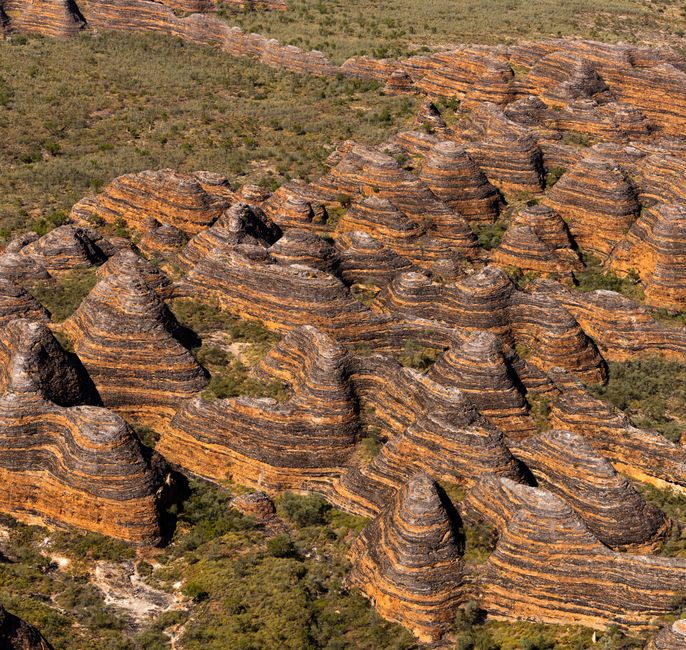
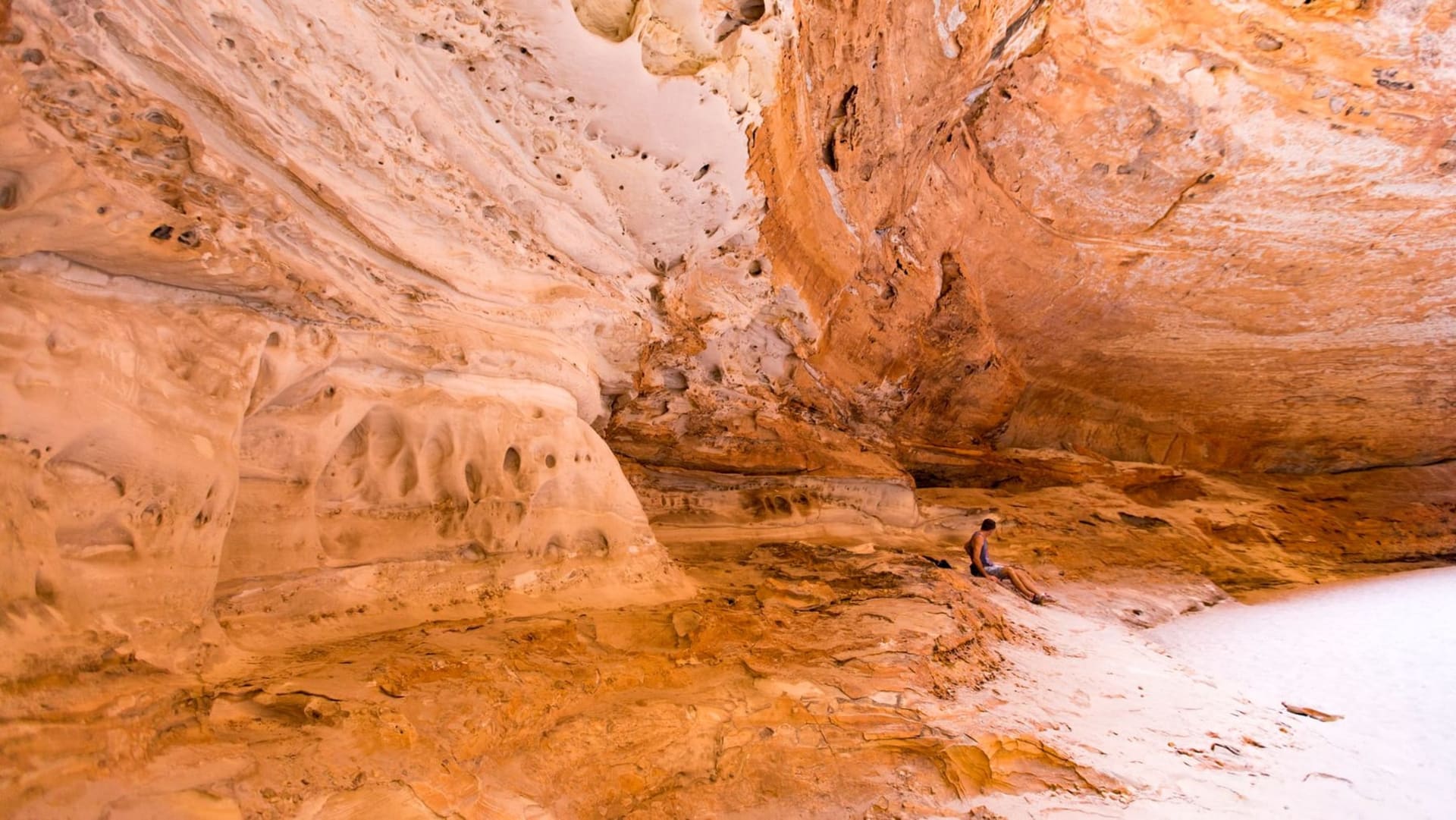
Purnululu’s beehive domes rise from the plateau in tight clusters, banded orange and black from alternating layers of silica and cyanobacteria. We walked the Cathedral Gorge trail at dawn before the tour groups arrived. Inside the natural amphitheatre, sound behaved strangely. Lia whispered something and it reached me whole, perfect, from twenty metres away. We stood there a long time, not speaking.
When to go: The dry season runs from April to September — the only time most roads are passable and gorge swimming is viable. July and August are peak, so April or early May offers some solitude before the crowds, with the landscape still green from the last rains.