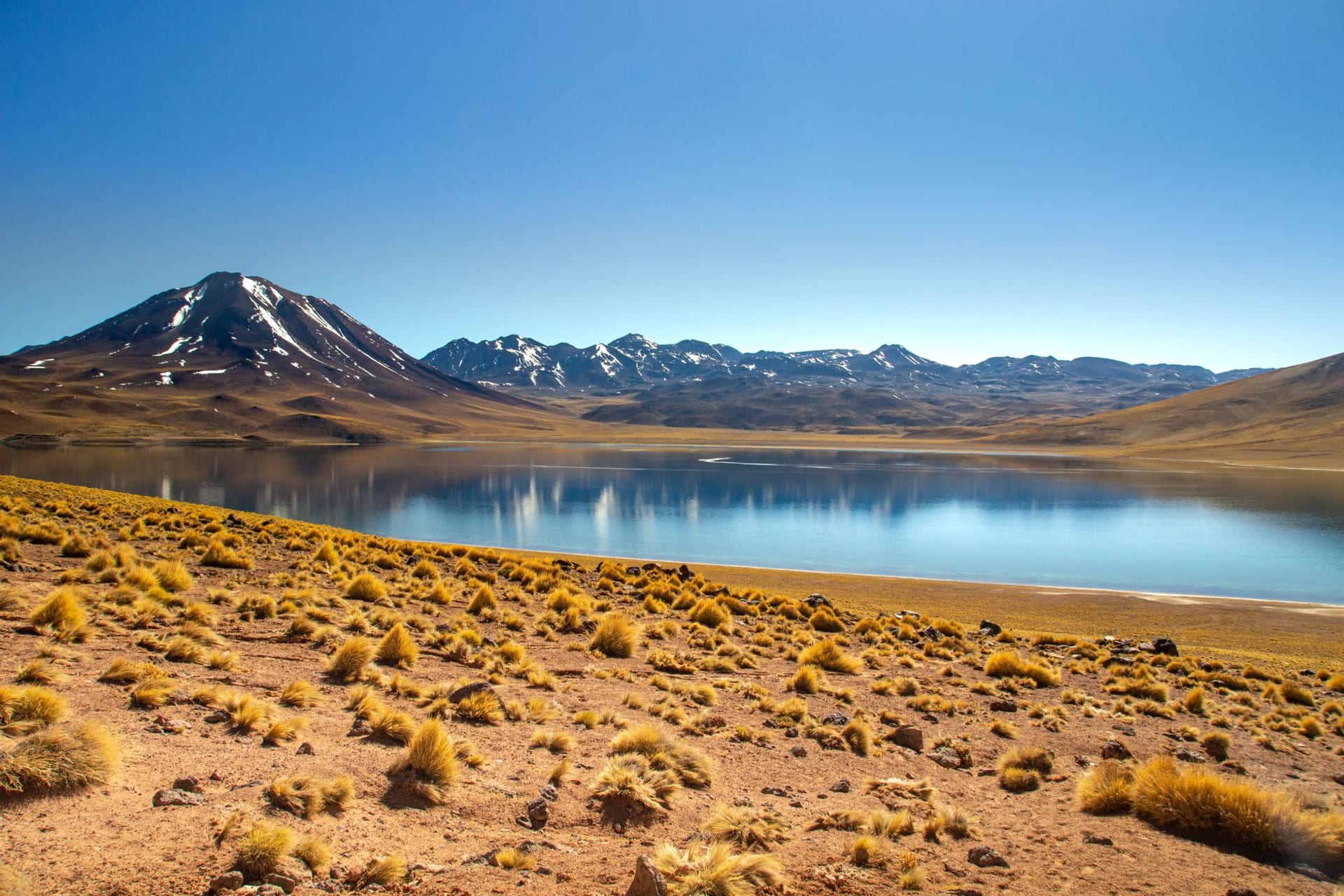
Laguna Miscanti
"I had a headache from the altitude and I still couldn't stop staring at the water."
The road to Laguna Miscanti climbs past 4,000 meters and keeps going. The landscape shifts as you gain altitude — the scrubby desert gives way to puna grasslands, yellow ichu grass bending in wind that comes off the peaks. The mountains get bigger and whiter. Somewhere around 3,800 meters my head began to ache, the kind of altitude headache that sits just behind the eyes and pulses with every heartbeat. I drank water and focused on breathing steadily, which is all you can do, and the van kept climbing.
The lagoon, when it appeared around a bend in the road, was a shock. I had expected something small and grey at this altitude, some windswept tarn. Instead: an enormous sheet of blue-green water, the specific color of old copper, perfectly clear, with the snow-capped cone of Volcán Miscanti reflected in it and a population of Andean flamingos working the shallows on the far shore. The scale was wrong in the best way. Nothing in the approach had prepared me for the abundance of it.
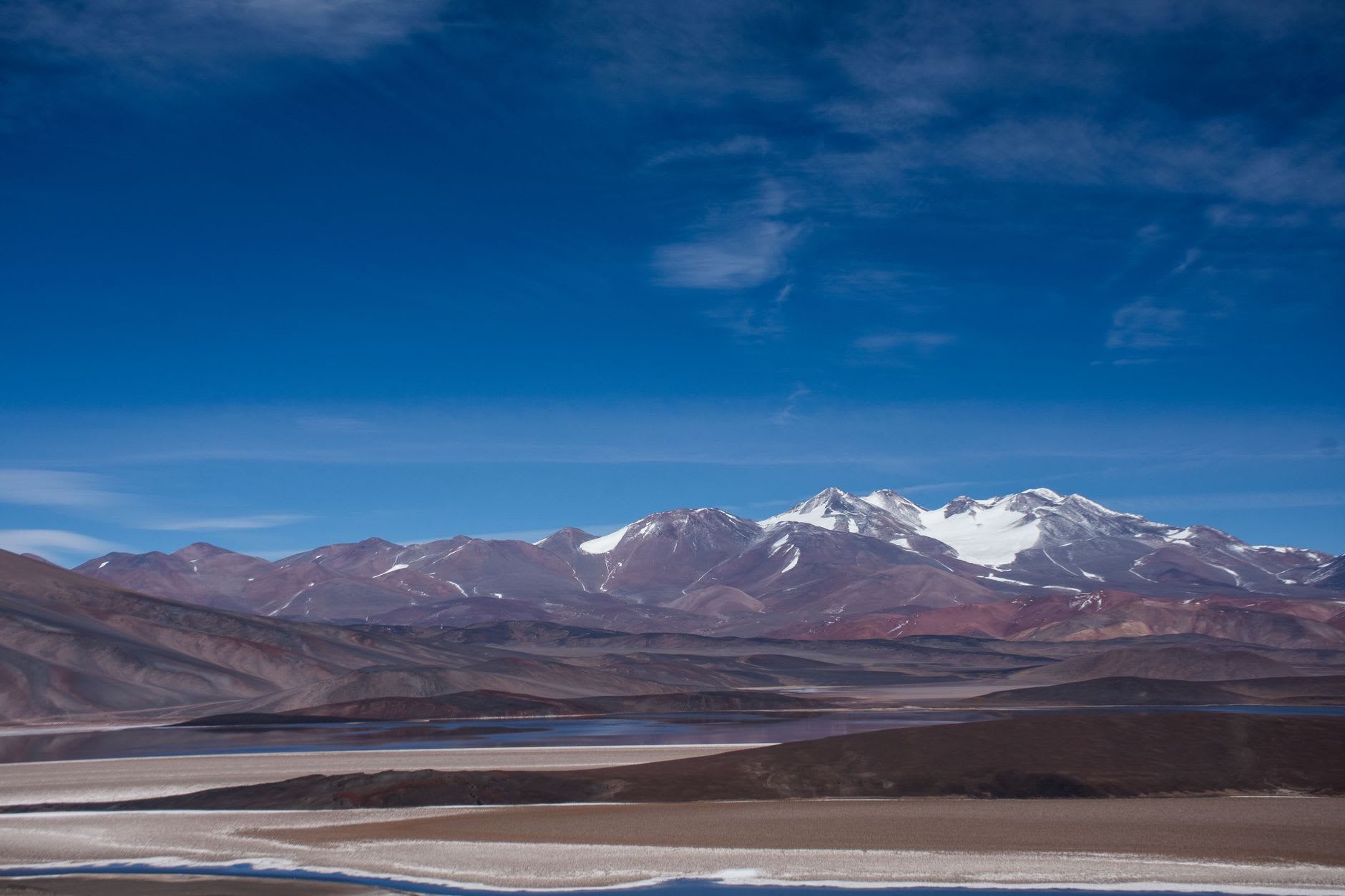
The wind at the lakeside is relentless and cold. I wore a down jacket in what was nominally early afternoon on a clear October day. The flamingos — Andean flamingos, with their yellow and black bills — moved slowly against the wind as though it required deliberate effort, their pink and white feathers ruffling. The ichu grass on the slopes above the lagoon moved in continuous waves. Everything was in motion except the water itself, which was flat and enormous and reflected the sky with perfect fidelity. I stood at the edge and watched my reflection assemble itself below me.
Laguna Miñiques, the smaller and slightly less accessible lake a few kilometers south, sits just below a dormant volcanic peak and has a quality of extreme remoteness that Miscanti, with its gravel parking area and information signs, does not quite achieve. The two lakes are always paired by tour operators but they are not twins — Miscanti is the grand gesture, Miñiques the intimate one. I preferred Miñiques for the silence. The flamingos there had the bearing of people who had not been interrupted in years, working the shallows with total concentration, indifferent to the small group of humans standing on the bank with their mouths open.
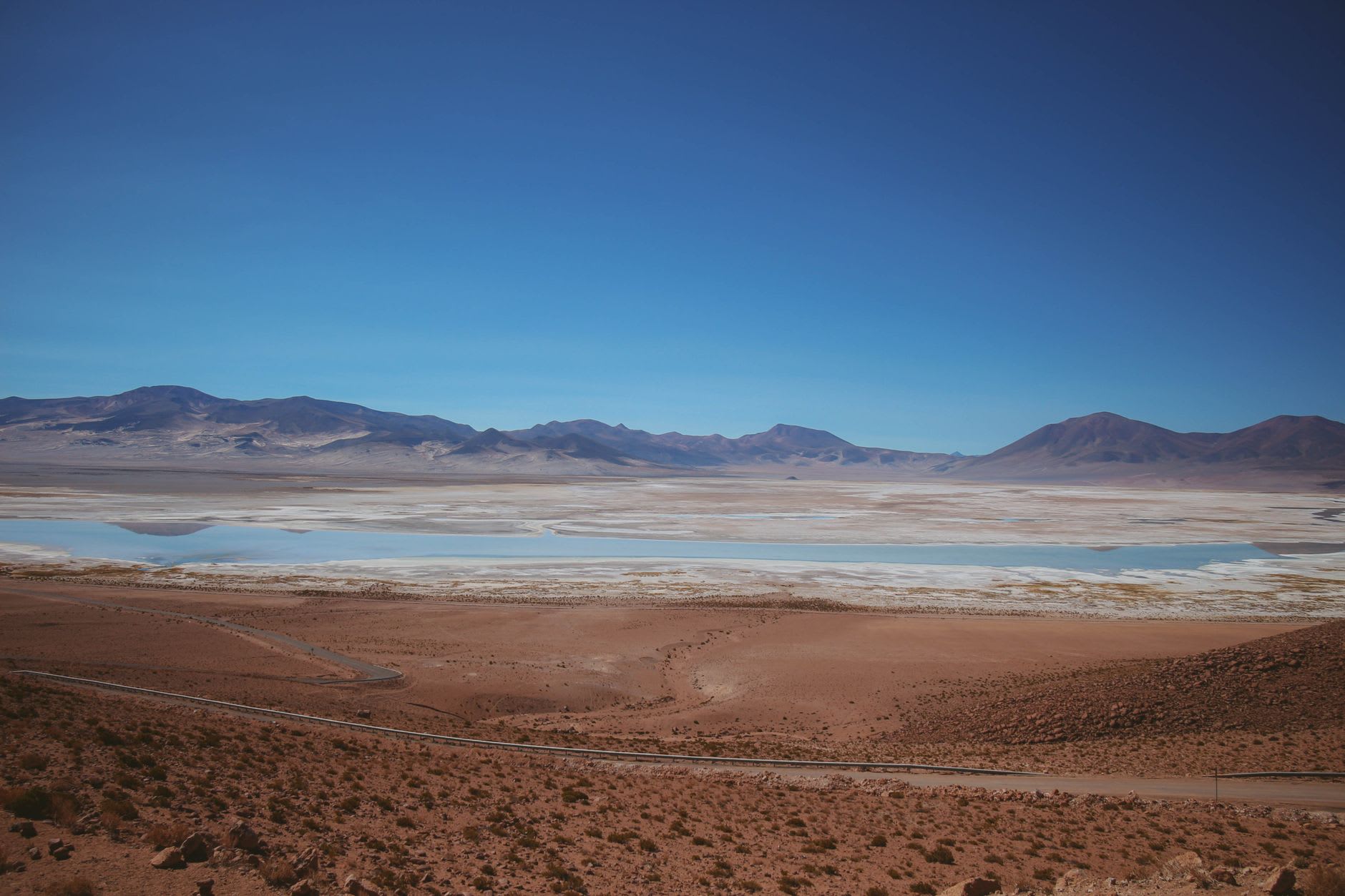
The altitude is real and should not be dismissed. I watched someone in our group spend the entire visit sitting in the van with the heater on, which is a legitimate response to altitude sickness and not a defeat. Acclimatize in San Pedro for at least two nights before attempting this excursion. The headache at 4,200 meters is manageable. Genuine altitude sickness at 4,200 meters, far from medical facilities, is something else entirely.
When to go: September through November and March through May. The summer rains from January through February can make the access road impassable after storms. The flamingos are present year-round but most numerous in spring and early summer. Dress for conditions significantly colder than San Pedro, regardless of the season.