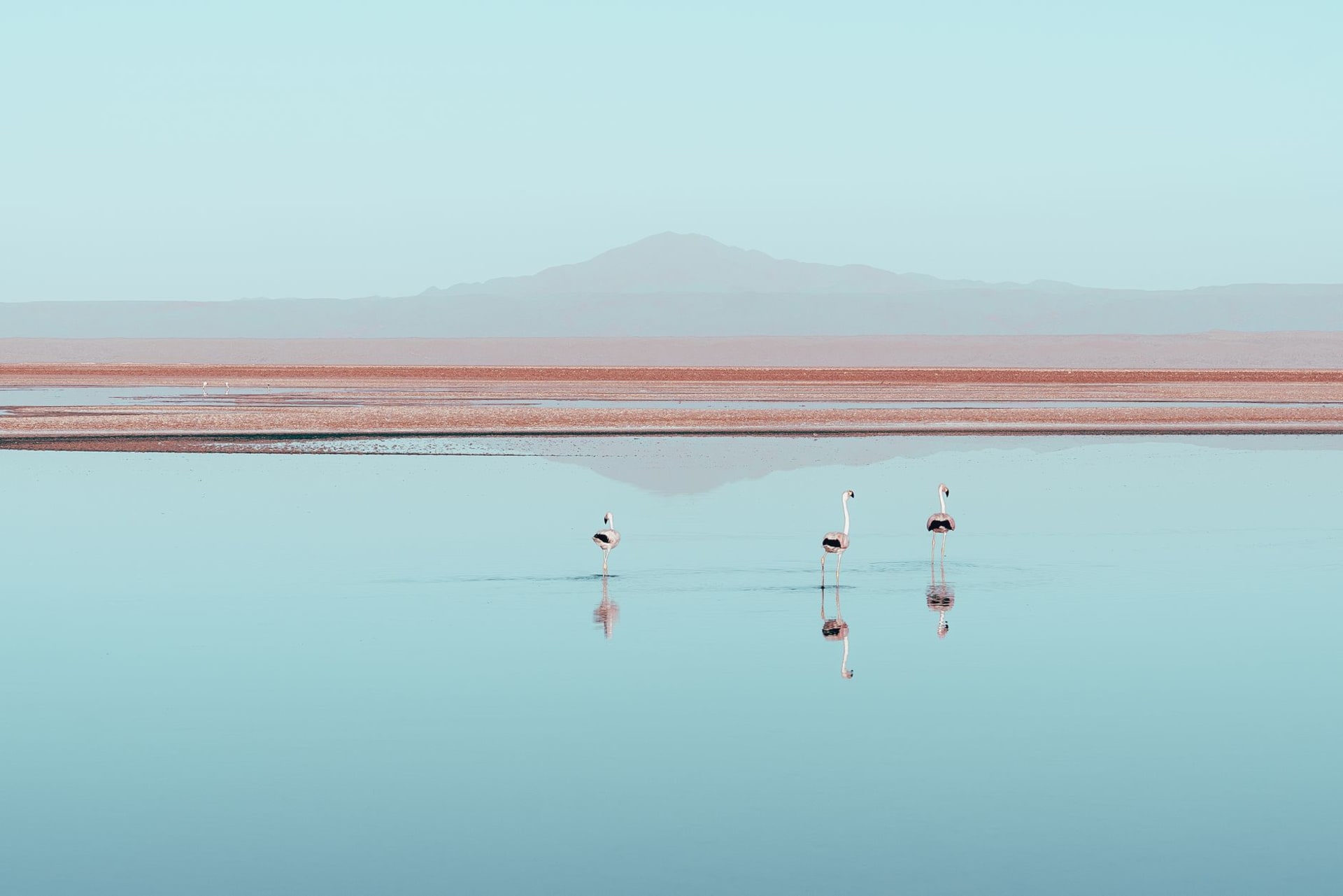
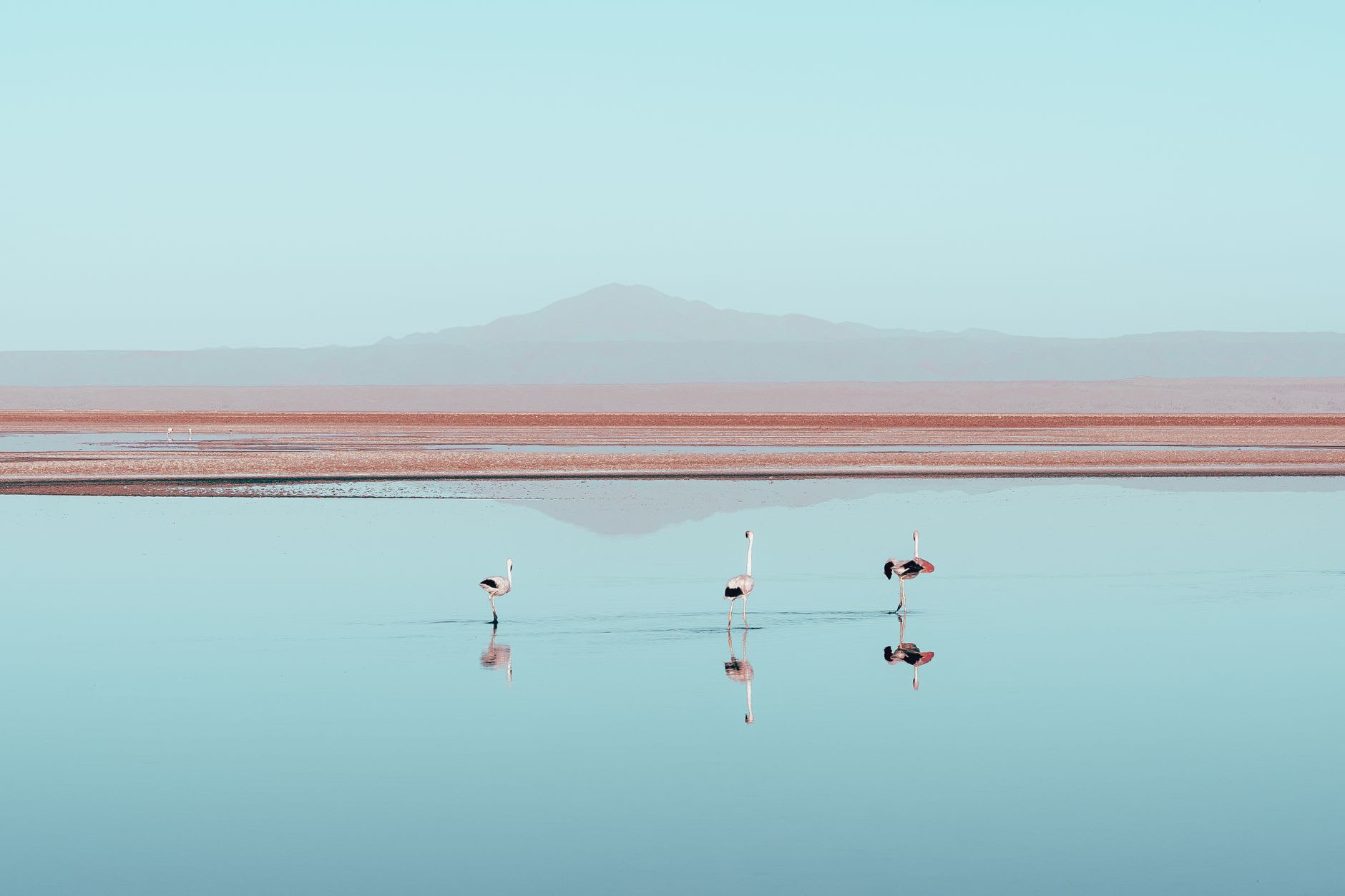
Nobody warned me about the sound. I expected the visual — I had seen the photographs, the flamingos in the mirror-flat water, the mountains beyond — but when I stepped out of the car at Laguna Chaxa, the first thing I noticed was the murmur. A low, continuous burbling, half honk and half something closer to domestic conversation. Several dozen flamingos, scattered across the shallows of the lagoon, filtering brine through their prehistoric bills and talking to each other about it. The sound made me laugh, which broke the silence, which made a few of them look up with an expression of complete indifference.
The three species that breed here — the Andean, the Chilean, and the James’s flamingo — are distinguished by subtle differences in size and beak coloring that you learn to spot after twenty minutes of watching. The James’s flamingo is the rarest and the pinkest, almost implausibly so, like something that escaped from a child’s drawing. They move through the shallows in loose groups, their reflections wavering slightly whenever they take a step, the water so still and so white with dissolved salt that the whole scene looks like a color photograph of a color photograph, slightly doubled, slightly too good.
The ground around the lagoon is salt crust — thick, white, cracked into irregular polygons, crunching underfoot with a sound like stepping on glass. In places where the water table is close to the surface, the crust has formed into towers and mushrooms of salt that look like they have been assembled by someone with strong aesthetic opinions. In the early afternoon light, everything sparkles in a way that makes you understand why the Incas thought this place was sacred. The whole landscape is doing its best to be unrealistic and succeeding completely.
I stayed for two hours. Long enough to watch the light change and the flamingos cycle through feeding and preening and the slow, stately disagreements that seemed to occupy their afternoons. A group of flamingos in dispute is a surprisingly dignified spectacle — no aggression, just a slow repositioning of long necks, a turning of backs, a small rearrangement of the social order. I ate a peach I had brought from San Pedro and sat on the salt crust at a respectful distance, and thought about how certain places earn their way into the category of real, visceral strangeness. This was one of them.
The lagoon is part of the Salar de Atacama National Reserve and requires a paid permit. The entrance is managed by the indigenous Atacameño community of Toconao, who handle conservation here. A portion of every ticket goes directly to the community — one of the better-organized ecotourism models I have encountered in Chile, where the people who have lived beside a place for centuries are actually running it.
When to go: Year-round. The flamingos are present throughout the year, though numbers peak during breeding season from November through January. Come in the morning for the best reflections and bring sunscreen — the light bouncing off the salt flat is relentless and hits angles sunscreen normally misses.