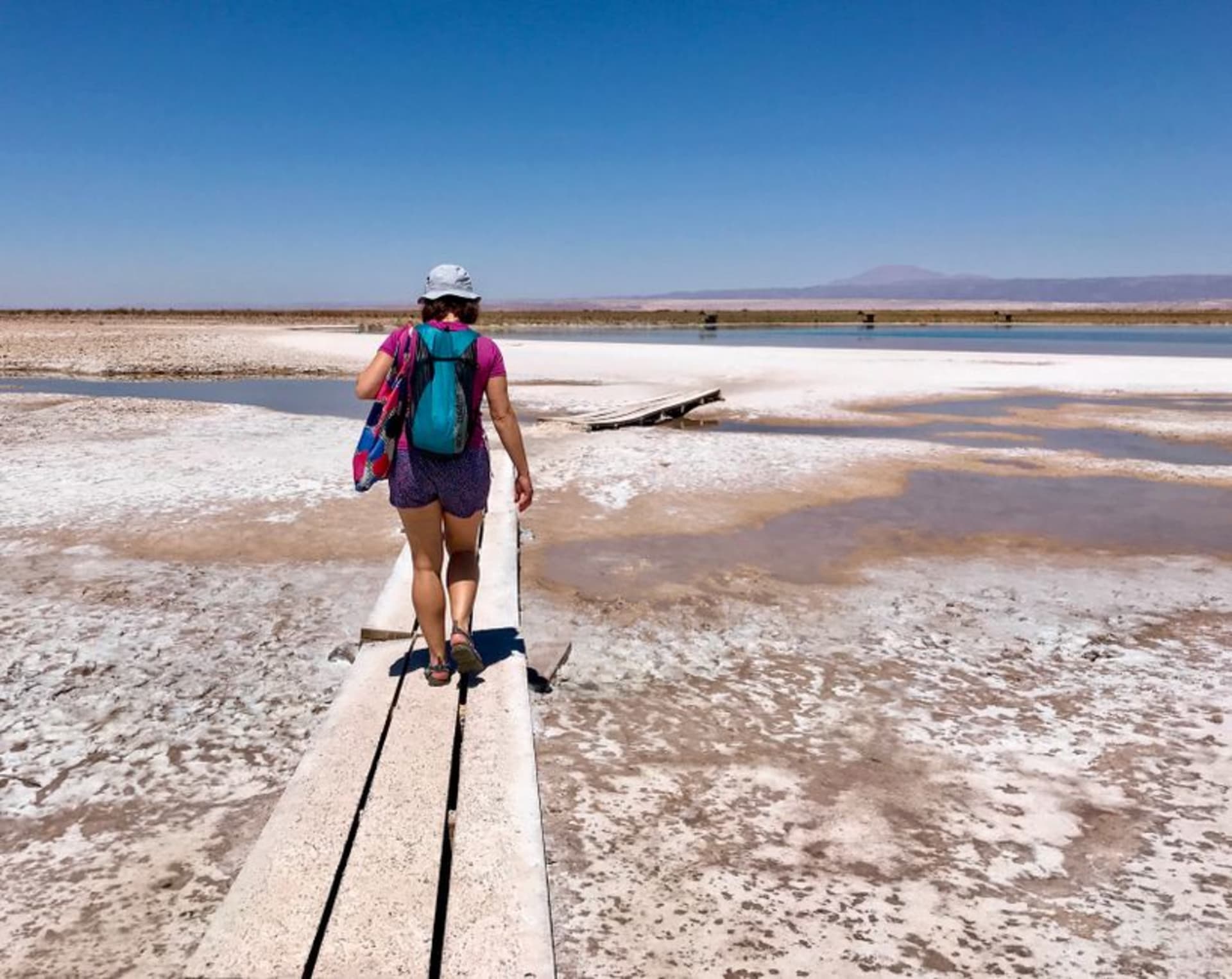
A sinkhole lagoon in the salt flats where you float like a cork and watch Licancabur turn pink at dusk.
Lia had warned me not to fight it, but I still kicked my legs the first few seconds in Laguna Cejar, out of pure instinct. Then I stopped, and I just sat there in the water, arms out, going nowhere and sinking nowhere, like the lagoon had decided the argument for me. We’d driven about eighteen kilometers south from San Pedro de Atacama that afternoon, past a flat nothing of gravel and scrub, until the van pulled up next to this sinkhole of water so saline it might as well have been a smaller, quieter cousin of the Dead Sea. Our guide said the salt concentration here does the same trick — buoyancy without effort — and I didn’t fully believe it until my own body proved him right.
What got me more than the floating, actually, was the ring of white around the lagoon. The salt crust crunches underfoot like old snow, and it stretches out into a crust so bright it hurts to look at without sunglasses, until it meets the darker basin of the Salar de Atacama. Someone in our group mentioned that Cejar isn’t alone out there — there’s Laguna Piedra and Laguna Tebinquiche nearby, part of a whole family of lagoons fed not by rivers but by underground aquifers pushing up through the salt. No visible source, no visible drain, just water appearing out of the desert like it had always been waiting there. I found that stranger than the swimming, honestly.
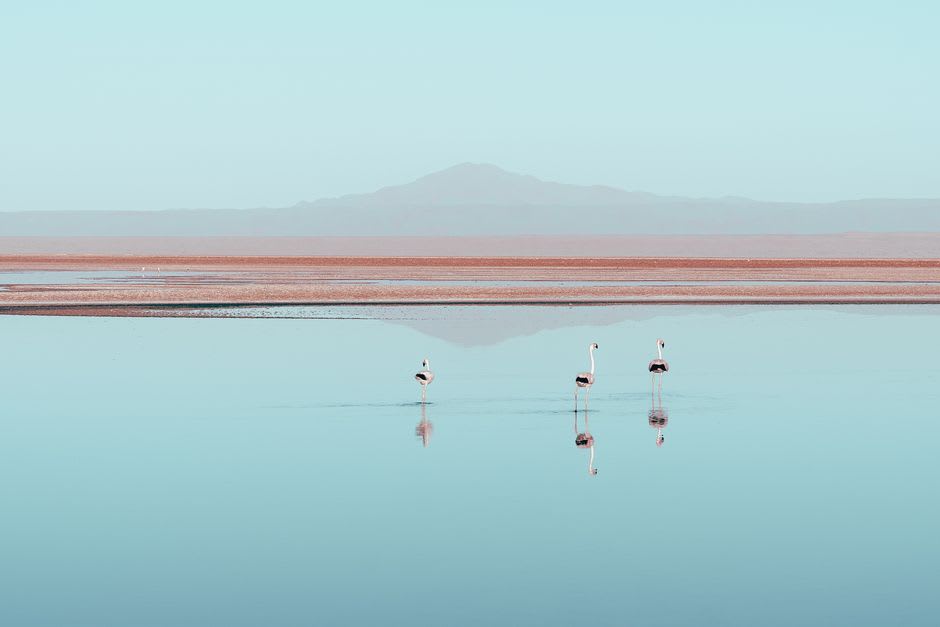
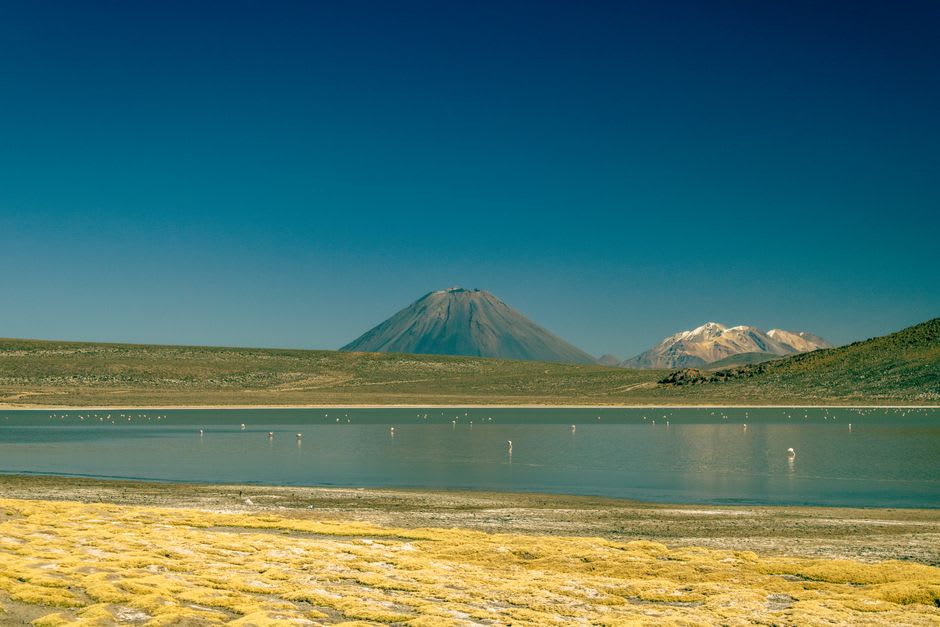
We’d timed it for sunset, on purpose, and it was worth the cold change of clothes afterward. As the light dropped, Licancabur — that near-perfect volcanic cone that watches over half of San Pedro — went from grey to a deep rust-orange, then to something closer to violet, mirrored faintly in the still parts of the lagoon. Lia floated next to me with her eyes closed, salt drying white on her shoulders, and neither of us said much. It’s one of those places where talking feels like it would just get in the way.
Afterward there’s a freshwater shower set up near the parking area, which you will absolutely need — dried salt on your skin is not a souvenir you want to carry back to your hotel. We rinsed off shivering a little in the evening chill, wrapped ourselves in towels, and drove back into San Pedro with the windows cracked, still tasting salt on our lips.
When to go: Go for sunset if you can swing it — that’s when the crowds thin and Licancabur puts on its best colors. Days here stay warm enough for a swim across most of the year, so the desert climate rarely gets in your way, but the light at golden hour is the real reason to time it that way.