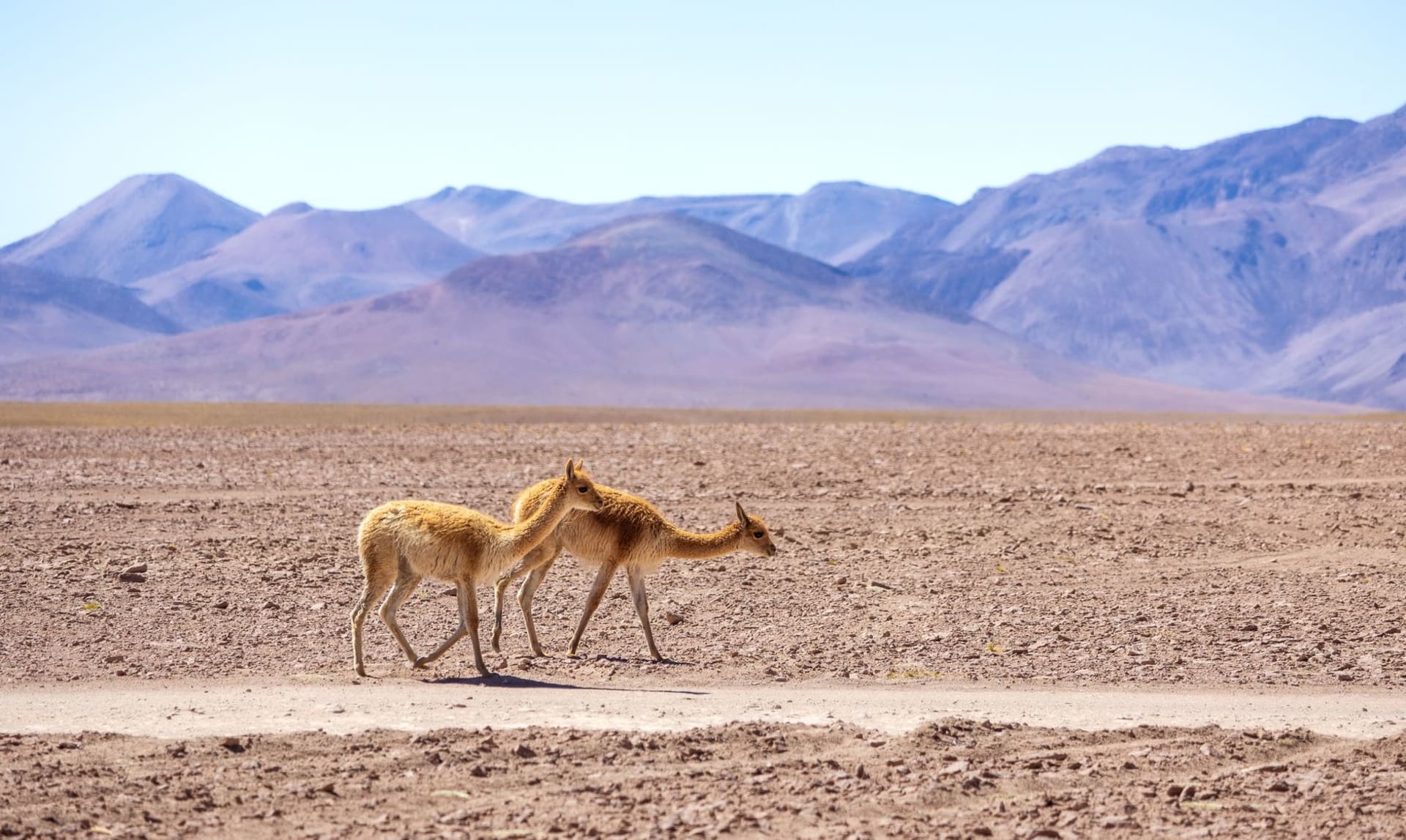
Chiu Chiu sits an hour east of Calama on the road to San Pedro, and almost no one stops. The pull of the Atacama — the salt flats, the geysers, the flamingos — creates a gravitational field that draws travelers past this small Atacameño village without pause. I stopped because I needed petrol and because the satellite image on my phone had shown something green, and in the Atacama, green means water, and water means history.
The Iglesia de San Francisco de Asís is the oldest surviving church in Chile. Built in 1611 with walls a meter thick, its architecture is pure Atacameño colonial — massive adobe construction with cactus wood beams, a white-plastered face, and a simplicity that reads less as modesty and more as deep confidence. The church does not need ornament. The walls are enough. I stood in the shade of the doorway for a long moment before going in, and when I did, the interior was cool and dark and smelled of old wood and candle wax and something I can only describe as the specific smell of a building that has been prayed in for four hundred years. The smell of accumulated intention.
Outside, the village plaza held a few dogs, a woman carrying vegetables from the market, and an old man sitting on the bench who showed no interest in me whatsoever. The square was swept clean. The trees — tamarugo and algarrobo, desert-adapted species with roots that chase the water table down twenty meters — provided a shade that felt cool relative to the surrounding landscape. The Loa River runs just below the village and you can hear it if you stand near the edge of the escarpment — a sound completely out of place here, the sound of moving water in a place that receives less than a millimeter of rain per year. It takes a moment to believe you are hearing it.
I ate lunch at the one restaurant in the village, which was somebody’s house adapted for the purpose, with four plastic tables and a woman who brought me cazuela without asking what I wanted. The soup — beef, potato, corn, a wedge of squash — was the kind of food that makes sense in context: warm and dense, built for altitude and dry air and the particular hunger of a person who has been driving through a desert. I was the only customer. The television in the corner had a telenovela running with the sound down. Outside, the dogs had moved from the square to the shade of the church wall.

The pre-Incan ruins of Lasana — a pukara, or fortified settlement, dating from around 900 CE — sit ten kilometers north on a dramatic Loa River canyon. Most people combine Chiu Chiu and Lasana in a single visit, which makes sense geographically. Lasana deserves its own hour: a dramatic canyon setting, well-preserved adobe structures stacked up the canyon wall, and information panels that treat the archaeological evidence seriously rather than reducing everything to bullet points. The view from the top of the pukara, across the canyon to the desert beyond, is one of the better views in the entire Atacama region that nobody talks about.
When to go: Any time of year. Chiu Chiu is not a place you plan a trip around — you stop, look, eat, hear the river, and leave enriched. Allow two to three hours including Lasana. The church is sometimes locked; ask at the nearby house and someone will usually appear with a key.