Palm Beach
"The water here is so blue it seems like a misunderstanding between the sea and the sky."
I resisted Palm Beach for two days, parking myself at Eagle Beach and feeling virtuous about it. Then I walked north on a whim one afternoon and understood what I’d been avoiding: the water at Palm Beach is, against all odds and despite the high-rises and the jet skis and the floating bars and the parasailers, genuinely spectacular. That particular shade of Caribbean turquoise — the one that looks like someone has been dissolving aquamarine gemstones in the shallows — is more intense here than almost anywhere I’ve swum, and I’ve spent significant portions of my adult life in Caribbean and Pacific water.
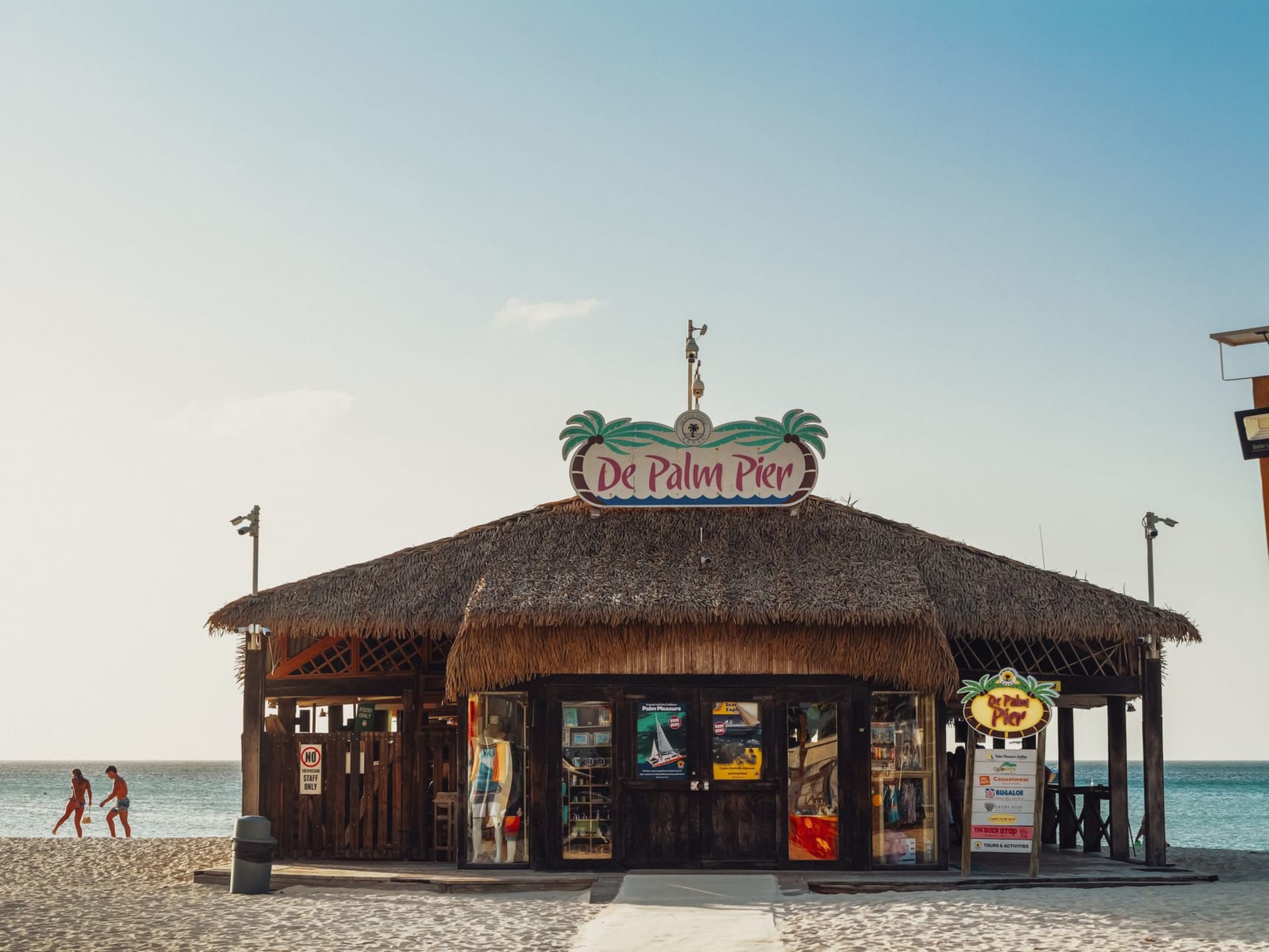
The strip itself is a full-on resort corridor. High-rises in terracotta and cream, including the iconic Ritz-Carlton and a dozen others whose names I immediately forgot, line the beach road from north to south. Between them and the water: a continuous parade of beach bars, watersports rentals, souvenir shops, and restaurants that post their menus in six languages. The infrastructure is absurdly well-developed. There are outdoor showers every hundred meters. The water is raked. The sand is maintained. It is a beach that has been consciously managed to within an inch of its life, and it works.

What I didn’t expect was the east end of Palm Beach — the far northern stretch past most of the major resorts, where the beach widens and the crowd thins. I walked there on my second visit and found local families who’d driven in from Noord, coolers in the back of their pickups, kids running in the shallows. The water temperature was the same improbable warmth — Aruba sits south of the hurricane belt, close to the equator — and the wind came in steadily off the Caribbean, keeping the heat from becoming oppressive. A man named Jacinto was selling cold fresh coconuts from the back of a repurposed shopping cart. I bought one and we talked for twenty minutes about the difference between Aruba in January and Aruba in July, which he described as the difference between a carnival and a very pleasant Tuesday.
The sunsets at Palm Beach are their own event. By five o’clock the beach bar terraces begin to fill with people holding rum punches and angling their phones westward. I understand the impulse — the sun drops directly into the Caribbean from here, the sky running through orange to deep rose, and the silhouetted palm trees lean westward in the trade wind like they’re watching too. It’s theatrical. It’s also genuinely moving, which is an uncomfortable thing to admit about a beach in front of a Marriott.

The snorkeling directly off Palm Beach is better than expected — there’s a reef structure maybe two hundred meters offshore where I saw parrotfish, a small reef shark circling with no particular urgency, and more queen angelfish than I’ve seen in one place outside of dedicated marine reserves. The water clarity is such that you can locate the reef from the shore by the color change in the water.
When to go: Palm Beach works year-round, but it’s most alive December through March when the resort season peaks and every bar has something happening after dark. For lower prices and actual breathing room on the sand, come May through July — the shoulder season here feels like the tourist high season everywhere else.