Arikok National Park
"I drove past a donkey, two iguanas, and a cactus taller than my rental car before I saw another human being."
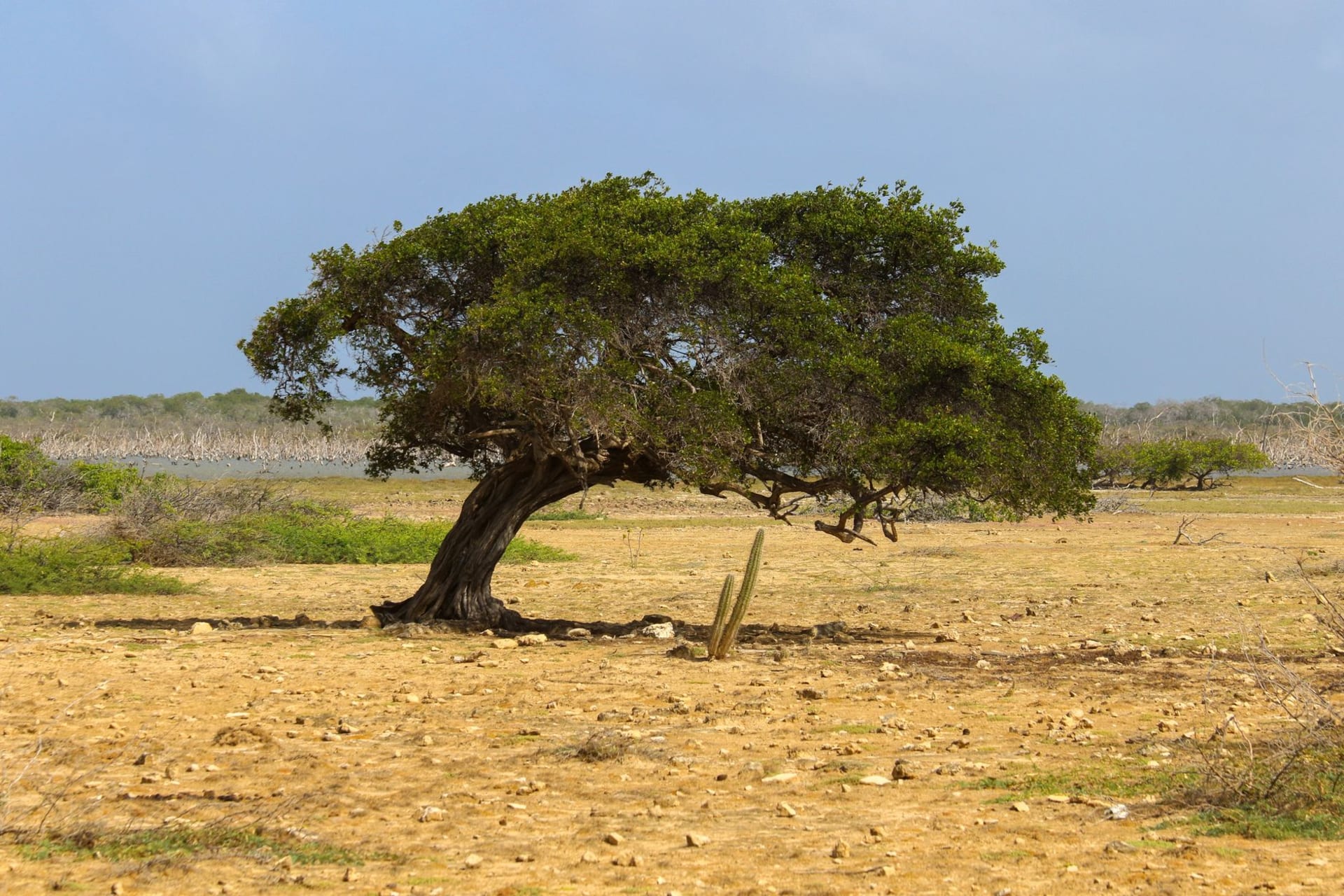
The road into Arikok crosses a threshold that Aruba’s beach side never prepares you for. I turned off the main ring road near San Fuego, through a gate staffed by a ranger who handed me a paper map and said, in the cheerful, unhurried way of someone who loves their job: “Don’t go off trail in the dark, the divi-divi can shred your ankles.” I had no intention of being here after dark. I drove maybe two hundred meters and pulled over just to look. Cardón cacti — the columnar kind, not the low prickly pear — rose three, four, five meters from a landscape the color of dried terracotta. The sky was white-blue with heat. The only sound was wind and something small moving in the brush nearby that I didn’t go to investigate.
Arikok covers roughly twenty square kilometers and protects the island’s most authentic interior: the cunucu, which is how Arubans describe this arid scrubland — a word from Arawak, the indigenous people who shaped everything here before the Dutch arrived. The Arawak weren’t passing through; they were here for centuries, and they left two significant cave systems behind. Fontein Cave and Quadirikiri Cave both contain petroglyphs and pictographs painted onto the walls in ochre and charcoal. In Fontein, I crouched in the low entrance and looked at hand shapes and symbols the archaeologists still argue about, made by people who sat in this exact dim, cool space maybe a thousand years ago. The cave smells of old stone and something faintly animal, and the drawings have a directness — no artifice, no distance — that more polished museums rarely achieve.
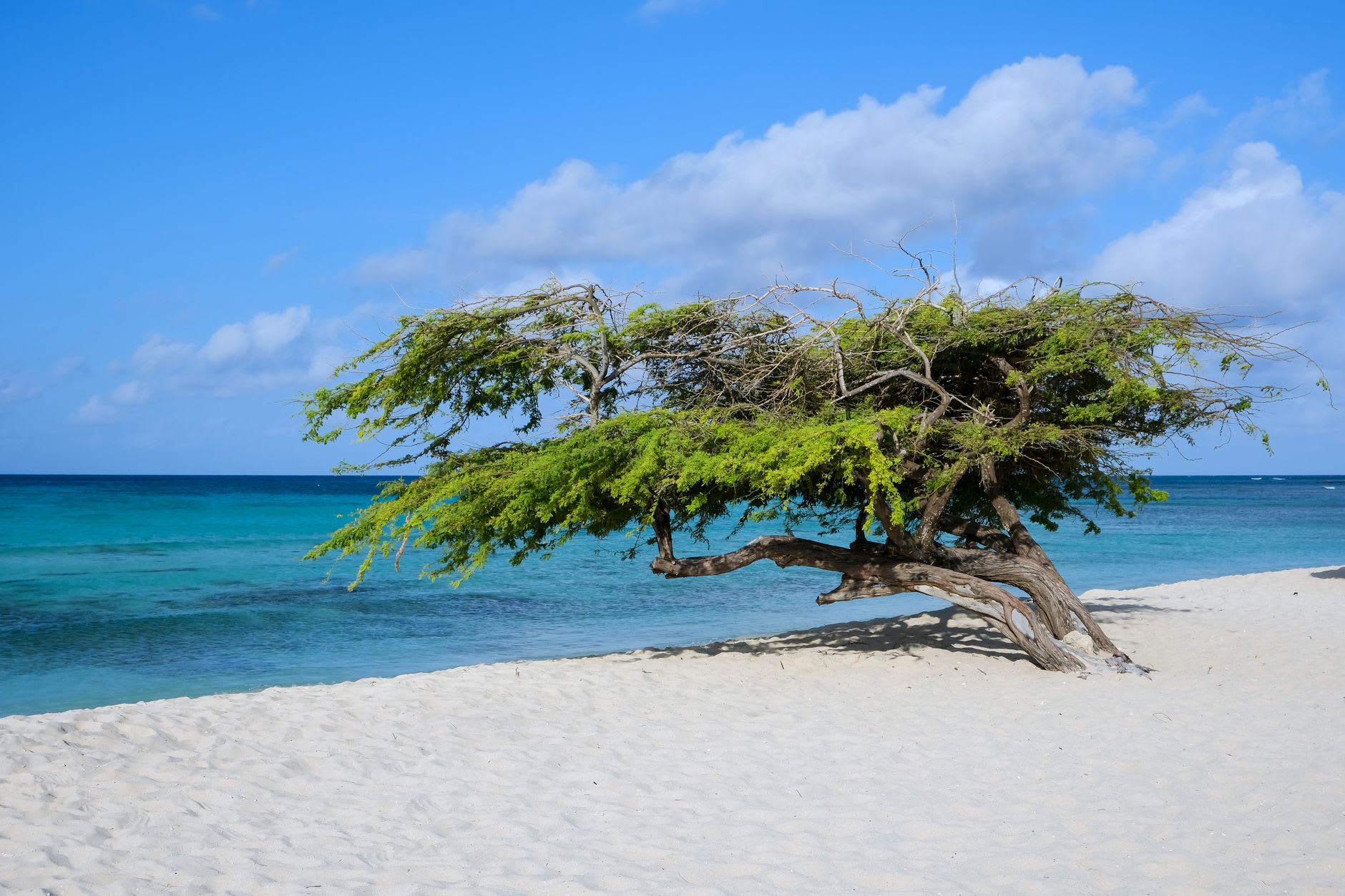
The wildlife surprised me. I’d expected the park to be empty in the way that official protected areas often feel empty — cleaned up, regulated, performatively wild. Instead I kept encountering things: a bright green Aruban whiptail lizard that sat in the path and watched me with reptilian composure, a pair of trupial birds — the orange-and-black national bird — arguing in a cactus overhead, and the donkeys. The island’s wild donkeys are descendants of animals brought by Spanish colonizers in the 1500s and abandoned over subsequent centuries. They wander the park with complete authority, and two of them blocked my car on the trail for several minutes while looking at me with the expression of creatures who know they’re on firm ground legally.
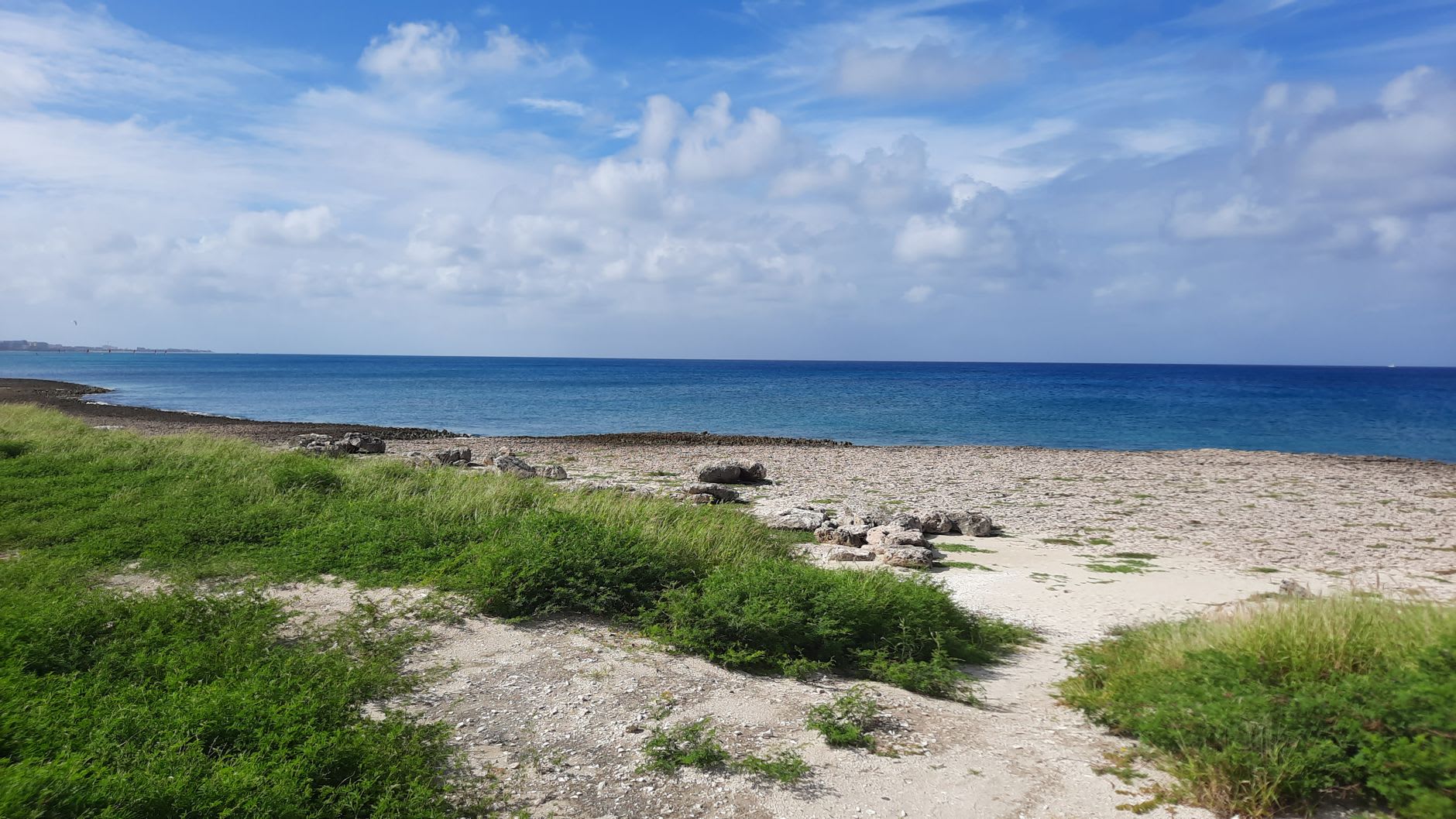
I hiked to Sero Arikok, the highest point in the park, around three in the afternoon when the heat was properly committed. The summit is maybe 188 meters — not dramatic by any metric — but from the top, the island’s geography becomes suddenly legible. The flat leeward coast where the resorts sit, the rougher windward Atlantic shore where the waves have carved blowholes and natural bridges, and between them this scrubby desert interior where practically no one builds anything. You can see Venezuela on very clear days. I couldn’t that afternoon — too much haze — but the Venezuelan coast floated in my imagination across twenty-seven kilometers of open Caribbean.
The Cunucu Arikok hiking trails are well-marked and manageable; the ranger’s map is more reliable than it looks. Water is critical — bring more than you think you need, because the park has no vendors and the heat is serious even in January. A two-liter minimum for an afternoon hike. The natural pool at Conchi is accessible from the park’s north side by rough track — worth its own separate visit, which I’d recommend treating as an early-morning mission before the 4WD tour groups arrive.
When to go: Arikok is best visited October through May, when the heat peaks below forty degrees Celsius and the occasional brief rain softens the trail dust. Avoid midday hiking in any month — the park opens at eight and the smart move is to arrive with that and leave by noon, returning at four for the late afternoon light, which turns the cacti and the rust-colored earth into something that looks like a painting.