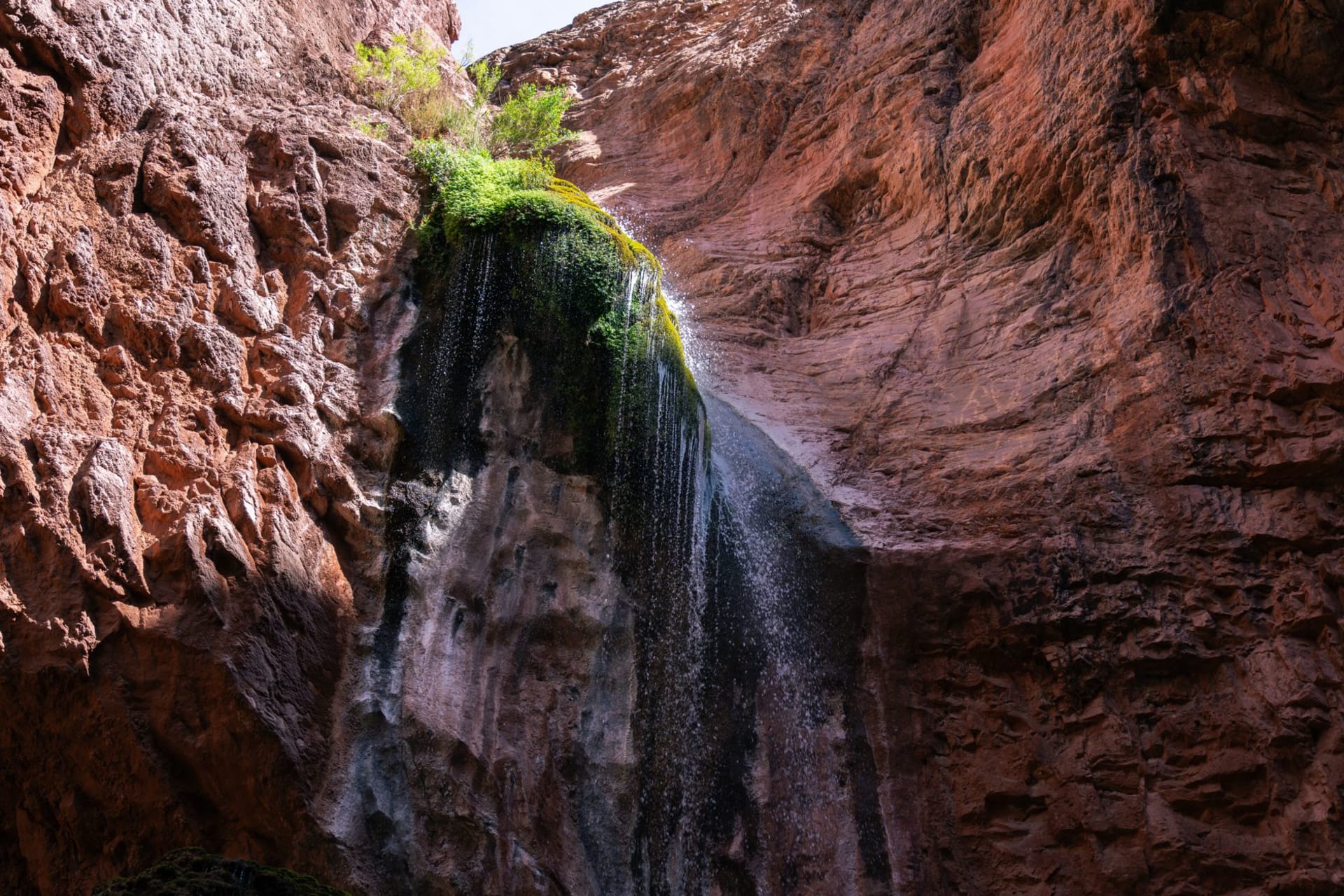
Havasupai
"Nothing in the desert prepares you for turquoise water. It hits like a joke with perfect timing."
The hike into Havasupai starts at the Hualapai Hilltop trailhead at 4am, in darkness, with a headlamp and more weight on your back than you think you’ll need and less than you actually need. The trail drops 300 meters in the first three kilometers through a series of switchbacks cut into the canyon wall, and then levels out into Hualapai Canyon, a narrow corridor of red rock that leads south for eight miles to Supai village. I went in April. The temperature at the trailhead at 4am was around six degrees Celsius, and by the time I reached the canyon floor it was already twenty and climbing. The air smelled of dust and dry grass and something faintly mineral that I later identified as the travertine deposits that give Havasupai’s water its extraordinary color.
The color, when it finally appears, is the thing that stops every conversation. You have been walking through red-rock desert for three or four hours, sweating, watching for rattlesnakes, counting the kilometers, and then the canyon narrows and you round a bend and Havasu Creek appears at your feet — impossibly, impossibly turquoise, the blue-green of a Caribbean lagoon dropped into the Arizona desert by some geographical error that turned out to be a gift. The color comes from the high calcium carbonate content of the water, which precipitates as travertine on the canyon floor and gives the water a reflective quality that turns it opaque in the best possible way. I sat on a rock in the middle of the creek and put my face in it and drank without thinking about it, because the water was cold and clear and I had been walking for hours and some instincts override caution.
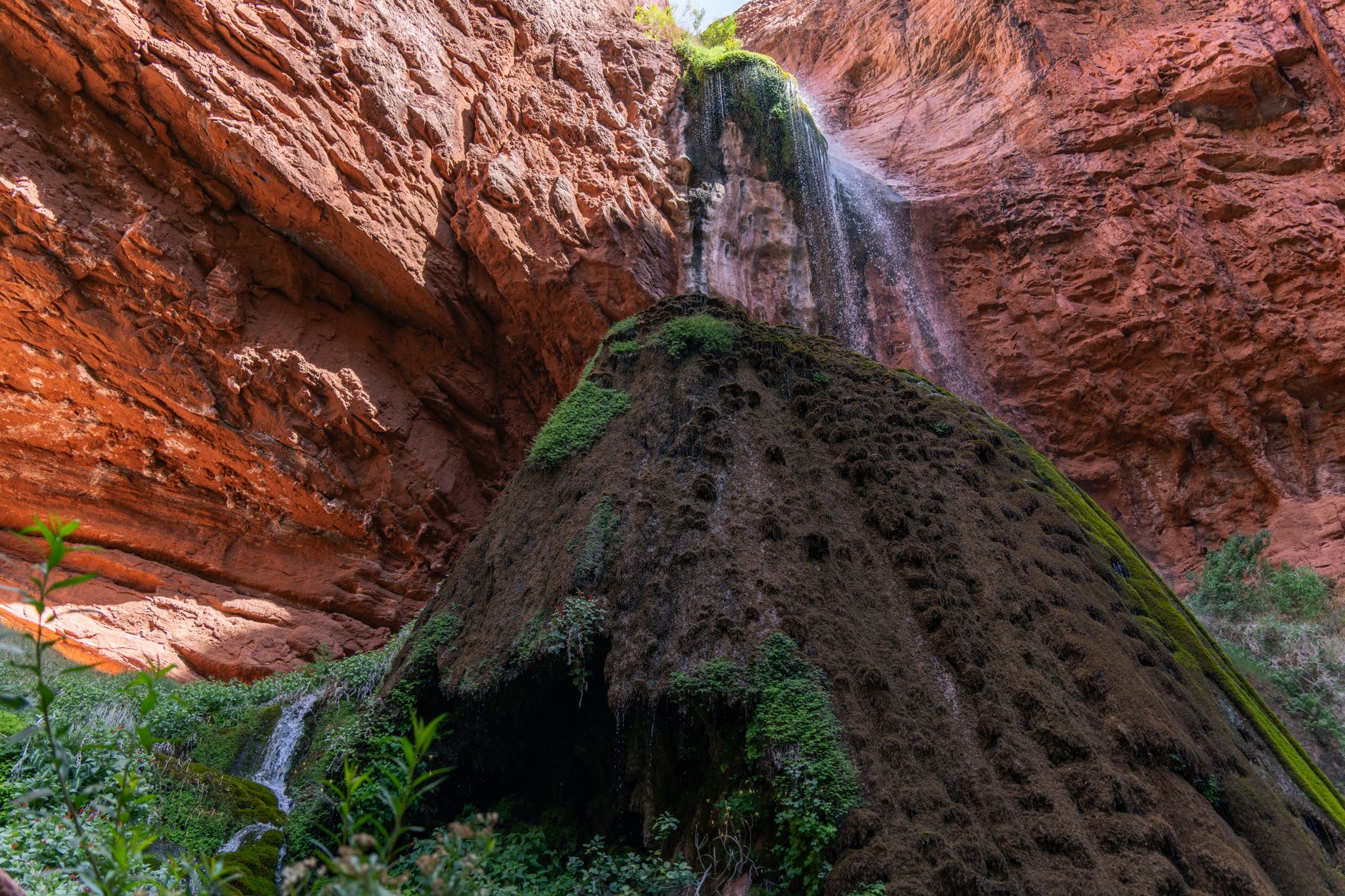
Supai village is the only community in the continental United States that still receives its mail by mule train — a detail that is not quaint but practical, since there is no road into the village and hasn’t been one in modern memory. The Havasupai people have lived in this canyon for centuries and manage the land as tribal territory; all visitors must obtain permits through the tribe’s reservation system, which opens each year in February and fills within minutes for the following spring season. I booked mine six months out and still felt lucky to get a spot. The campground is a kilometer past the village, set between canyon walls in a space where the light is particular — the walls close enough to create their own microclimate, warm even in April, and the stars visible in a narrow band overhead.
Havasu Falls drops thirty meters over a travertine ledge into a pool the color of glacial melt. Mooney Falls, further downstream, drops another fifty meters in a cascade so powerful that the spray soaks you before you reach the bottom — the descent requires fixed chains and a series of iron stakes hammered into the cliff face, and at the bottom you emerge soaking into a pool surrounded by canyon walls draped in maidenhair fern and moss. Below Mooney, the Beaver Falls require a two-hour round-trip wade and scramble through the creek itself, and reward you with a series of smaller falls and pools that are almost entirely deserted even when the campground above is full.
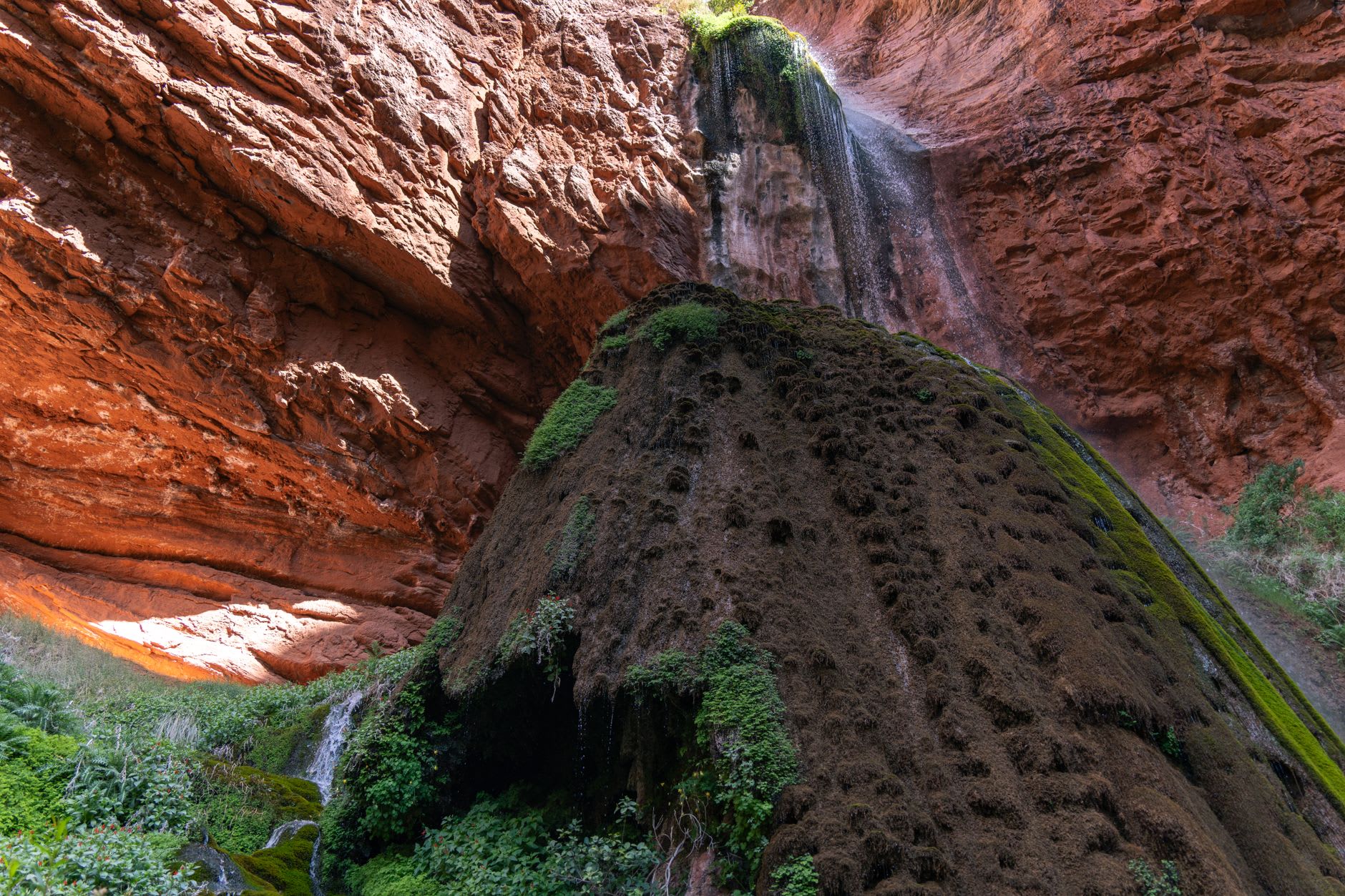
The experience is physical in a way that is not incidental to its beauty but essential to it. You earn Havasupai with your knees and your water consumption and your sleep on a campground cot. The turquoise water, when you finally reach it, feels like something you’ve been given rather than something you’ve paid for. I have visited a lot of places that are difficult to reach and turned out to be overrated. Havasupai is the exception — the difficulty is part of the experience, and the waterfalls, when you finally stand at their base, are as extraordinary as everyone says.
When to go: April through June and September through October are the optimal windows — warm enough to swim, cool enough to hike. July and August bring monsoon rains that can cause life-threatening flash floods through the canyon; the tribe occasionally evacuates the campground with little notice during this period. Permits open in February on the tribe’s website and sell out within an hour; set a reminder and have your payment details ready. Mule reservations for gear transport book separately.