Antelope Canyon
"Standing inside it, I understood why the Navajo consider this place a church."
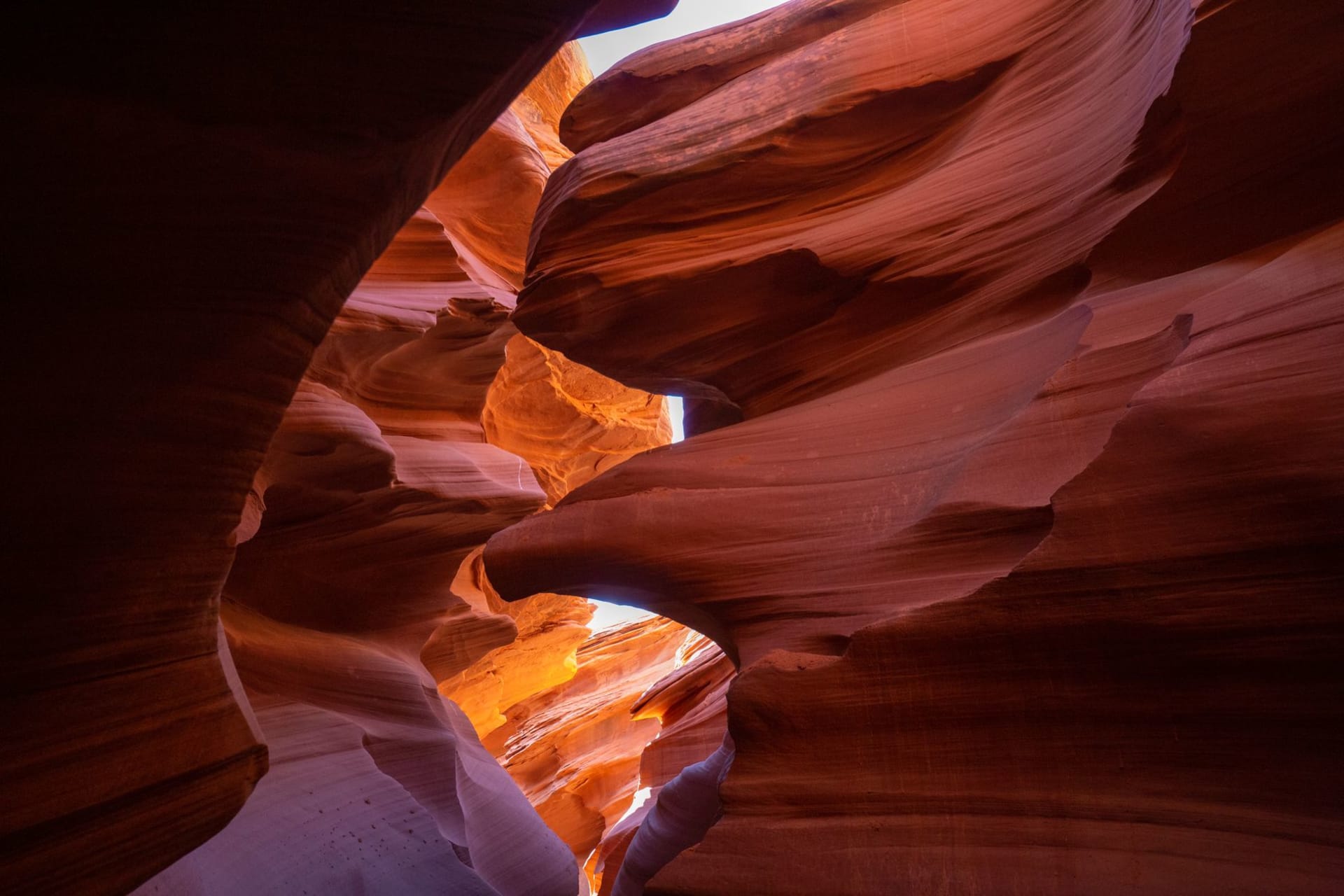
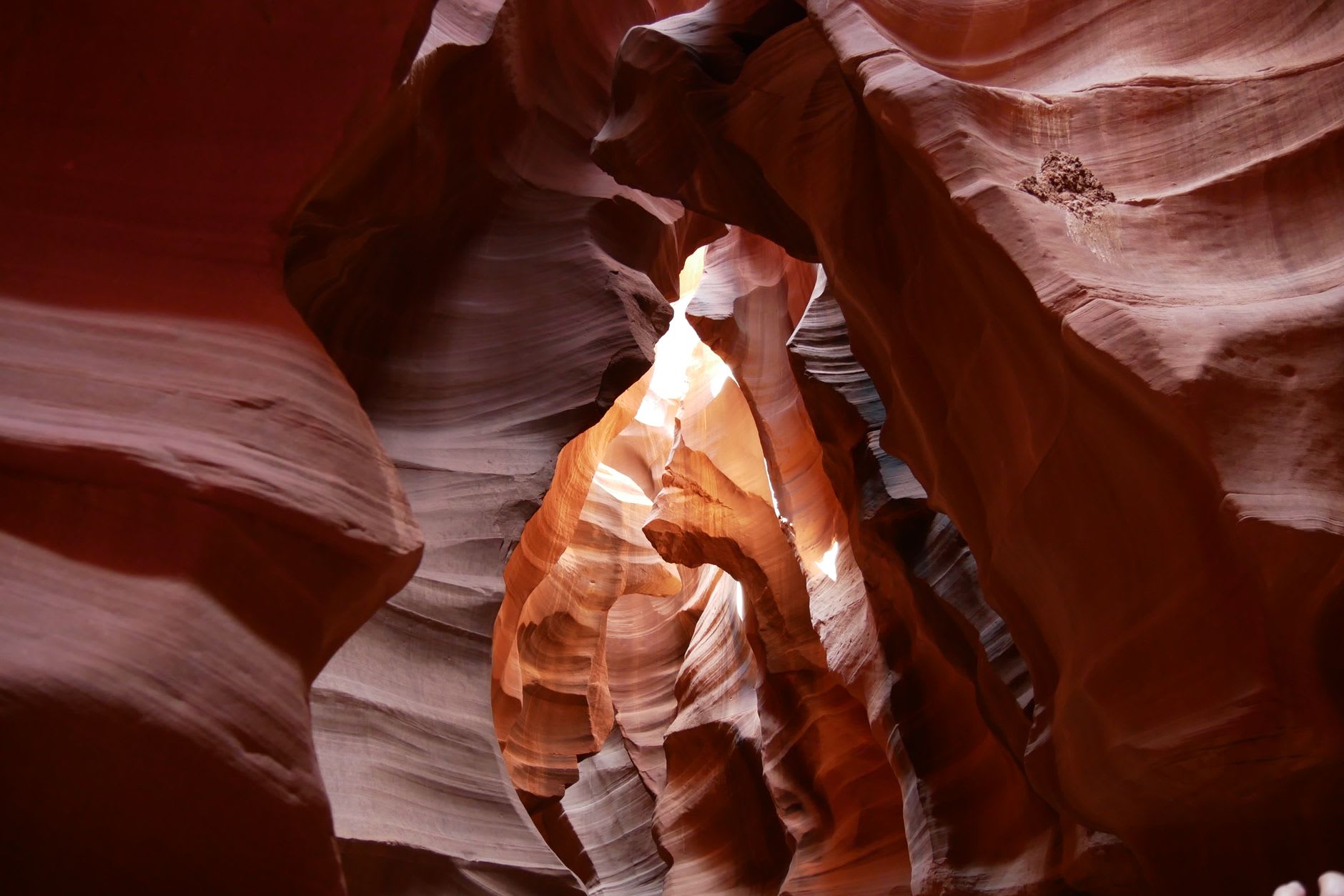
You enter Antelope Canyon through a crack in the earth that barely admits two people walking side by side, and then the walls sweep back and rise and the canyon reveals itself — smooth Navajo sandstone carved by centuries of flash flooding into curves that look hand-finished, the colors shifting from deep burgundy near the floor to tangerine to pale cream at the top, where the canyon opens to a strip of blue sky thirty feet above. The Navajo name for Upper Antelope Canyon is Tse’ bighanilini — “the place where water runs through rocks” — and you can feel that history in every surface, the stone polished and scoured by water into organic shapes, a spiral here, a wave there, the floor still deep with fine orange sand that swirls when the wind moves through.
I went with a Navajo-run tour company, which is the only legal way to enter — the canyon sits on Navajo Nation land near Page, Arizona, and requires a guide. My guide was a young woman named Destiny who had grown up near here and photographed the canyon obsessively in her twenties before deciding she wanted to show it to people rather than document it. She moved through the narrow passages with the ease of someone who knows a building by heart, pointing out formations — a wolf head, a dancing figure, a bear — that the eye doesn’t find unaided. At one point she stopped and told everyone to be quiet. In the silence we could hear a faint sound, almost below the threshold of hearing: the wind moving through the slickrock overhead, the canyon breathing.
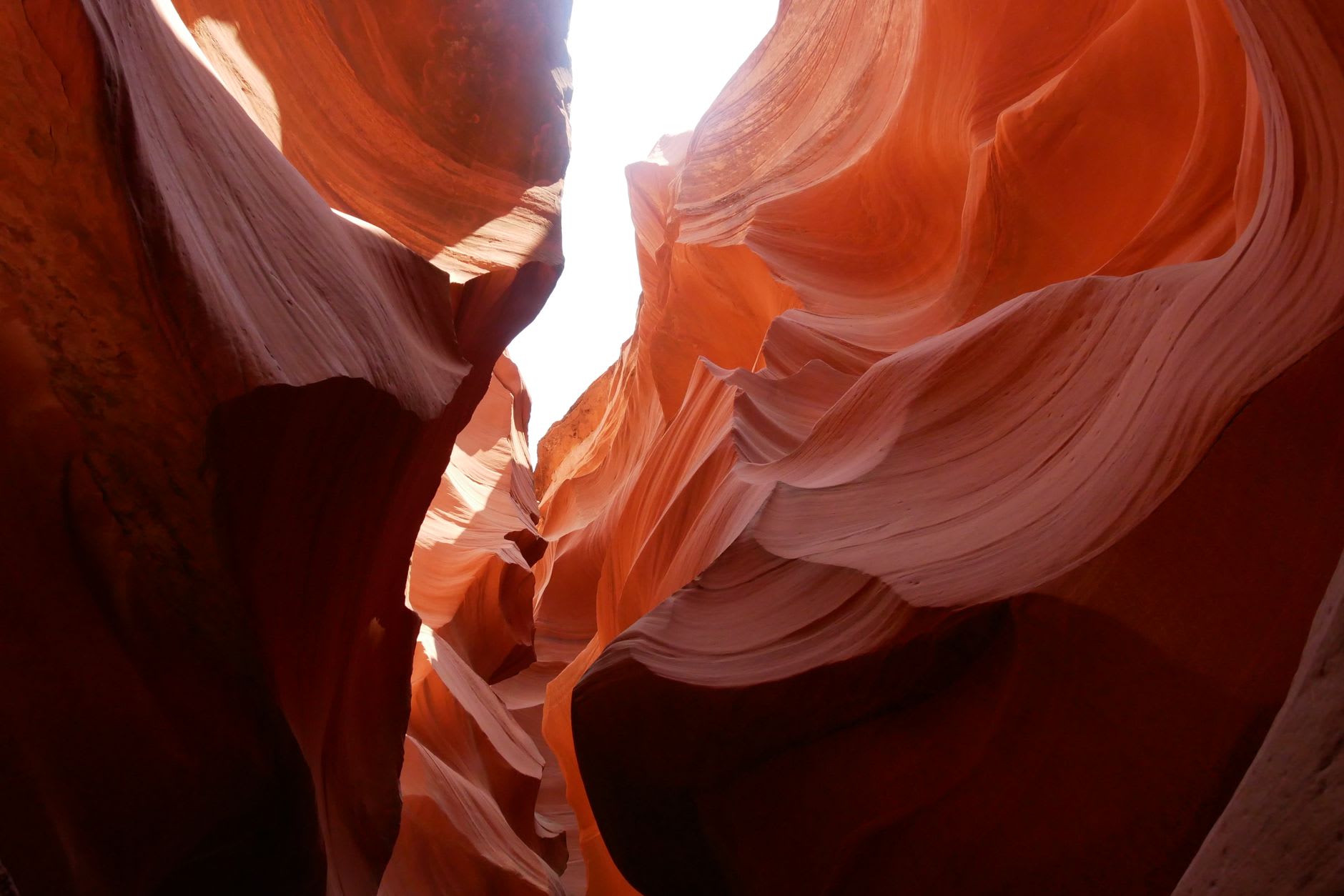
The famous light beams — shafts of direct sun that fall through openings in the canyon ceiling and illuminate the suspended sand into something that looks like solid light — appear in Upper Antelope Canyon between roughly 11am and 1:30pm on sunny days from late March through early October. They are real. Photographs do not exaggerate them. The beam enters from above, hits the floating dust and sand, and resolves into a column of light so bright and so clearly defined against the shadowed canyon walls that it looks like a stage effect, something installed by a production designer with expensive equipment and too much artistic ambition. I spent twenty minutes watching one beam move across the canyon floor as the earth rotated, the column of light shifting by centimeters, and the other tourists around me stood quietly in a way that people usually only stand in places they recognize as sacred.
Lower Antelope Canyon — a separate slot system, less visited and requiring ladders to navigate — is narrower and longer and has a different quality of light, more diffuse, filtering down through the overhead slot and bouncing between walls in ways that produce color combinations that have no name. The graffiti that mars many natural places is largely absent here; the Navajo manage the canyon with a care that reflects its status as something beyond a tourist attraction.
The area around Page has other reasons to visit. Lake Powell — the reservoir created by Glen Canyon Dam — has divided opinion for decades, the dam having flooded Glen Canyon in 1966 in what many conservationists still call the greatest environmental mistake in American history. What remains is a strange beauty: red canyon walls dropping into blue water, houseboats drifting through formations that once stood dry. The Horseshoe Bend of the Colorado River, five kilometers south of Page, can be reached in a twenty-minute walk from the highway and gives you a view of the river making a 270-degree bend through Navajo sandstone 300 meters below — the kind of geology that stops conversation.
When to go: Late March through early October for the light beams in Upper Antelope Canyon; aim for midday visits between April and September for the best beam conditions. Shoulder seasons (April–May and September–October) have better tour availability and less overwhelming crowd pressure than midsummer. Book tours weeks in advance; this is one of the most visited slot canyons in the world and same-day access is rarely possible.