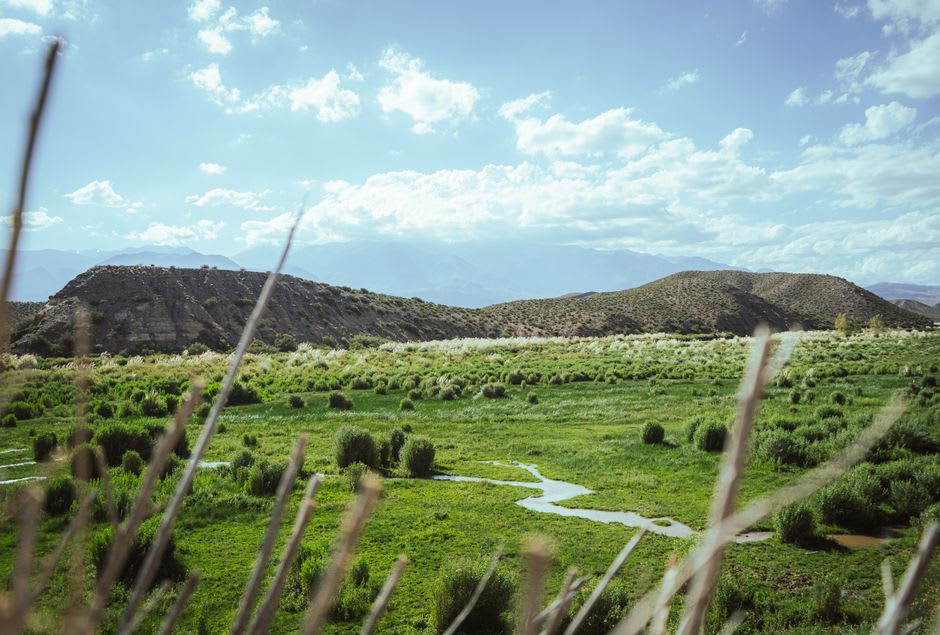
A high desert valley on the road to Chile, framed by red rock formations and some of the widest Andean skies in the province.
Uspallata exists in most travelers’ itineraries as a name on a road sign between Mendoza and the Chilean border, somewhere to glance at from a bus window on the way to somewhere more famous. We stopped on purpose, mostly because I’d read that parts of Seven Years in Tibet were filmed in the surrounding hills, and once we arrived it was obvious why: the valley looks like nowhere else in Argentina.
A Valley Wide Enough to Get Lost In
The road through Uspallata sits at nearly 2,000 meters, in a broad valley pinched between two mountain ranges, with red sandstone formations rising out of pale scrubland in a way that felt more like southern Utah than South America. Lia kept asking me to pull over for photos, and I kept obliging, until what should have been a twenty-minute detour off the main highway took the better part of two hours.
Inca Ruins and an Old Rail Line
Just outside town, the ruins of Las Bóvedas date back to pre-Hispanic metallurgy, small stone structures that once smelted ore, and the site is nearly always empty when we passed. The old Transandine railway, which used to connect Mendoza to Chile before it was abandoned mid-century, still cuts across the valley floor in places, rusted rails half-buried in dust, an odd and slightly melancholy monument to a route that never quite worked out.
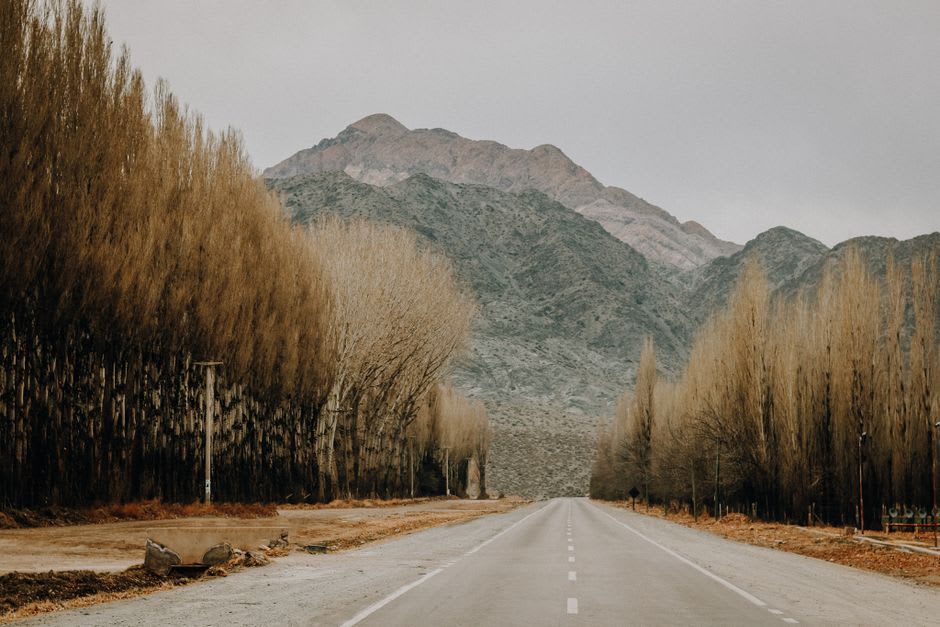
We stayed the night at a simple guesthouse run by a family who’d lived in the valley for three generations, and the silence after dark was the kind that makes you lower your voice without meaning to.
When to go: November through March for reliably open mountain roads and warm days with cold, clear nights; the pass toward Chile can close with snow in winter, so shoulder-season travelers should check conditions before setting out.
Keep exploring
More from Argentina
 argentina
 Valdes Peninsula
Right whales breach offshore while penguins waddle ashore on this UNESCO-listed Patagonian wildlife sanctuary.
Explore argentina
 Viedma
The quiet river capital of Rio Negro province, once slated to become Argentina's new federal capital.
Explore argentina
 Villa Carlos Paz
Córdoba province's classic lake resort town, built around Lago San Roque and famous, unavoidably, for its giant cuckoo clock.
Explore argentina
 Villa General Belgrano
A Germanic-Bavarian town in the Cordoba sierras founded by shipwreck survivors, famous for South America's biggest Oktoberfest.
Explore argentina
 Villa Gesell
A pine-forested coastal town built by a Danish immigrant, quieter and stranger than its bigger neighbor Mar del Plata.
Explore argentina
 Villa La Angostura
A quiet lakeside town on Nahuel Huapi's northern shore, guarding the cinnamon-barked Arrayanes forest.
Explore