A red sandstone canyon in La Rioja province where condors ride the thermals between walls carved by a vanished river.
The guide at Talampaya clapped once, loudly, in the middle of the canyon’s widest stretch, and the sound came back to us three distinct times from three different rock faces before it finally gave up. I had heard about the acoustics before arriving and assumed it was the usual tourist embellishment. It wasn’t. Talampaya is a canyon that behaves like an instrument.
A River That Left Only Its Shape
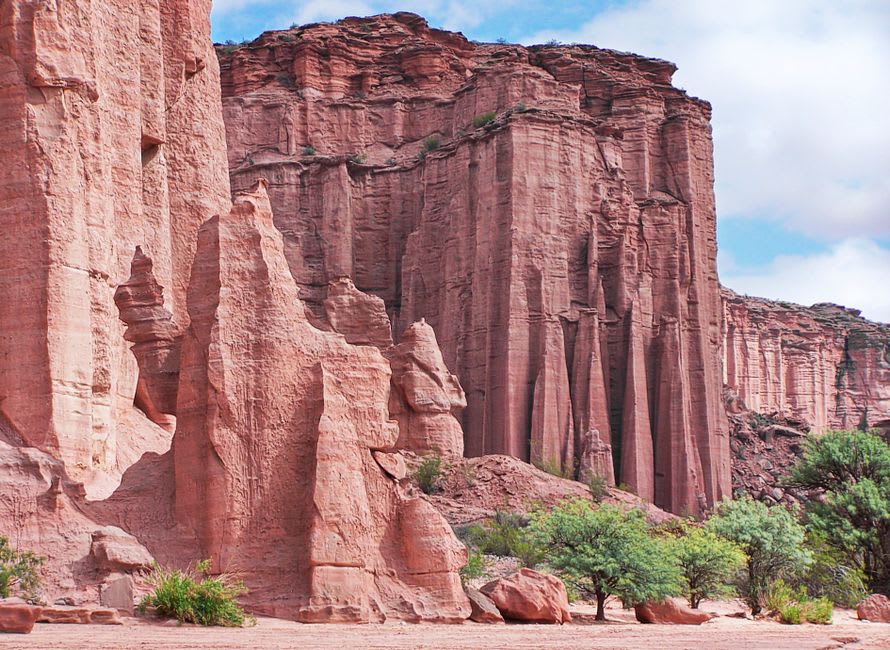
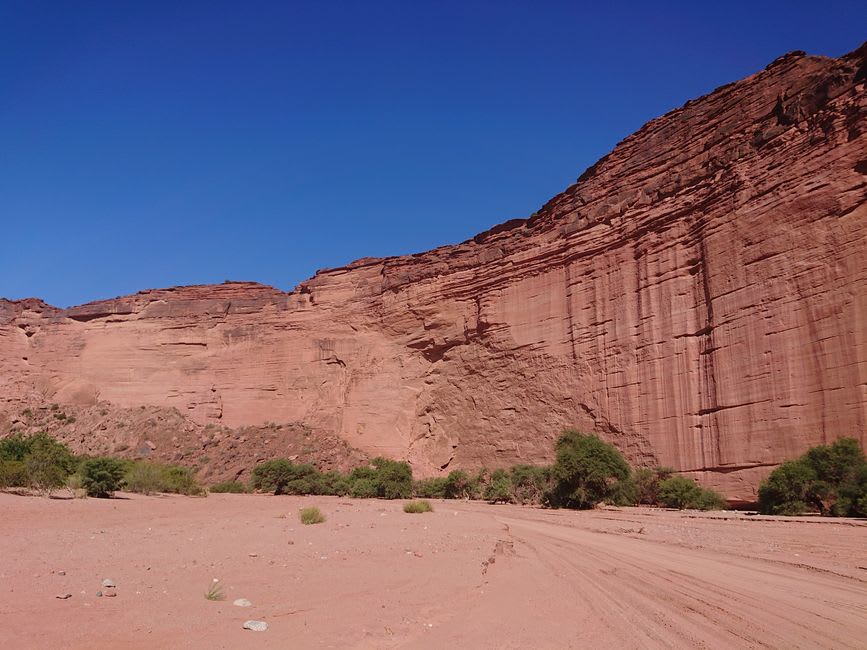
Talampaya was carved by a river that no longer exists in any meaningful volume, cutting through 200-million-year-old red sandstone until it left behind sheer walls that in places rise 150 meters straight up. You can only enter with a park-authorized vehicle, in a small group, which initially annoyed me — I like to wander at my own pace — until I understood it was the only way the canyon stays this quiet and this preserved. Our driver knew exactly where to stop the truck so the cliffs framed the sky into a narrow blue ribbon overhead.
Condors on the Thermals
The canyon’s upper cliffs host a colony of Andean condors, and watching them work the rising afternoon air is a genuine spectacle — wingspans close to three meters, barely a flap between one ridge and the next, riding invisible currents with an economy of motion that made me feel clumsy just standing there watching. Lia spotted the first one before I did and grabbed my arm hard enough that I actually flinched. We counted eleven by the time we left, though our guide swore there were more circling too high to see clearly.
Petroglyphs and the People Who Were Here First
Scattered along the canyon walls are petroglyphs left by pre-Hispanic peoples who used Talampaya as a ceremonial and practical route through the mountains — spirals, animal figures, hand shapes pecked into the dark desert varnish coating the rock. Our guide pointed out a panel most visitors miss entirely, tucked into a shaded alcove, and said it had probably been made more than a thousand years before anyone thought to protect it. It didn’t need protecting until people like me started showing up.
When to go: April through October. Midday light flattens the canyon’s color, so book an early morning or late afternoon tour if the schedule allows — that’s when the red truly ignites.
Keep exploring
More from Argentina
 argentina
 Tandil
A sierra town famous for its balancing rock, its cured meats, and a food culture built entirely around cheese and salami.
Explore argentina
 Tierra del Fuego National Park
Windswept coastal forest at the southern tip of the Americas, minutes from Ushuaia and the end of the road.
Explore argentina
 Tigre
A river delta of islands and channels just outside Buenos Aires — a watery escape from the capital's hustle.
Explore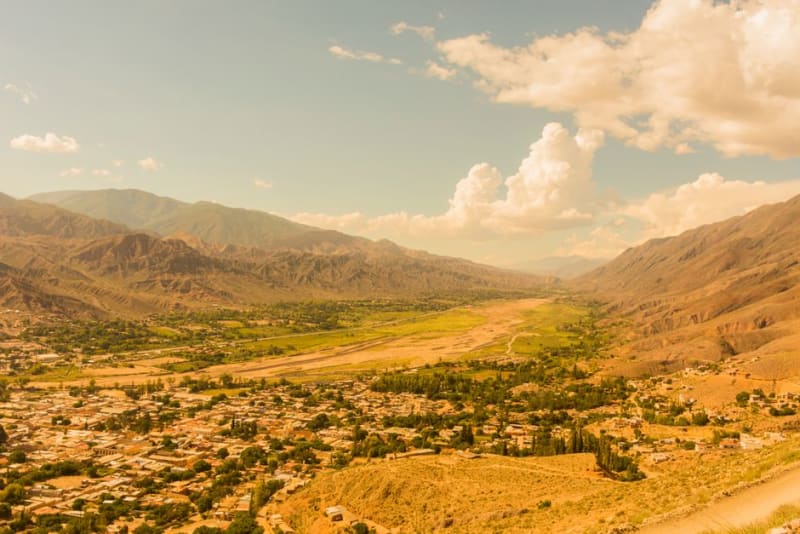 argentina
 Tilcara
A Quebrada de Humahuaca town built around a pre-Inca pucará fortress, with the region's best archaeology and its liveliest carnival.
Explore argentina
 Tinogasta
A desert oasis wine town in Catamarca province where poplar-lined irrigation channels turn hard country green.
Explore argentina
 Trelew
The commercial heart of Welsh Patagonia, home to one of Argentina's finest dinosaur museums.
Explore