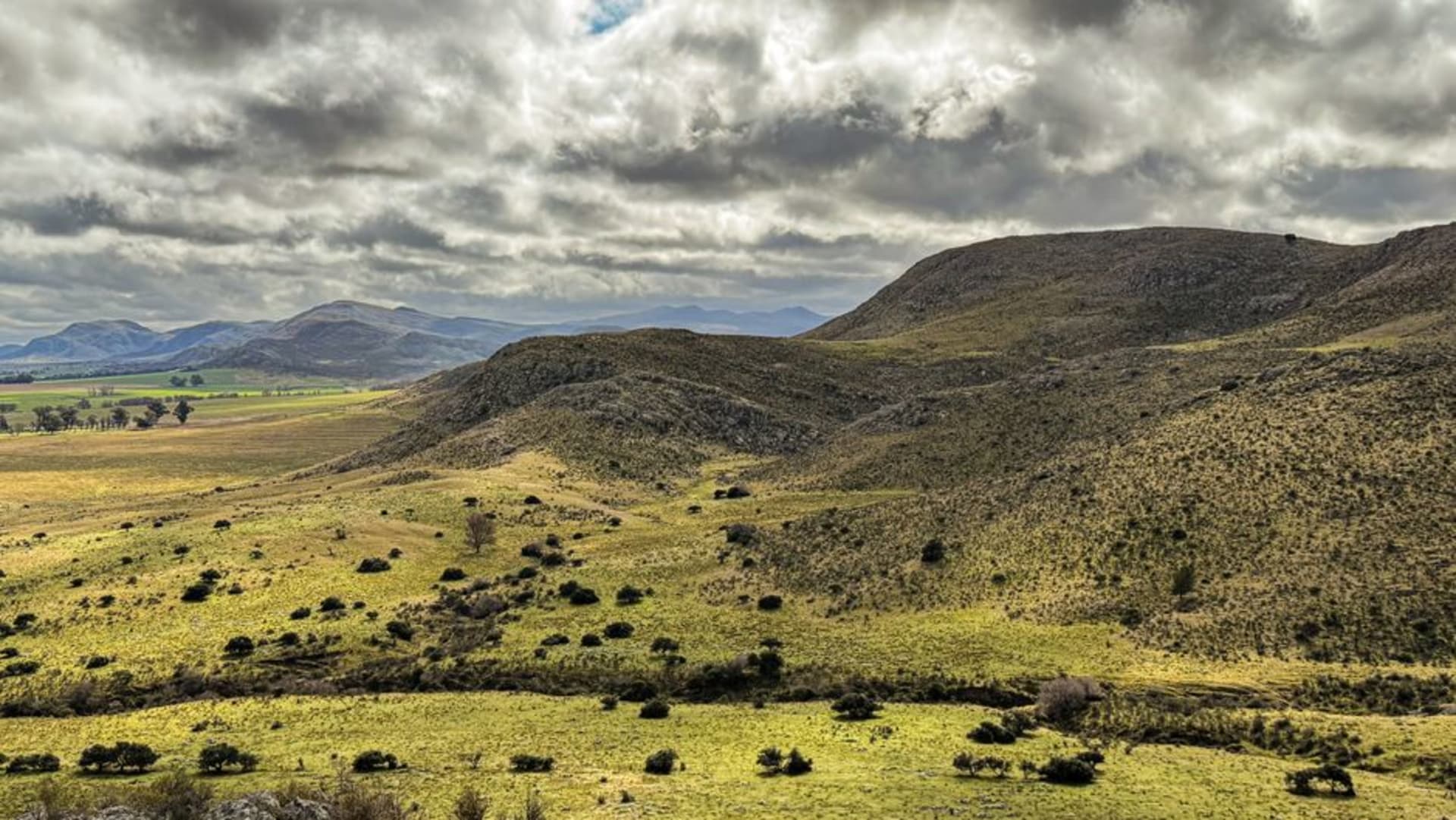
Sierra de la Ventana
"Flat, flat, flat, flat — and then a mountain range that seems to have wandered in from somewhere else."
A range of ancient, wind-scoured hills rising unexpectedly out of the Pampas, anchored by the hiking village of Villa Ventana and the summit of Cerro Tres Picos.
Nothing prepares you for Sierra de la Ventana if you’re driving in from the north, because for two hours the Pampas do exactly what the Pampas do — nothing, in the most total sense, grass to the horizon in every direction — and then the road bends and there’s suddenly a jagged ridge of rock rising a thousand meters out of flat farmland like it was dropped there by mistake. Lia actually said “wait, what” out loud, which is not a normal Lia reaction to landscape. These are some of the oldest mountains on the continent, worn down by geologic time into something craggier and stranger than their modest height suggests.
Villa Ventana and the Feel of the Place
We based ourselves in Villa Ventana, a small village of stone cabins tucked into native tala and coronillo woodland at the foot of the range, and it has the unhurried, slightly bohemian energy of a mountain town that never fully commercialized. No chain anything. A general store, a handful of small restaurants, trails leading straight out of town into the hills. I liked that you could walk out your cabin door and be genuinely hiking within ten minutes.
Cerro Tres Picos
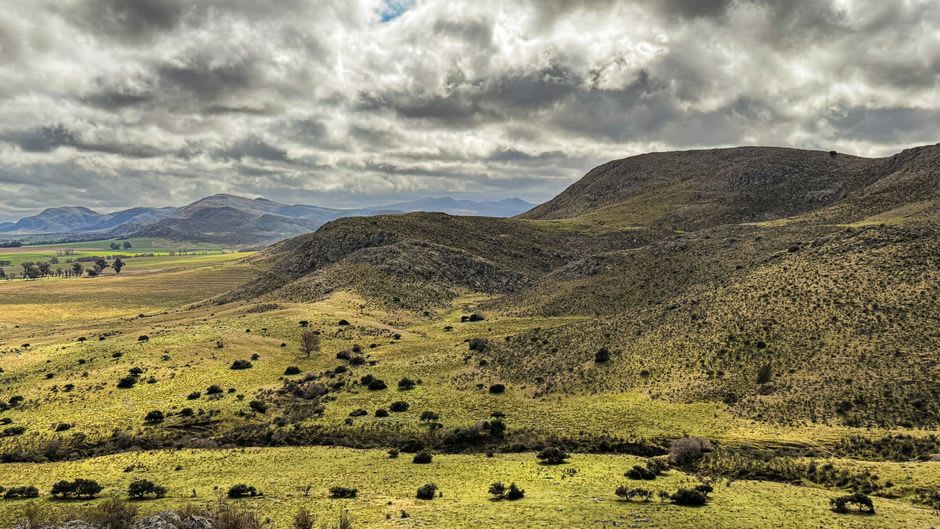
The main event, if you’re willing to earn it, is Cerro Tres Picos — at 1,239 meters the highest point in Buenos Aires province, and a genuinely demanding day hike across private land that requires a permit and, in practice, a local guide who knows which gate to open. We did it with a guide named Hernán who’d grown up on the ranch at the base and clearly still found the mountain interesting after what must have been hundreds of ascents. The final scramble to the three rock summits that give the peak its name is exposed enough that I stopped talking for the last twenty minutes, which for me is saying something.
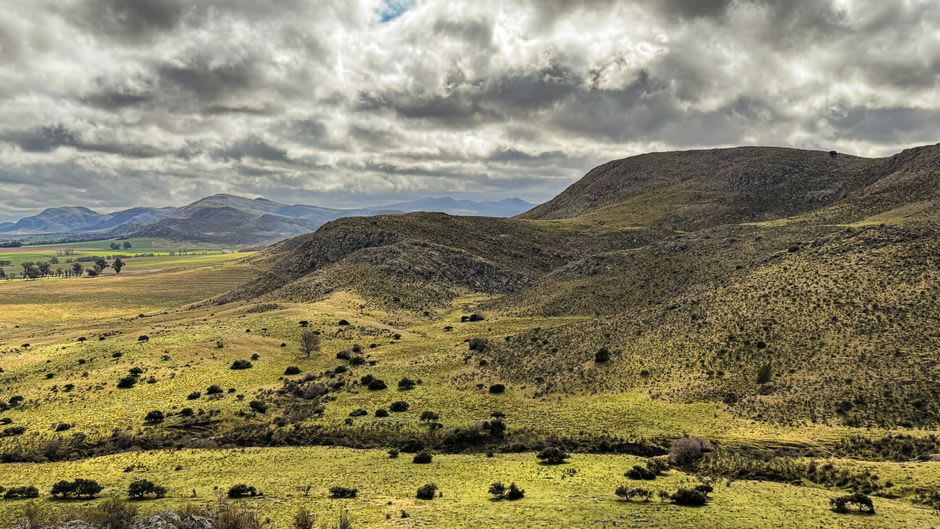
From the top, the view is the whole point of the trip distilled into one image — the sierra folding away in ridges below, and beyond it, the Pampas resuming their flatness in every direction like the mountains were never there at all. Hernán told us the wind up top averages something absurd, and that day it lived up to the reputation; I had to brace against a rock to take a photo that didn’t come out blurred.
When to go: October through April for stable hiking weather, with November and March offering the best combination of cool temperatures and long daylight. Book the Tres Picos permit and guide at least a few days ahead — access is limited and it fills up on weekends.