Rosario
"Buenos Aires' little sister, except she's not that little and she's not that impressed with you."
A confident river city on the Paraná, birthplace of Che Guevara and the national flag, with a riverside culture that rivals Buenos Aires without trying to be it.
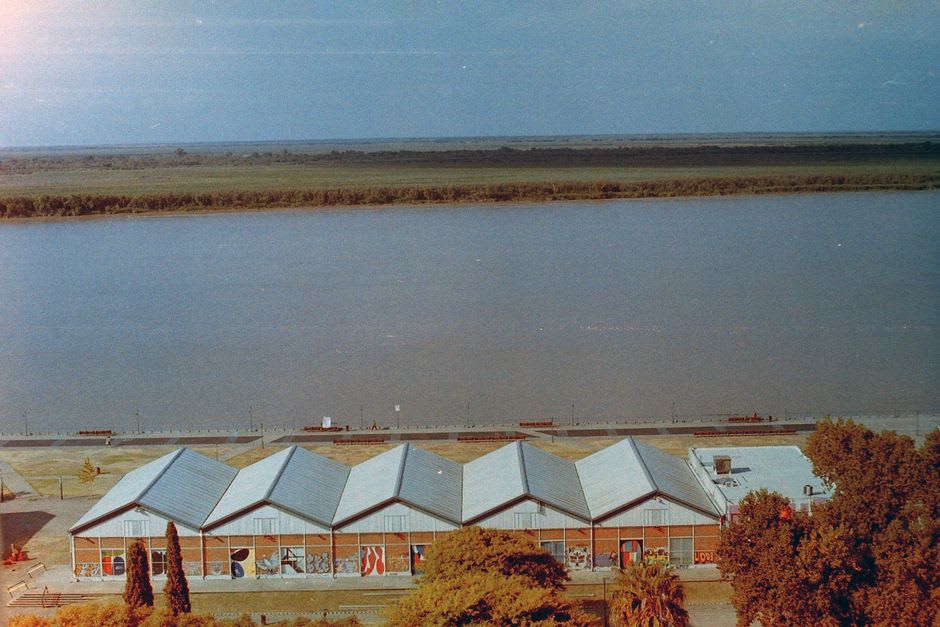
Rosarinos have a specific chip on their shoulder about Buenos Aires, and after three days there I understood exactly where it comes from. Rosario is the third-largest city in Argentina, sits on a river as wide and as brown-gold as anything in Buenos Aires, produced both Che Guevara and Lionel Messi, and gets treated, in the national imagination, as a footnote. Nobody I met there let this pass without comment. Lia found it charming. I found it entirely fair.
The Monumento and the River
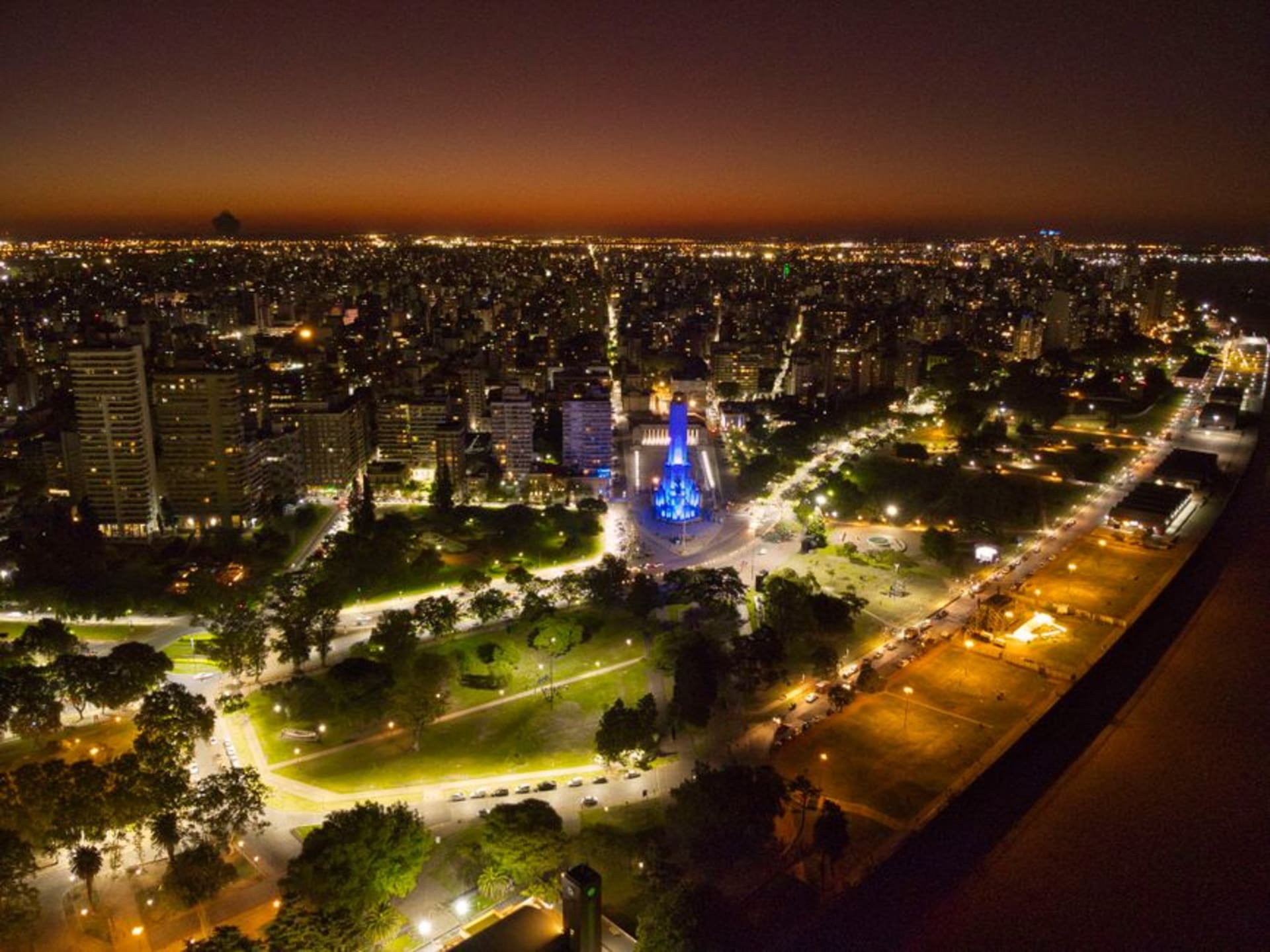
The Monumento a la Bandera dominates the skyline from almost anywhere near the water — a soaring 1950s civic monument built on the spot where Manuel Belgrano is said to have raised the Argentine flag for the first time in 1812, and it has a scale and solemnity that surprised me for a monument I’d never heard mentioned outside Argentina. I climbed the tower at sunset and the view over the Paraná, wide enough here that the far bank blurs into haze, made the climb worth it on its own.
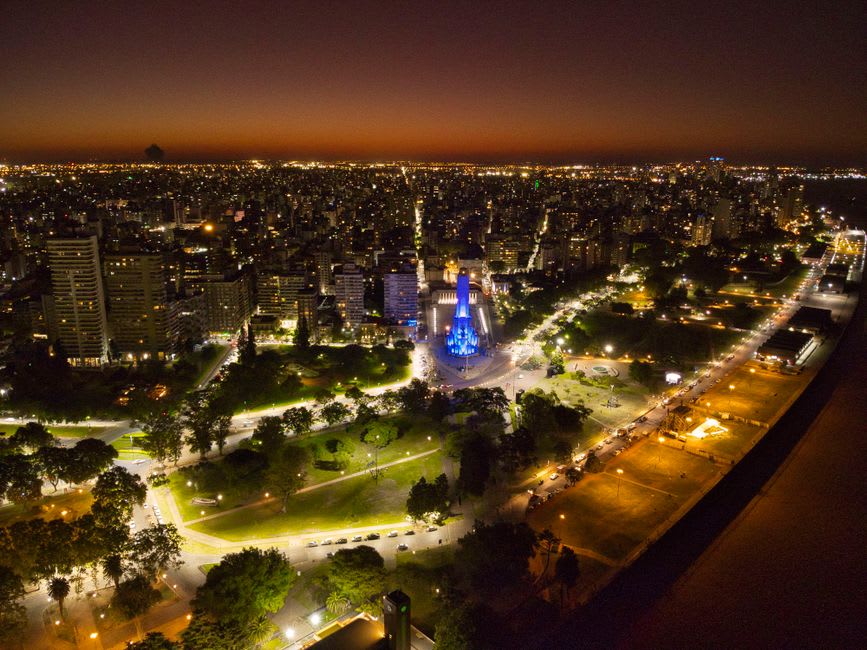
Below the monument, the riverfront parks — a long green ribbon called the Costanera — are where Rosario actually lives in the evenings. We walked it at golden hour and it was full: joggers, mate drinkers in folding chairs, kids on bikes, couples doing the specific slow lean-against-the-railing thing that river cities seem to inspire everywhere. It’s a genuinely well-used public space, better maintained and more alive than some of what I’ve seen along the Río de la Plata in the capital.
Che’s City, Quietly
Rosario doesn’t make a huge production of being Che Guevara’s birthplace — there’s a modest plaque on Calle Entre Ríos marking the building where he was born, and a mural or two around town, but nothing like the shrine I half expected. I found the understatement more interesting than a monument would have been. The house itself is a private residence now, and a couple having coffee on the corner across from it barely looked up when I stood there taking a photo.
The city center around Plaza San Martín and the pedestrian Calle Córdoba has real energy — cafés, bookstores, a university crowd that keeps the bars going late without the self-conscious cool of Palermo. It felt like a real city living its own life rather than performing for visitors, which after Buenos Aires was a relief.
When to go: March through May and September through November for mild river-city weather. Summer along the Costanera is lively but genuinely hot and humid, and locals mostly retreat indoors during the worst of it.