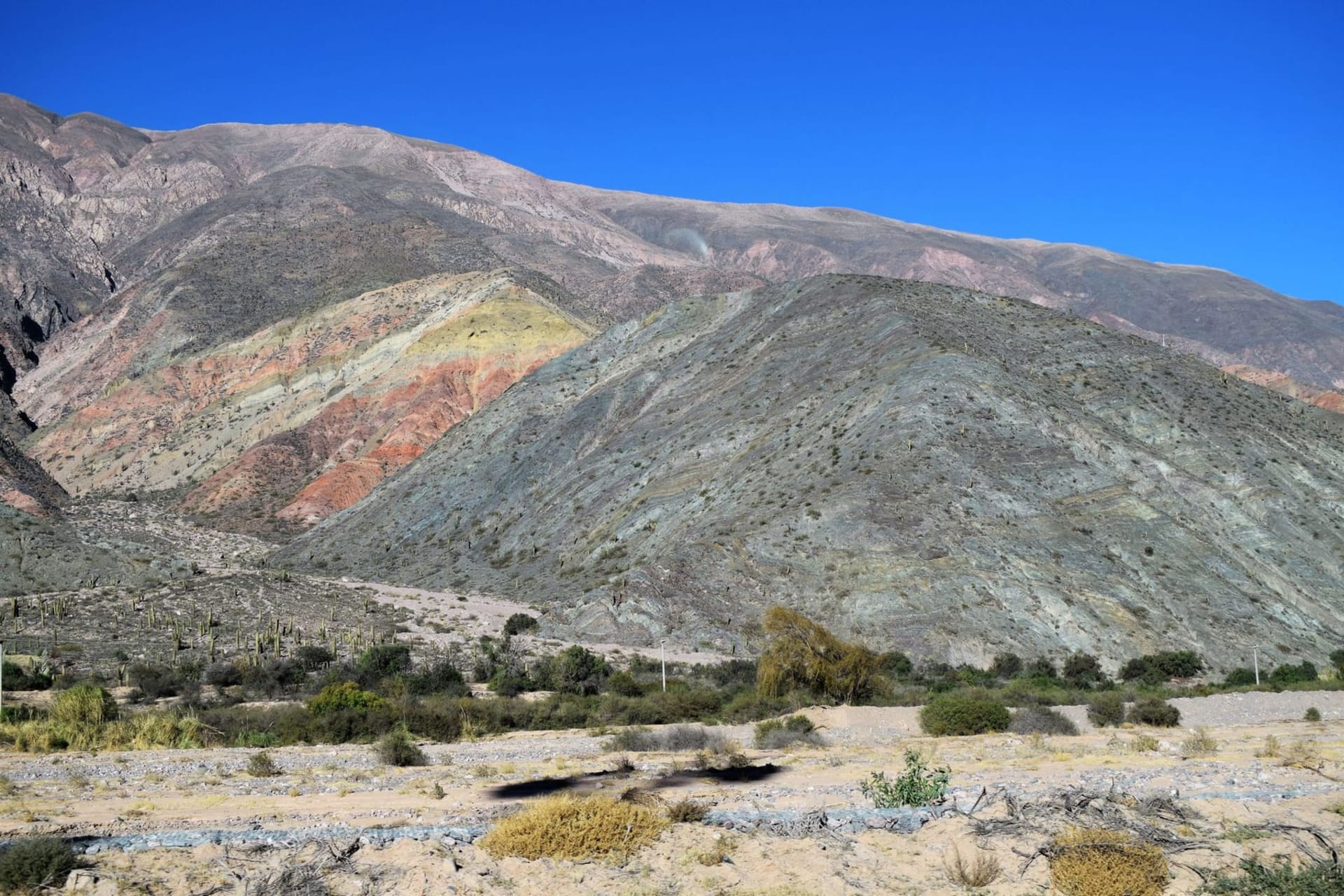
Quebrada de Humahuaca
"The Hill of Seven Colors is either a geological accident or something far more deliberate."
A UNESCO-listed gorge of 14 colors where ancient Andean cultures, cactus, and carnival traditions live together.
The bus from Jujuy climbed for three hours through a gorge that kept changing its mind about what color to be. Brick red. Burnt sienna. A deep arterial purple. Then a green so oxidized it looked like it belonged on a copper roof. By the time we pulled into Tilcara, Lia had stopped talking and was simply pressed against the window with her forehead touching the glass. I understood why — there is nothing useful to say when a landscape does that to you.
This is the Quebrada de Humahuaca — a 155-kilometer slash through the Andes that has been a trade route since pre-Inca times, a UNESCO World Heritage Site since 2003, and one of those places that resists the vocabulary you bring to it.
Tilcara and the Ruins Above the Valley
Tilcara is the gorge’s most livable village — small enough to walk end to end in twenty minutes, substantial enough to have a proper market on Belgrano street on Saturday mornings, where women in pollera skirts sell fresh humitas, dried llama jerky, and a purple corn chicha that is fermented and dangerous in the best way. I ate a locro here, a thick Andean stew of corn, white beans, and pork, at a sidewalk table while a man with a charango played something that had no beginning or end. The stew arrived in a clay bowl, steam rising in the cold morning air, and I burned my tongue on the first spoonful and did not regret it.
Above the village, the Pucará de Tilcara is a pre-Columbian fortress reconstructed in the early twentieth century with varying degrees of archaeological accuracy. Lia was skeptical — she has a low tolerance for reconstructions that feel more theme park than history — but what matters is not the stonework itself, it’s the position. Standing on that hill, the gorge opens in both directions, and the scale of the rock formations becomes comprehensible for the first time. The walls are alive with color: strata of iron oxide and copper and manganese laid down over millions of years, tilted and compressed until they emerged looking intentional.
The Hill of Seven Colors
The Cerro de los Siete Colores above the town of Purmamarca is the gorge’s defining image — photographed from the main plaza at dawn, when the light comes low and raking from the east and the shadows deepen each color into something almost operatic. I arrived at six in the morning, alone except for a single vendor setting up her stall, hands wrapped around a thermos of mate. I understood immediately why the hill has accumulated so much mythology. It does not look geological. It looks painted.
What I did not expect was the walking path that circles the entire formation — two hours through quebrada scrub and giant cardón cactus, past a dry streambed and a small shrine with fresh flowers and an empty water bottle left as an offering. Halfway around, on the back side the postcard never shows, I found a section of wall where the colors ran in diagonal bands from rust to cream to pale green, and there was no one else there at all. No vendor, no tour group, no sound except the wind moving through dry grass. That half-hour alone on the back of the hill was the best thing I did in the Quebrada.
Humahuaca and the Carnival
The town of Humahuaca itself is the gorge’s northern anchor — quieter than Tilcara, older-feeling, with a church on the main plaza that dates to the seventeenth century and a monument to the heroes of independence that plays a brass-band recording at noon sharp, the mechanical kind that startles you if you are standing too close. I happened to arrive in late February, during the weeks of carnival, when the streets fill with comparsas — masked figures in elaborate costumes representing the urkupiña, the Pachamama, the devil himself in a sequined suit. Confetti and water balloons rained on us from second-floor balconies. The air smelled of chicha and something sweeter underneath it — copal resin burning at every corner. Carnival here is not Rio. It is older and stranger and less self-conscious, and I think more honest because of it.
When to go: April through June for clear skies, warm days, and thin crowds. February if the carnival pulls you — but book accommodation months ahead and embrace the chaos entirely.