Posadas
"Posadas faces Paraguay across the water and somehow still feels entirely its own."
Misiones' river capital, rebuilt along a wide Costanera on the Paraná, with Paraguay visible across the water.
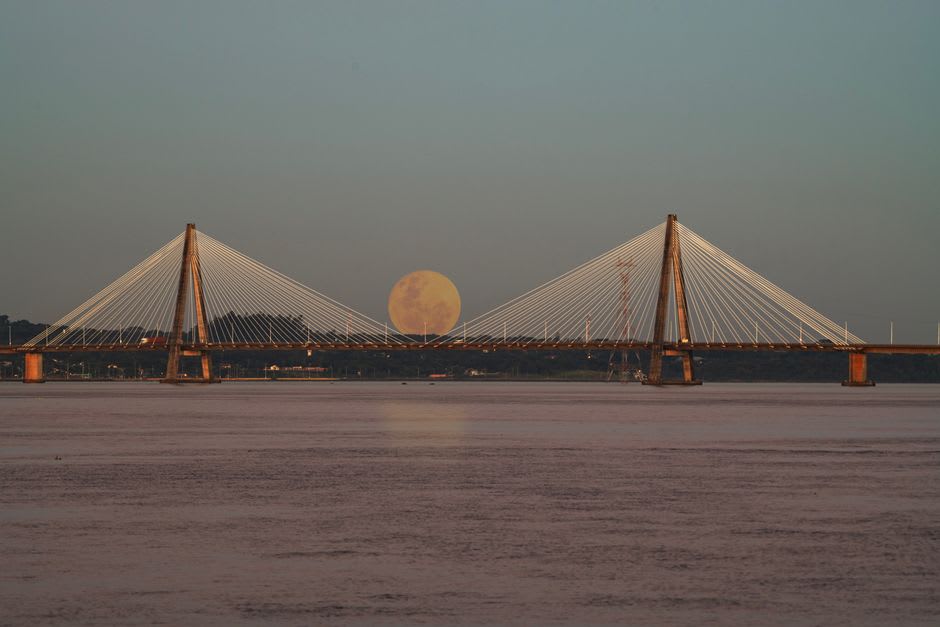
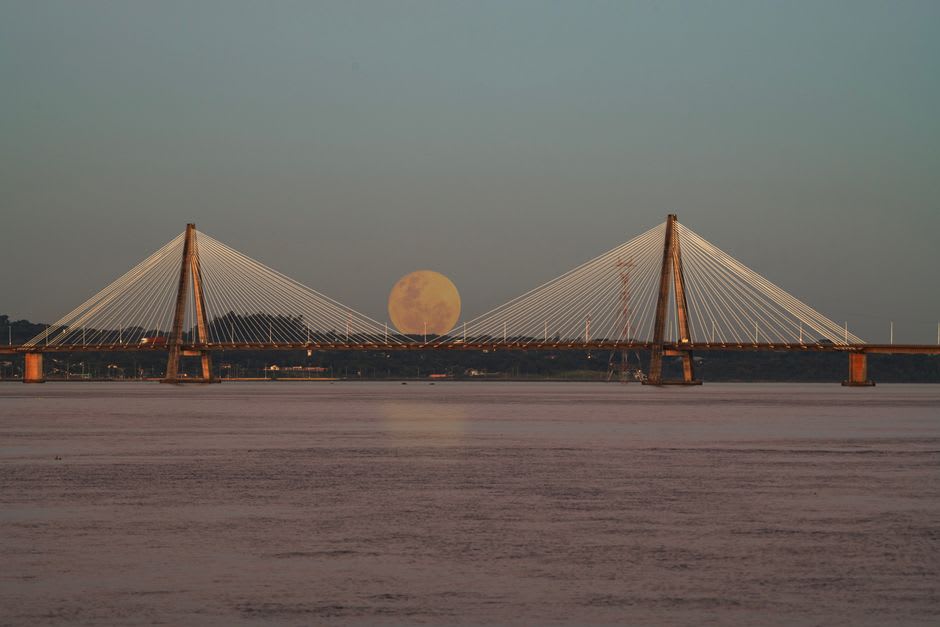
Posadas is a city that reoriented itself around a river. When the Yacyretá dam raised the level of the Paraná in the nineties, huge sections of the old waterfront were submerged, and rather than mourn it, the city built one of the more pleasant urban riverwalks I have come across in South America. Lia and I spent our first evening simply walking the Costanera, a couple of kilometers of paved promenade with joggers, ice cream carts, and teenagers doing tricks on skateboards, all with Paraguay sitting quietly on the opposite bank, close enough that its streetlights blink on before yours do.
A City That Faces Outward
What I like about Posadas is that it does not pretend to be anything other than a working provincial capital — government buildings, a busy central market, red-clay soil staining the sidewalks after rain. But the river gives it a personality most inland capitals lack. We ate dinner one night at a parrilla along the Costanera specializing in river fish, and the owner, unprompted, launched into a passionate explanation of why surubí catfish deserves more respect than beef in this part of the country. He was not wrong. Grilled with nothing but salt and lime, it was one of the better meals of the trip.
The heat here is a genuine consideration. Misiones sits in the subtropics, and by midday in summer the humidity makes even a short walk feel like an accomplishment. Locals disappear indoors between roughly one and five, re-emerging for a second half of the day that stretches late into the warm evening. We adapted quickly, retreating to a shaded café near Plaza 9 de Julio for iced tereré — the cold, herbal cousin of mate that Misiones and Paraguay both claim as their own — and reading through the worst of the afternoon sun.
Gateway, Not Afterthought
Most visitors treat Posadas purely as a stopover en route to San Ignacio Miní or the falls further north, and I understand the impulse, but that undersells it. The Museo Regional Aníbal Cambas has a genuinely thoughtful collection on Jesuit-Guaraní history that helped me understand the ruins we visited the next day far better than I would have otherwise. And the sunset over the river from the Costanera, with the bridge to Paraguay lit up and fishing boats coming in for the evening, is worth the stop on its own.
When to go: April through June and August through October, avoiding both the punishing summer humidity and the heaviest spring rains.
Keep exploring
More from Argentina
 argentina
 Potrerillos
A turquoise mountain reservoir an hour from Mendoza city, and the launch point for the province's best adventure sports.
Explore argentina
 Puente del Inca
A natural rock bridge stained sulfur-yellow by thermal springs, and the ruins of a spa town the mountain eventually reclaimed.
Explore argentina
 Puerto Deseado
A remote Santa Cruz fishing town where fjord-like cliffs shelter penguin colonies and the world's only red-legged cormorant nesting site.
Explore argentina
 Puerto Iguazú
The relaxed Argentine gateway town to Iguazu Falls, where the Paraná and Iguazú rivers meet three countries at once.
Explore argentina
 Puerto Madero
Buenos Aires's glass-and-steel waterfront reinvention, built around a curved white pedestrian bridge and a wild ecological reserve.
Explore argentina
 Puerto Madryn
A low-key Atlantic coastal city in Chubut that serves as the gateway to whale watching and the wildlife of Peninsula Valdés.
Explore