Valle de la Luna's moonscape of wind-carved rock and dinosaur fossils, one of the strangest landscapes I've stood in anywhere.
There’s a moment on the guided route through Ischigualasto Provincial Park — you’re only allowed in with a park vehicle or in a caravan of your own cars, following a ranger — when the bus rounds a bend and the valley opens into something that stopped every conversation on board. Valle de la Luna earns its name without exaggeration. It looks lunar. It looks like nowhere else I’ve been on this planet, and I mean that plainly, not as travel-writer inflation.
The Formations
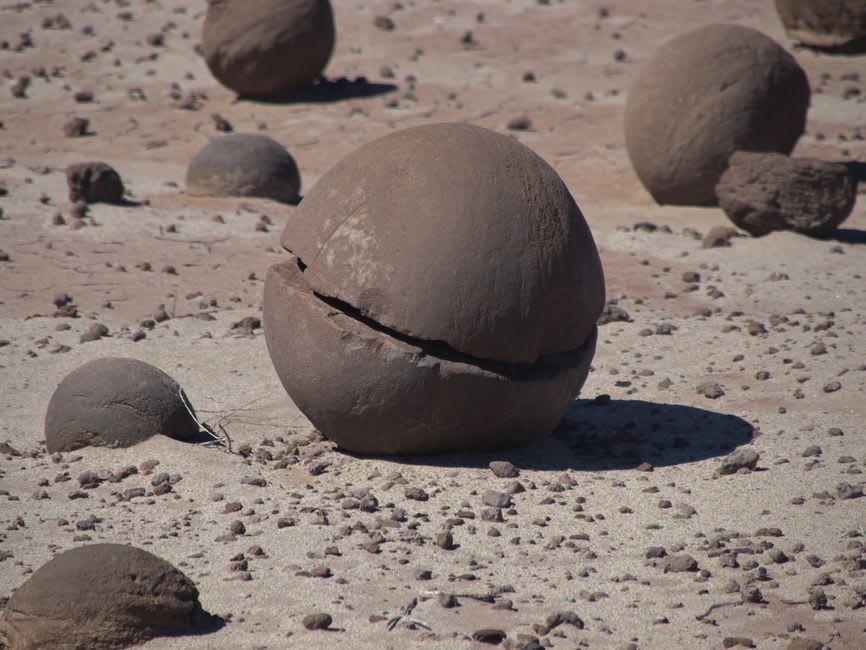
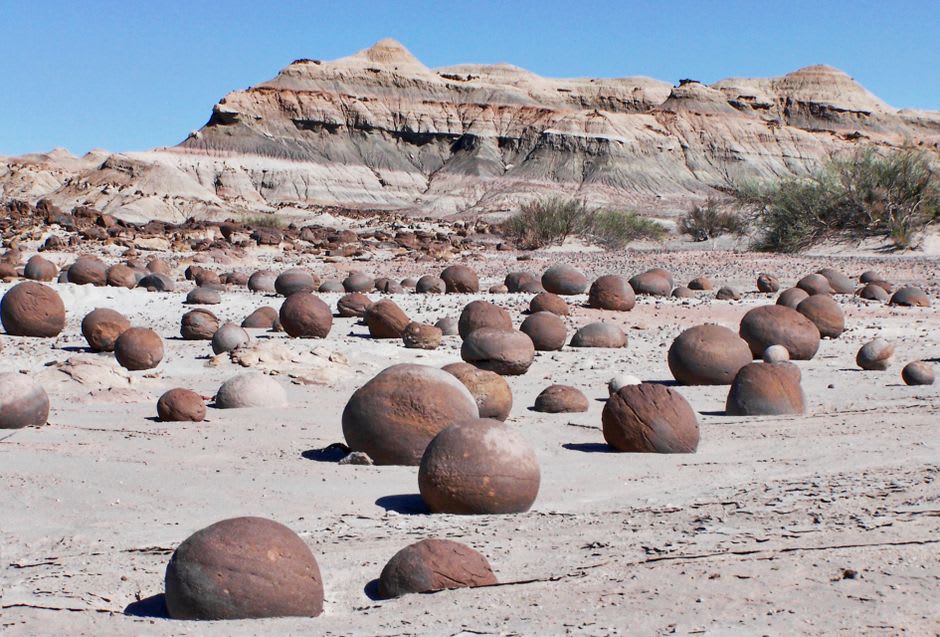
The park’s signature shapes have names that sound almost like jokes until you see them: El Submarino, a long ship-like ridge of stone; La Cancha de Bochas, a flat field scattered with perfectly round boulders that look deliberately placed, like a giant’s abandoned game; El Hongo, a mushroom-shaped rock balanced on a narrowed stem worn down by 200 million years of wind. I stood in front of the Cancha de Bochas for a long time, unable to shake the feeling that someone had arranged the spheres on purpose. Nobody had. Wind and water did all of it, patiently, over a span of time my brain doesn’t really process as real.
Ground Zero for Dinosaurs
What elevates Ischigualasto beyond visual spectacle is what’s buried in it. The Triassic-period rock here has produced some of the most important dinosaur fossils ever found, including Eoraptor and Herrerasaurus, among the earliest dinosaurs known to science. A small museum at the park entrance displays casts and a few originals, and our ranger-guide, a geology student doing summer work, explained that this valley essentially preserves the moment dinosaurs began outcompeting everything else on the planet. Lia, who is not usually moved by museum plaques, read every one of them twice.
Sunset Changes Everything
Rangers run a separate, smaller sunset tour into a section of the park closed to daytime traffic, timed so the low light turns the red and grey strata nearly incandescent. I paid extra for it without hesitation once I heard the description, and it was the single best hour I spent in San Juan province. The rock doesn’t just get prettier at sunset. It gets stranger.
When to go: April through October, during the cooler months, when midday heat doesn’t turn the shadeless valley into an ordeal. Book the sunset tour in advance — spots are limited and it sells out.
Keep exploring
More from Argentina
 argentina
 Jesuit Estancias of Cordoba
A UNESCO World Heritage route of rural Jesuit estates scattered across Cordoba province, connected to the city's historic Jesuit Block.
Explore argentina
 Junín de los Andes
The self-proclaimed trout capital of Argentina, a working Andean town at the gateway to Lanín National Park.
Explore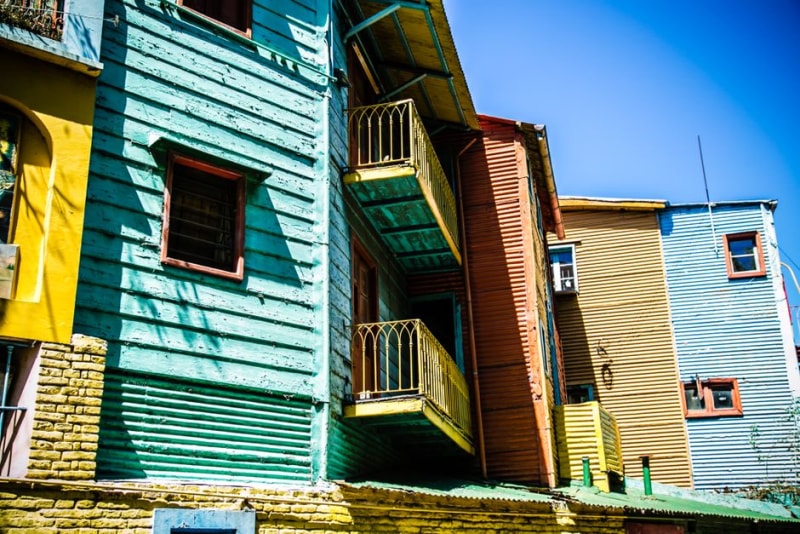 argentina
 La Boca
Buenos Aires's original dockworkers' barrio, painted in scrap-metal colors, loud with tango and football.
Explore argentina
 La Cumbrecita
A car-free alpine village in the Cordoba sierras, reached on foot through pine forest to stone lodges and mountain streams.
Explore argentina
 La Quiaca
Argentina's northernmost border town, a windswept outpost on the Bolivian frontier at the edge of the Puna.
Explore argentina
 La Rioja City
A colonial city in the Andean foothills surrounded by olive groves, with a slower pulse than any other provincial capital I've visited in Argentina.
Explore