The windblown gateway town to Perito Moreno — steppe, lamb, and the best empanadas I've had in Argentina.
I landed in El Calafate expecting a way station — somewhere to sleep before the glacier — and left thinking of it as one of my favorite small towns in Argentina. That’s not a sentence I expected to write about a place whose entire economy is built on tourists passing through. But the wind here has a way of stripping pretension out of everything, including the town itself, and what’s left is oddly likeable: one long commercial street, Avenida del Libertador, lined with steakhouses, chocolate shops, and outfitters, all of it backed by the flat gold expanse of the Patagonian steppe running out to Lago Argentino.
Lia and I arrived in the evening, dropped our bags, and went straight out looking for dinner, which is how we ended up at a parrilla eating Patagonian lamb cooked al asador — splayed open on a metal cross and roasted for hours beside an open fire until the meat came away from the bone without resistance. I’ve had good lamb elsewhere. This was different, smokier and somehow cleaner-tasting, and the woman running the place told us it was because the sheep here graze on wild herbs the wind carries in off the steppe. I have no way to verify that. I believed her completely.
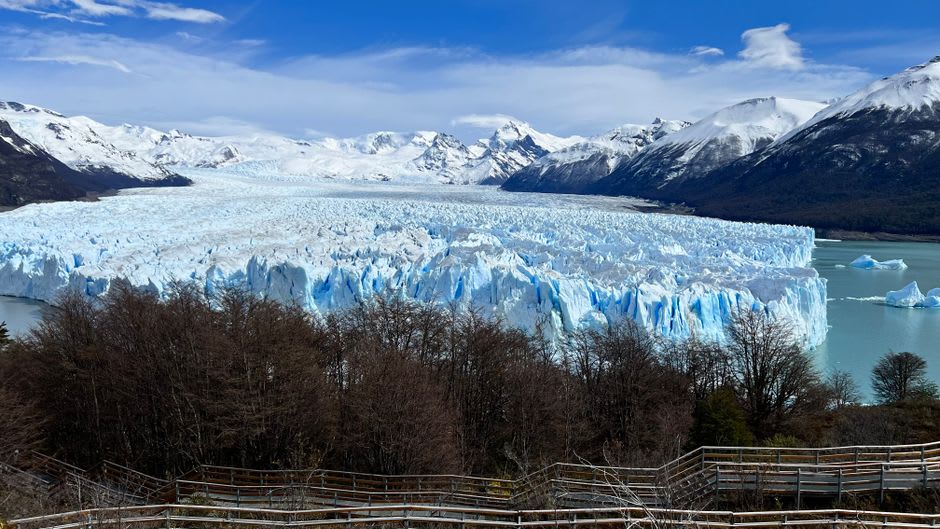
The town sits directly on Lago Argentino, and in the mornings before the tour buses filled up for the glacier, I walked down to the Laguna Nimez reserve at the edge of town — a wetland reserve inside the city limits, improbably, where flamingos wade in shallow water with the Andes rising pale behind them. I hadn’t expected flamingos in Patagonia. They’re a different species than the tropical ones, adapted to the cold, and watching a flock of them stand pink and unbothered against a backdrop of glaciers rearranged something in my sense of what this landscape was allowed to contain.
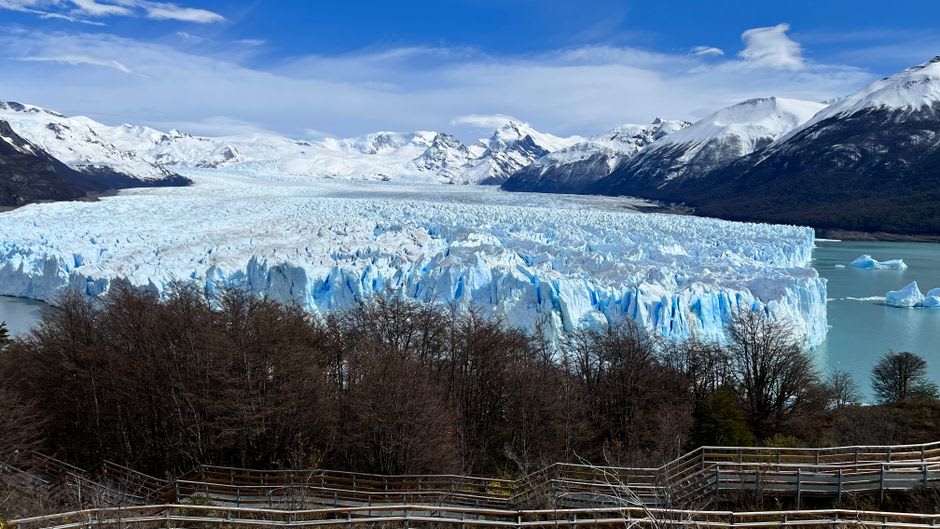
Everyone comes here for Perito Moreno, and rightly so, but I’d underestimate the town if I let the glacier eclipse it entirely. The empanadas at a bakery a block off the main avenue — small, fried, filled with beef and olive and a boiled egg quarter — were the best I ate anywhere in the country, and I ate a great many empanadas in the course of researching that claim. There’s also a low-key, end-of-the-earth energy to the place at night, when the wind drops and the restaurants fill with a mix of exhausted trekkers down from El Chaltén and glacier day-trippers comparing photos over Malbec. Lia and I fell into conversation with an Australian couple over dinner one night and ended up sharing a bottle we hadn’t planned on. That happens easily here.
When to go: October through April, with December through February bringing the longest days and busiest streets. I’d lean toward the shoulder months — late October or April — when the town empties out a little and the light across the steppe turns a particular flat gold in the late afternoon that I haven’t seen anywhere else.
Keep exploring
More from Argentina
 argentina
 El Chalten
Argentina's trekking capital — a tiny village beneath the jagged spires of Mount Fitz Roy.
Explore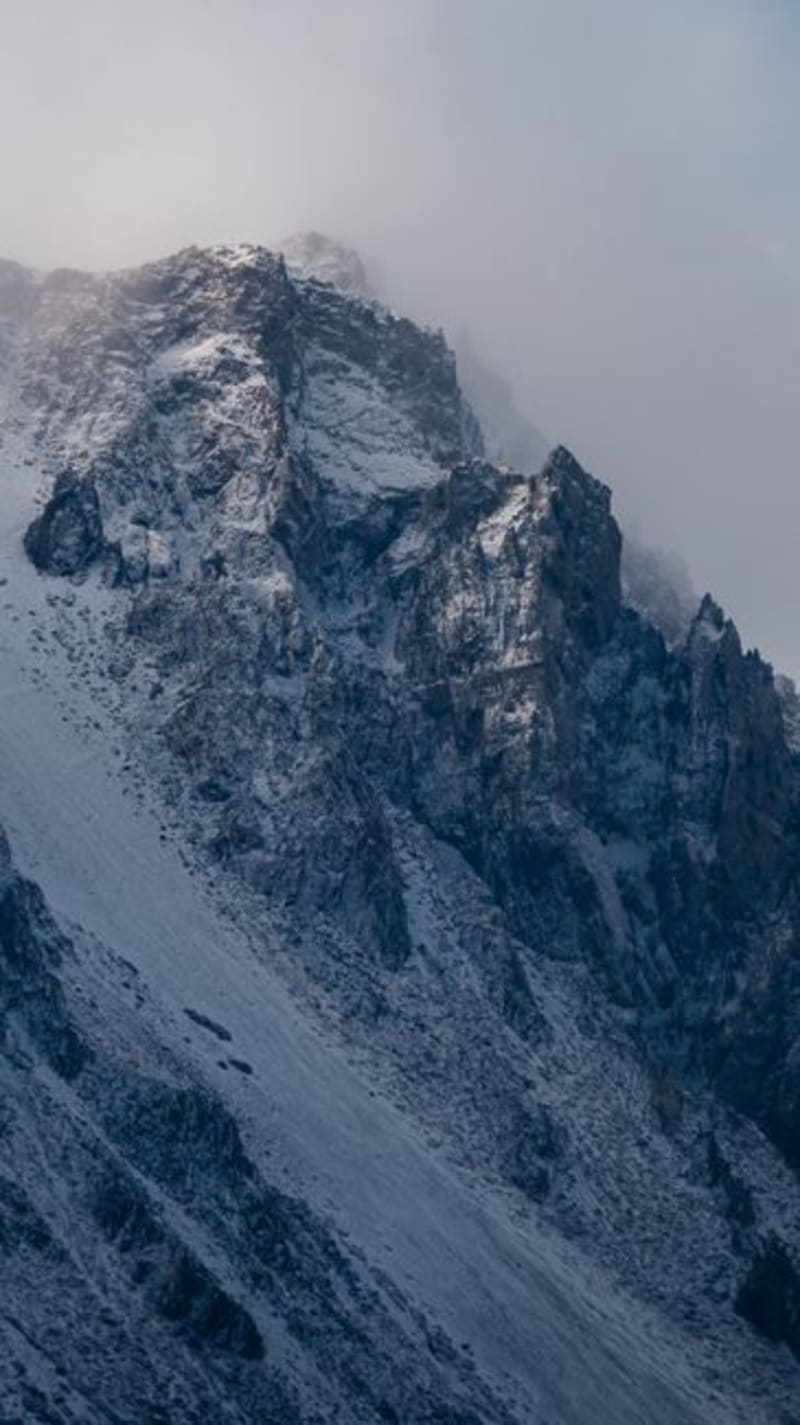 argentina
 Esquel
A no-frills Andean town in Chubut where an old steam train still hauls tourists across the Patagonian steppe.
Explore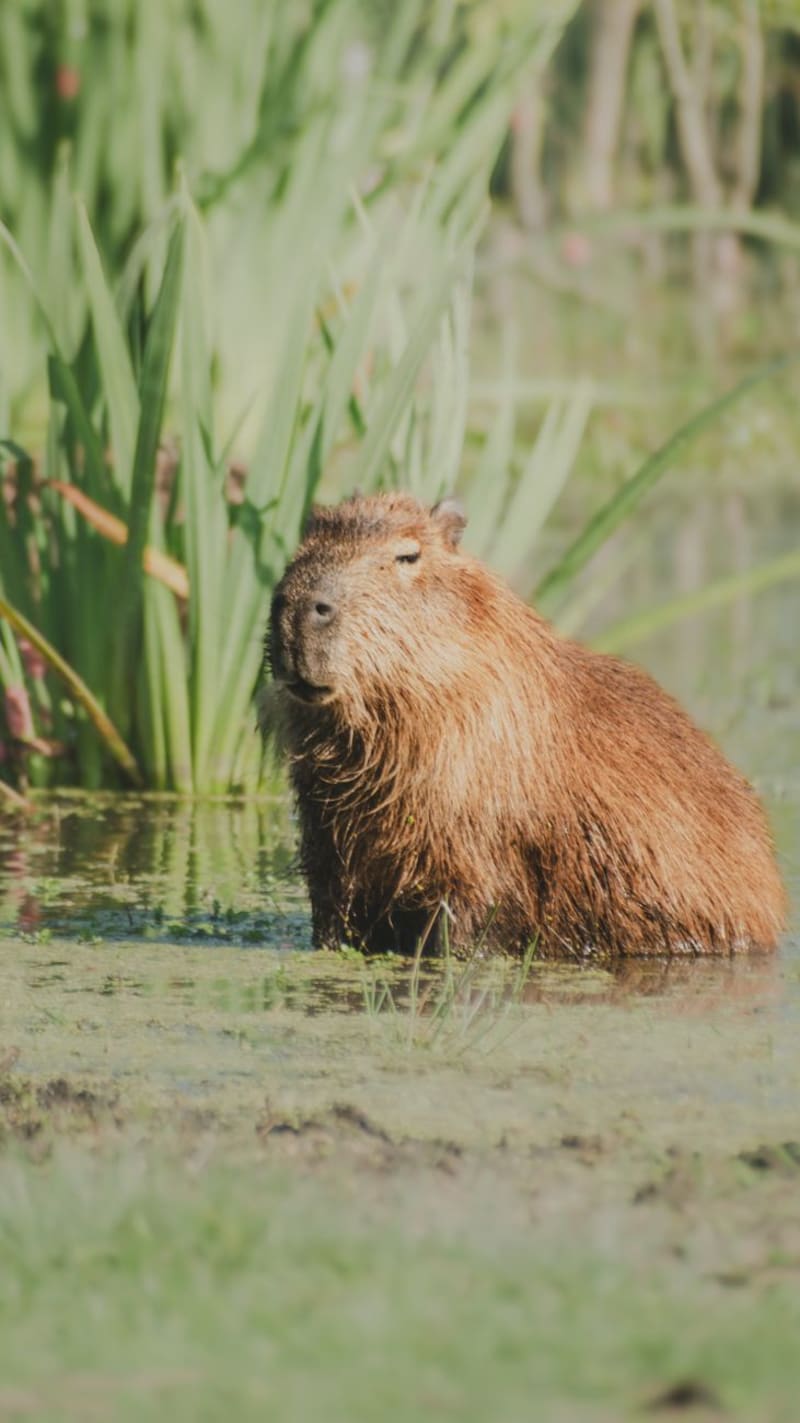 argentina
 Esteros del Iberá
A vast wetland in northeast Argentina where caimans bask on floating islands and capybaras graze the verges, now one of the continent's great rewilding stories.
Explore argentina
 Federación
A thermal spa town rebuilt from scratch after the old city was flooded for a dam, now built entirely around its hot springs.
Explore argentina
 Gaiman
A small Welsh village in the Chubut valley where teahouses and a stone chapel keep a 19th-century migration story alive.
Explore argentina
 Gualeguaychú
The carnival capital of Argentina, a river town on the Uruguay whose corsódromo fills every summer weekend with sequins and drums.
Explore