
Alta Gracia
"One house, two centuries apart — a Jesuit estancia and a revolutionary's childhood bedroom."
A colonial Jesuit town near Cordoba where a young Che Guevara grew up, now home to his childhood house turned museum.
Alta Gracia sits close enough to Cordoba city that we did it as a day trip, and it’s the kind of place that rewards you for arriving with no particular expectation. I knew the Jesuit estancia was here, one of the UNESCO-listed complexes scattered across the province. I did not fully register, until the guidebook in the glovebox reminded me on the drive out, that this was also where Ernesto “Che” Guevara spent much of his childhood, asthmatic and bookish, in a house that is now a museum a fifteen-minute walk from the plaza.
The Estancia Jesuítica
The Jesuit residence and church anchor the town’s center, built in the early 1600s as a working estate — mills, workshops, a reservoir called the Tajamar that still holds water and still anchors the town’s social life on weekend afternoons. The church’s whitewashed facade and squat bell tower have a plainer, more workmanlike beauty than the ornate interior of Cordoba’s Compania de Jesus church, which makes sense: this was a rural production site first, a place of worship second. I spent longer than planned in the small museum inside, looking at reconstructed workshops and reading about the estate’s role supplying the wider Jesuit network before the order’s 1767 expulsion from Spanish America.
Che Guevara’s Childhood House
Museo Casa de Ernesto Che Guevara occupies the house where the Guevara family lived through much of his boyhood, and it’s a strange, compelling stop precisely because it resists the mythology that usually surrounds him. There are school photos, asthma medication bottles, a chess set, letters — the ordinary material of a childhood, displayed a few rooms away from photographs of the Cuban Revolution he’d go on to help lead. Lia lingered over a wall of correspondence between Che and his mother, written decades after he’d left this house, and said it was the most human she’d ever found him in any museum or biography. I didn’t disagree.
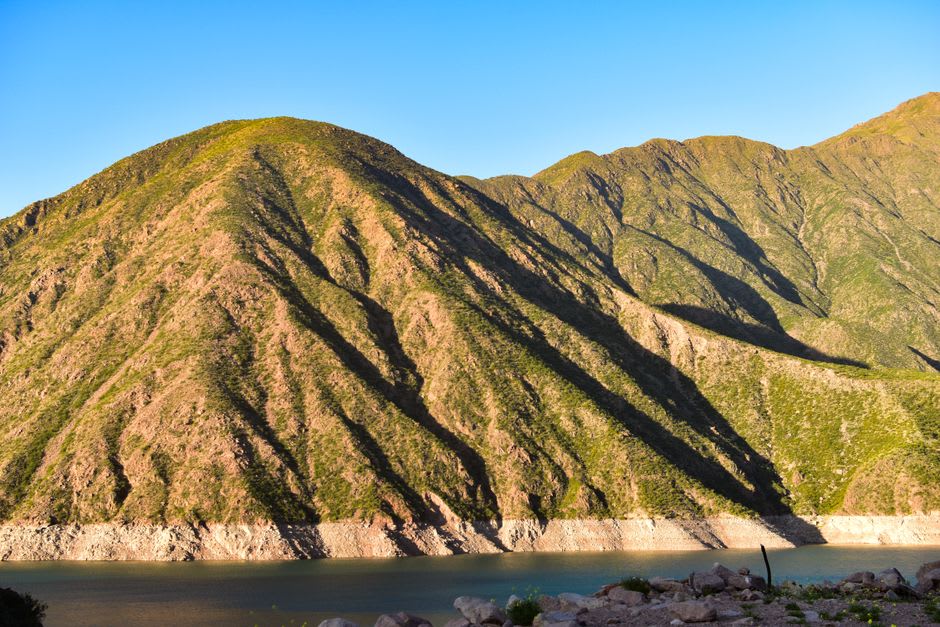
Outside the two big draws, Alta Gracia is a pleasant, unhurried town to walk — golf course older than most in the country, a handful of good parrillas around the plaza, and locals who seemed genuinely unbothered by the small stream of visitors coming through for the museum.
When to go: March through May and September through November for comfortable walking weather. It works well as a half-day or full-day trip from Cordoba city year-round.