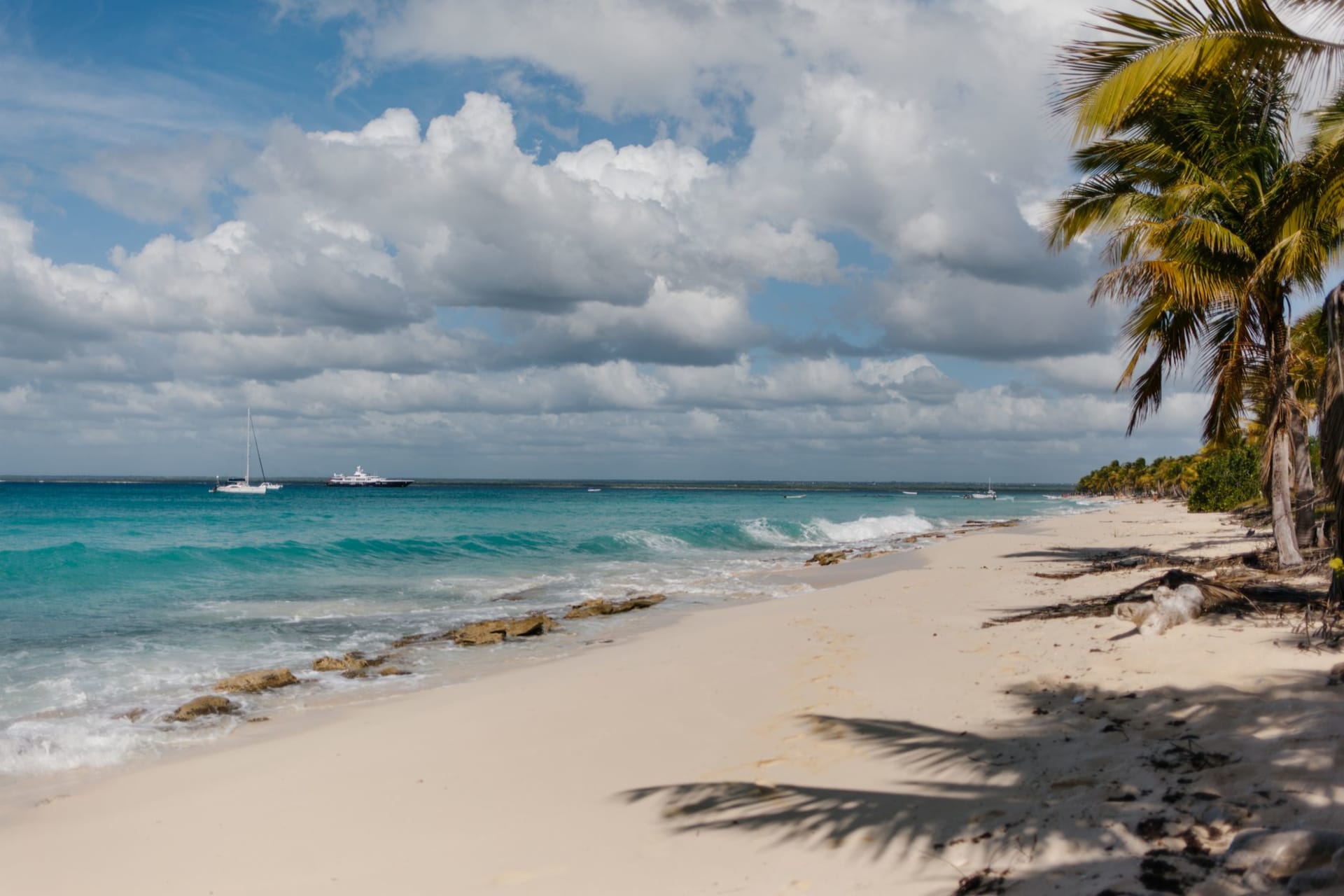
Shoal Bay East
"I sat under an almond tree for an hour and did absolutely nothing useful. It was the best hour of the trip."
I arrived at Shoal Bay East expecting a beach — I found something closer to an argument. An argument against everywhere else I had ever swum. The sand is not beige or off-white or creamy; it is white in the way that a blank page is white, and so fine it squeaks faintly when you walk on it. I had seen photographs and assumed some digital trickery was at work. The photographs, if anything, are conservative.
I waded in slowly, partly because the water is shallow far out, and partly because I did not want the moment to pass too quickly. The turquoise layer near the shore shifts imperceptibly to cobalt by the time you are chest-deep, the transition so gradual you keep looking back at the shore to confirm you have actually moved. The water was body-temperature warm. A pelican cruised ten feet overhead, made a sharp banking turn, and hit the surface with a violence that seemed entirely out of place with the prevailing calm.
There are a few beach bars strung along the bay — Gwen’s, Uncle Ernie’s, a couple of others — and they operate on a time system that has nothing to do with clocks. I ordered a Ting with rum at what I thought was late afternoon; it turned out to be eleven in the morning. Nobody seemed bothered by this, including me. The fish tacos at Uncle Ernie’s came with a hot sauce made in-house, a dark orange liquid with seeds floating in it that hit the back of the throat just hard enough to remind you you were eating something real. I ate them standing up because I had been lying on a towel for two hours and standing felt like an occasion.
What genuinely surprised me about Shoal Bay East was the absence of noise. There is no soundtrack here engineered by a resort — no thumping speakers, no parasailing boats circling the bay. On a Tuesday morning in February, the loudest sounds were a generator running somewhere behind the tree line and two women speaking Creole at the bar, their laughter carrying over the sand in a way that felt like punctuation, not disturbance. Anguilla has no cruise ship port, no casinos. Nobody ends up here by accident or on a whim. Everyone who arrives has made a deliberate decision to come to this particular flat, coral-limestone island, and Shoal Bay is where most of them eventually end up, staring at the water with the slightly stunned expression of people who have received news better than expected.
The snorkeling over the reef at the eastern end of the bay is worth the effort. Brain coral the size of kitchen tables, sergeant majors darting in formation, the occasional needle-nosed trumpet fish drifting past like it has somewhere to be and is choosing to arrive late. I rented fins from a man sleeping in a hammock who woke up at my approach with complete alertness, as though napping was simply another form of readiness.
When to go: February and March are the sweet spot — water visibility is exceptional, trade winds keep temperatures around 27°C, and the bay is busy enough to feel alive without being crowded. Weekday mornings in either month, the beach is nearly empty before ten o’clock.