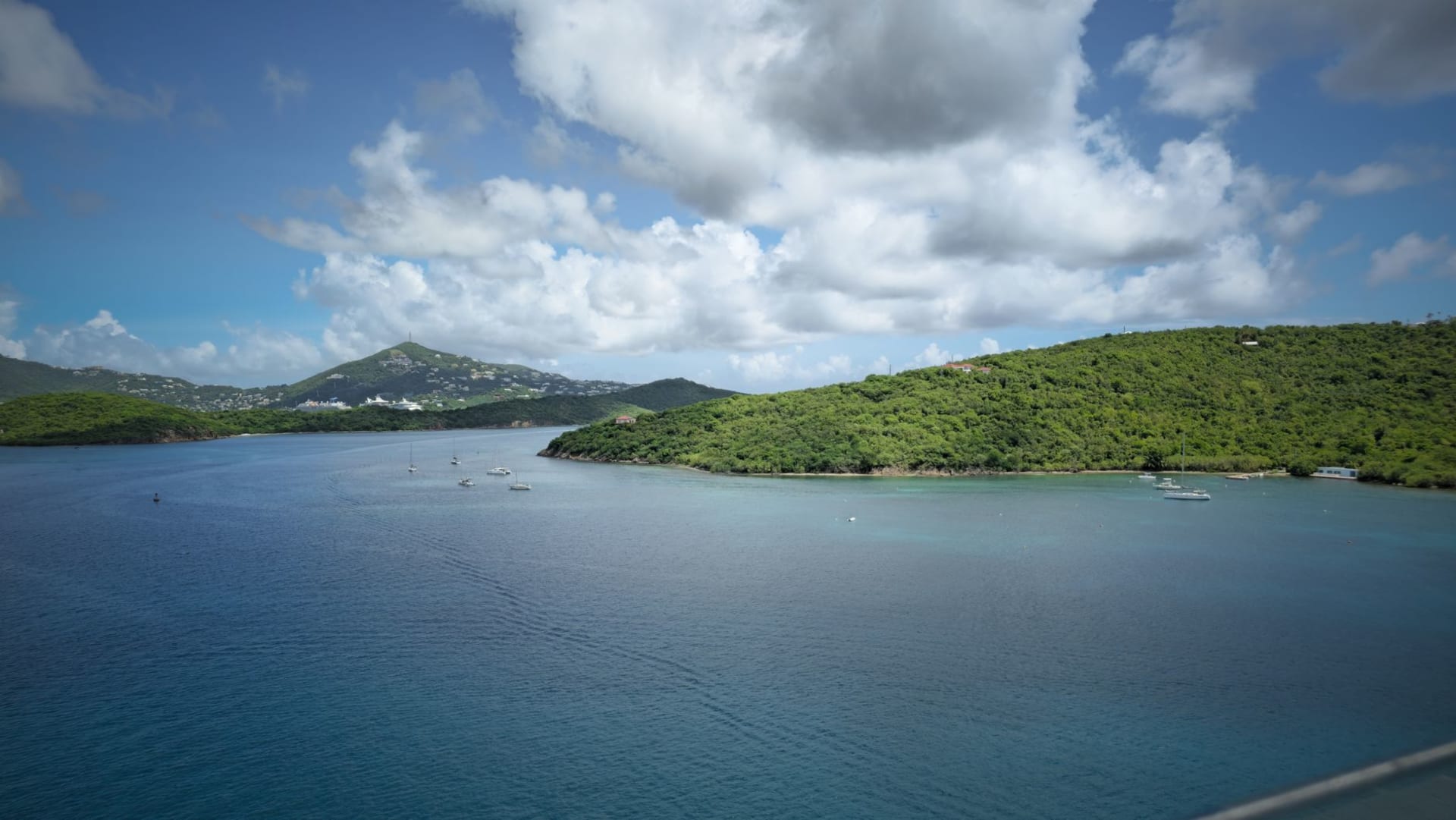
Scrub Island
"Uninhabited means something different when you are in it — the word loses its qualifier and becomes just a fact about the world."
Scrub Island is the largest of the uninhabited islands off the coast of Anguilla, sitting about three kilometres northeast of the main island across a channel of fast-moving, blue-green water. It takes twenty minutes to reach by boat from Island Harbour, and the boat I went on was a borrowed open skiff driven by a man named Calvin who had grown up visiting the island as a boy and navigated by a combination of memory and the look of the water. We banged across the channel in the morning chop and rounded the north end of the island and then the motion stopped because we were in the lee and the water went flat and shallow and the island was right there, close enough to see the lizards on the rocks.
The beaches on Scrub Island’s western side are undisturbed in a way that the word “unspoiled” does not quite capture — not unspoiled, which implies something saved from something, but simply untouched, in a state that predates the category of tourism altogether. The sand is coarser than Anguilla’s main beaches, more ivory than white, mixed with small pieces of shell and coral. No one has raked it. No chairs, no umbrellas, no rope designating where the hotel sand ends and the public sand begins. We pulled the boat up and stepped out and there was nothing to do except be there.

The snorkeling around the reef on the eastern side of the island is the best I experienced in Anguilla. Calvin anchored in a sandy patch and I swam twenty meters to the reef edge and dropped down and found myself in water full of things that had not been made cautious by regular human contact. A hawksbill turtle turned slowly above me, apparently uninterested. A school of blue tang moved through a coral formation like a cloud changing shape. At the base of a large brain coral, three nurse sharks lay inert and piled loosely on each other — they sleep in the daytime, Calvin told me later, and are completely harmless — and I floated above them for five minutes watching their gills move in the slow rhythm of something so deeply asleep it had forgotten the water.
The interior of the island is dry scrub forest — manchineel trees, which require careful avoidance, and sea grape and cacti and a dense tangle of vegetation that gives the island its name. We did not go far inland, mostly because Calvin pointed at a manchineel and made a descriptive gesture about what the sap does to skin that was enough to redirect my curiosity toward the shore. There are ruins of a small structure near the center of the island from a development project that was never completed, concrete blocks now colonized by vines, which felt like a useful reminder about certain ambitions.

On the way back across the channel, Calvin cut the engine briefly and we drifted in the current. The main island was visible ahead, flat and low, and behind us Scrub Island sat on the horizon already returning to its normal condition of having no one on it. That return — the island going back to what it actually is — felt like a privilege to have briefly interrupted.
When to go: Scrub Island is best visited December through April when the channel crossing is calmer. Arrange a boat from Island Harbour — there is no formal system, just ask at the dock or at Scilly Cay restaurant, and someone will know someone who goes. Bring everything: water, food, sunscreen, snorkel gear. There is nothing on the island and that is entirely the point.