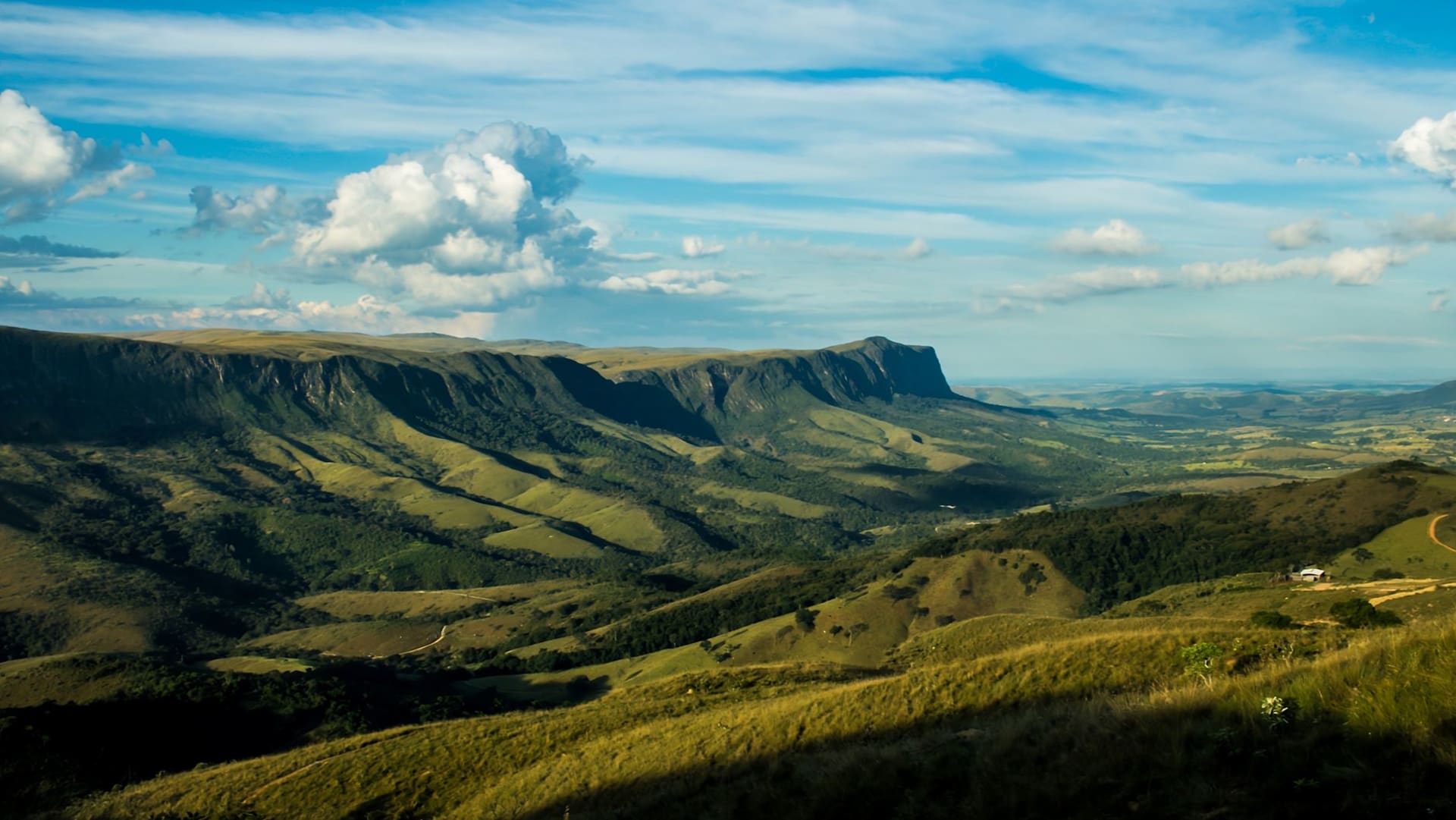
There is a photograph that is taken from a specific viewpoint above the Serra da Leba pass — a viewpoint that every visitor to the area ends up at, because the road takes you there, because the lay-by is obviously intended for this purpose, because the photograph has been taken a thousand times before and will be taken a thousand times again. The photo shows the road descending the escarpment in a series of tight hairpin curves, each one looping back on the one before, and in the distance below the coastal plain stretches out to where it becomes the sky. I knew this photograph before I arrived. I had seen it on every piece of writing about Angola I had ever read.
The photograph does not prepare you for the thing itself. No photograph of Serra da Leba does, because the thing itself involves not just seeing the road but being on it — feeling the altitude dropping beneath you curve by curve, watching the vegetation change from highland scrub to denser, moister forest as you descend, hearing the engine note change as the driver works through the gears, feeling the air warming by degrees through the window. The pass drops roughly 1,000 metres over 18 kilometres, and the Portuguese engineers who built this road in the 1970s — their last significant project in Angola before independence in 1975 — designed it with a dramatic precision that suggests they understood they were building something that would outlast them.

I drove the pass in both directions on the same day — down in the morning when the coastal plain below was still in mist, up in the afternoon when the light had shifted and the highlands were catching the angle of the sun in a way that made the whole escarpment look painted. The descent in the morning was made slower by a truck that took each curve with enormous deliberation, which meant I had time to look — at the drops on the unguarded outer edges, at the way the vegetation thickened as we lost altitude, at the occasional village on the slope with its banana trees and corrugated roofs. I was not impatient. There was nothing to be impatient about.
At the bottom of the pass, the road flattens into the lowland coastal zone and the air becomes immediately warmer and denser. Here the landscape shifts toward something more arid — dry grass, scattered acacias, the particular emptiness of land that gets little rain and asks nothing from it. A roadside stall sold watermelon and coconut water from a table under a palm-frond canopy, and I stopped and sat on an upturned crate eating cold watermelon in the heat and looked back up at the escarpment above me and the road cutting through it in those precise, improbable curves, and tried to hold both — the coolness above and the heat below — as a single thought.

The best viewpoint is at the top of the pass, on the right side as you approach from Lubango heading northwest. There is a small car park and a low wall you can stand on, and from there you see the full geometry of what the road does — the way it solves the problem of the escarpment by refusing to go straight, by insisting instead on the curve. An engineer’s answer to a geographer’s problem, and one that happens to be beautiful.
When to go: Serra da Leba is accessible year-round, but the dry season (May through October) offers the clearest views from the top viewpoint — the coastal haze is lower and the escarpment better defined. In the wet season, the pass can be wrapped in cloud that gives it a moody, dramatic quality but obscures the distance views. The road itself is well-maintained and paved; a normal car is sufficient. Drive it at dawn if you can — the light on the escarpment in the first hour after sunrise is unrepeatable.