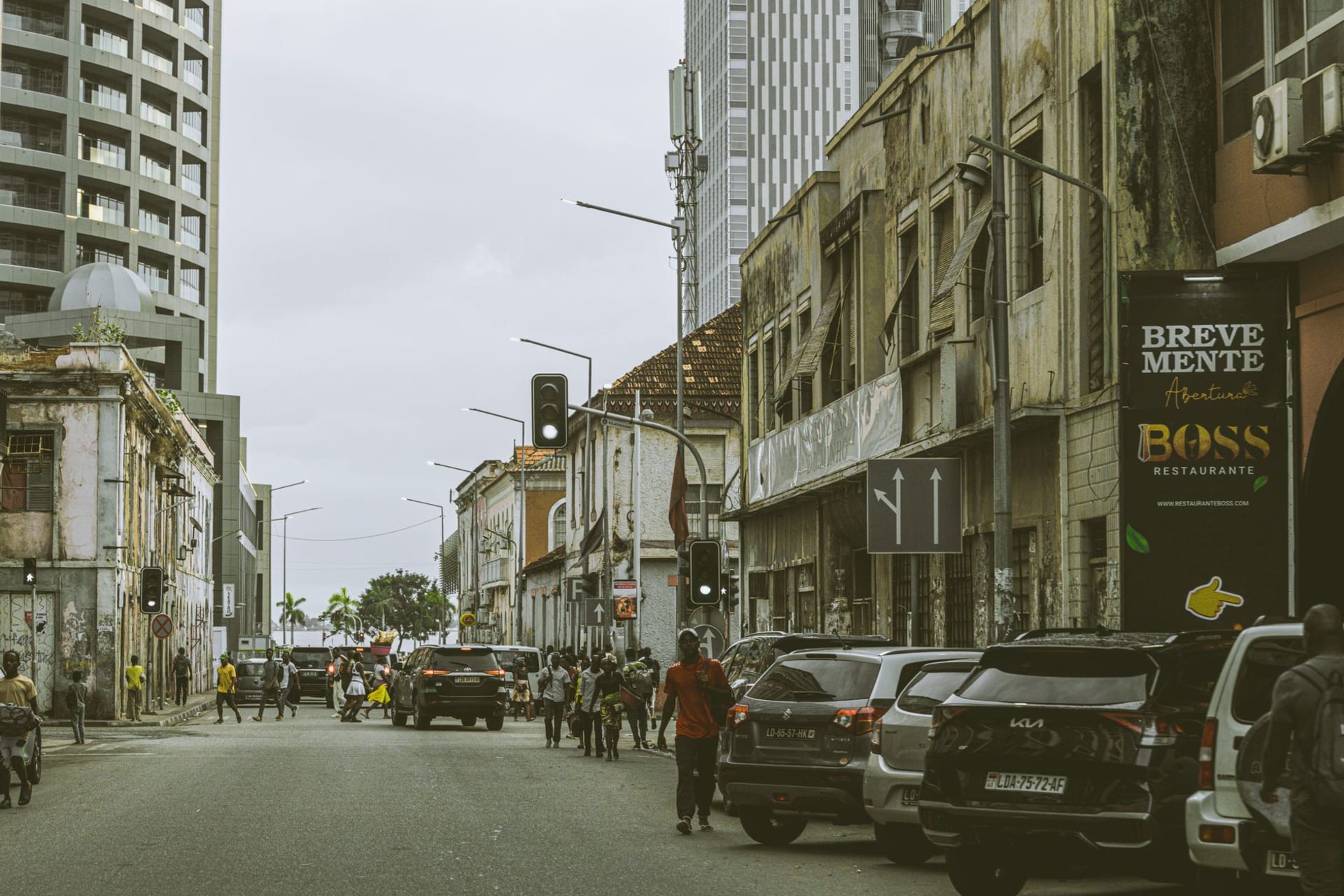
I landed on a Tuesday evening and the first thing Luanda gave me was a wall of heat that smelled of diesel and frangipani and something frying in palm oil two streets over. The taxi from the airport crept along the Marginal — the coastal boulevard that runs the length of Luanda Bay — in traffic so thick that motorbikes threaded between cars like needles through fabric. Music leaked from every other vehicle. The Bay itself was turning bronze in the last of the sun, flat and generous, and I kept craning my neck to catch it between the buses. Whatever I had expected, it wasn’t this particular combination of overwhelm and beauty.
Luanda is one of the most expensive cities in Africa and probably the least apologetic about it. The oil economy created a class of wealthy Angolans who built glass towers above the colonial Baixa and filled them with rooftop bars serving cocktails that cost what a family in the interior earns in a week. This disparity is real and visible and impossible to ignore. And yet the city also contains something that no amount of money has managed to homogenise: a bairro culture that runs on kizomba rhythms, on women selling dendê oil from enamel bowls, on the smell of grilled fish rising from charcoal drums at the roadside.

The Baixa — the lower downtown — is where Luanda’s architectural memory lives, in various states of collapse and dignity. Portuguese colonial buildings from the 18th and 19th centuries line the streets, their walls sun-bleached to the colour of old paper, balconies rusting in the salt air. Some have been restored; most haven’t. Walking through the Baixa on a weekday morning, past the Fortaleza de São Miguel on its bluff overlooking the bay, past street vendors selling phone credit and cashews and small bags of dried shrimp, I kept thinking that the beauty here was entirely accidental — a byproduct of neglect and memory and that particular quality of tropical light that makes even decay look considered.
The Mercado do Kinaxixi stopped me cold the first time I walked in. It is not a tourist market. Women with straw baskets sell the building blocks of Angolan cooking — dendê (palm oil), dried fish, mortar-crushed garlic paste, okra, leaves for calulu stew — and the smells compound into something so specific that I could reconstruct it now just by closing my eyes. I bought a tin of palm oil I had no business owning and ate muamba de galinha — chicken slow-braised in that same oil with okra and vegetables — at a plastic table outside a stall where a woman served it with such speed and efficiency that I understood this was her art form, not mine.

At dusk, the Marginal becomes Luanda’s living room. People walk it for exercise, for air, for company. Families spread blankets on the grass median. Teenagers practice kizomba steps in the lamplight. Vendors push carts of roasted corn and coconut water. The bay goes dark while the skyline holds the last of the pink, and for a moment the chaos resolves into something like grace — this city of four million people breathing in and out along the edge of the Atlantic, doing what cities do, which is continue.
When to go: The dry season, May through October, brings the cacimbo — a cool mist that softens the heat and keeps temperatures around 20–24°C. July and August are Luanda’s most pleasant months. Avoid the rainy season (November through April) not because the city closes down, but because the roads flood and the heat intensifies to something oppressive. The bay is swimmable year-round from the Ilha de Luanda.