Benguela
"Everything here moves at the speed of the tide — deliberate, unhurried, ungovernable."
The drive south from Luanda along the coast road takes the better part of a day, and by the time Benguela appeared I had already passed through three different versions of Angola — the suburban sprawl of the capital, the industrial port at Lobito, and then a stretch of coast so spare and clean that it felt like the country had run out of opinions and was just offering light. Benguela itself announced itself with a smell: salt and fish and something organic and ancient that I recognised immediately as a working port town, the same smell that hangs over Essaouira and Marseille and Esssequibo, the universal perfume of boats and catch.
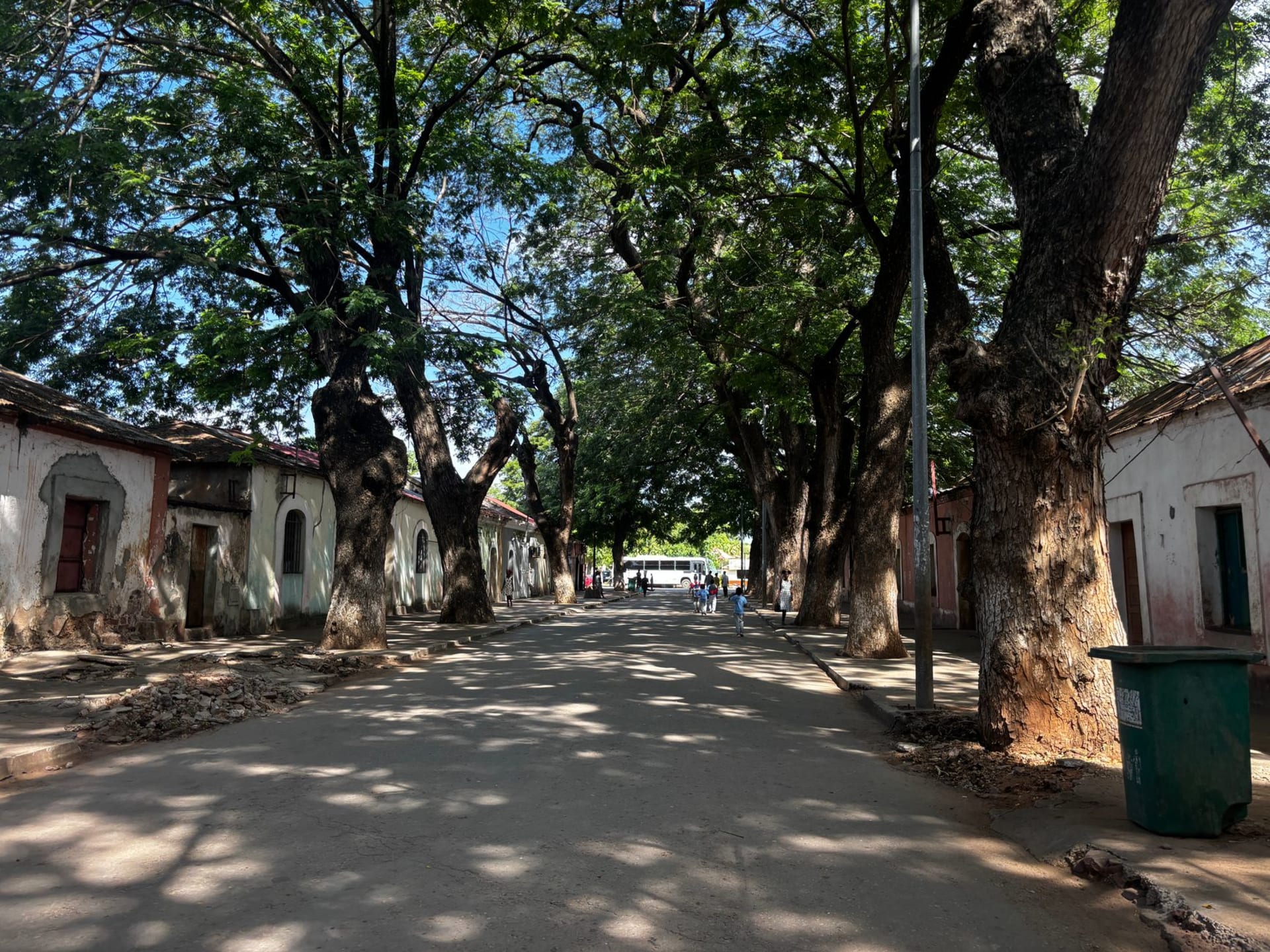
The city centre is small enough to walk in an afternoon and the walking reveals layers. The Portuguese colonial buildings along the main streets wear their age differently here than in Luanda — more salt-eroded, more honest about it. The cathedral, a white neoclassical structure built in the early 20th century, sits in a square where tamarind trees throw shade in thick blocks and old men play cards in the afternoon. I sat in that square for longer than I planned, eating a bag of roasted peanuts bought from a woman who had arranged them in a perfect cone on a square of newspaper and watching the cathedral’s shadow migrate across the tiles.

The Benguela Railway is one of those engineering stories that colonial history produced in abundance and that the post-colonial era largely forgot. At its peak, the line ran from the coast at Lobito all the way to the border of the Democratic Republic of Congo — over 1,300 kilometres of track through some of the most difficult terrain in Africa. The war destroyed much of it. Reconstruction has been ongoing for years, and stretches of the line operate again, but the old railway buildings in Benguela still carry the ghost of the project’s ambition: the station with its wrought-iron columns, the maintenance yards that once kept a transcontinental railway alive. I found a man who had worked on the railway for thirty years and who sat outside the station selling phone cases and who, once I asked about the trains, talked for an hour without pausing in a way that made it clear some histories need a listener before they can be spoken.
The fish market at Benguela runs along the waterfront and is most alive between five and nine in the morning. Boats come in with the night’s catch — corvina, cherne, dentão, heaps of smaller fish whose names I never got — and the sorting happens fast and without sentiment. Women with head trays move the fish from boats to stalls at a speed that makes you feel like you’re watching a choreography you weren’t given the program for. I bought a grilled corvina from a woman cooking over coals at the market’s edge. It arrived wrapped in newspaper with half a lemon and no apology for its bones, and it was the best fish I ate in Angola.

The beaches north and south of the city are long and mostly empty — pale sand running to the horizon, the Benguela Current keeping the water cold enough to be bracing even in December. Locals swim in the calmer sections near the rocks; the open beach is left to the wind. I swam once, briefly, with the shock of cold that the Benguela Current delivers to anyone expecting Atlantic warmth, and came out with the clean, slightly staggering feeling of having been corrected by the ocean.
When to go: May through September is the dry season and the most comfortable time to visit — temperatures moderate, the coast clear, the fish market at its most active with the post-rainy-season catch. October and November can be very hot. Benguela’s position south of Luanda means it escapes some of the capital’s humidity; the Benguela Current keeps the coast cooler than you’d expect for the latitude.