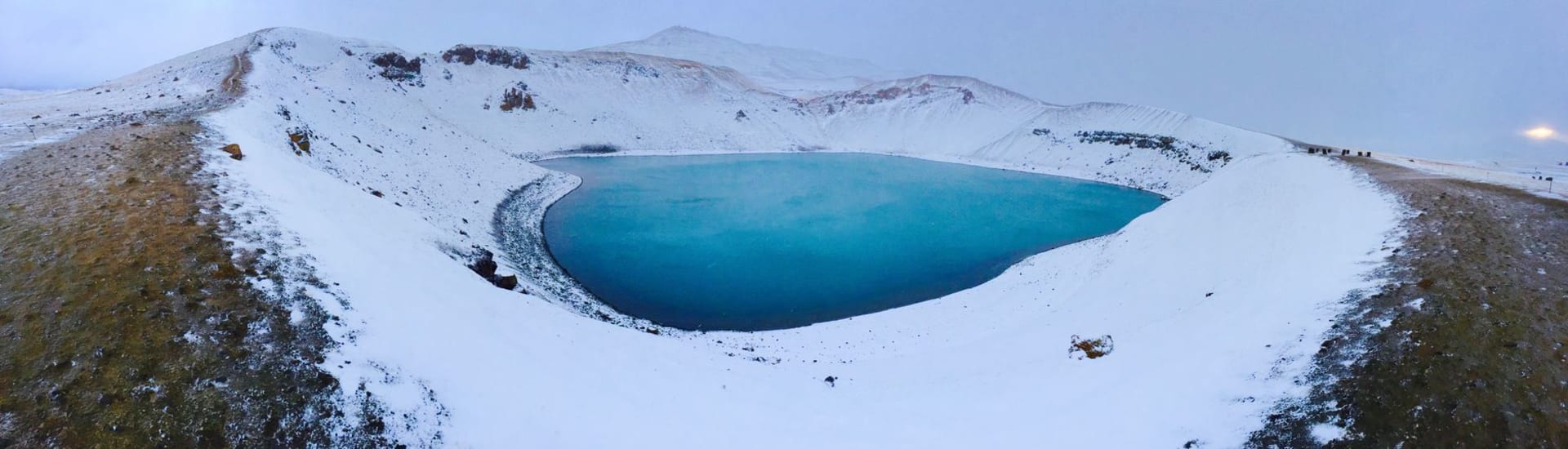
Meke Crater Lake
"A volcano inside a lake inside a plateau — the geology here has a sense of dramatic structure."
I found Meke Crater Lake by accident, which is probably the correct way to find it. I was driving between Karapınar and Konya on the D330, saw a brown sign pointing down a dirt road, and followed it without consulting anything. The road lasted three kilometres and ended at an unfenced, unmarked lookout over a nearly circular lake perhaps five hundred metres across. In the centre of the lake, rising maybe twenty metres above the water, was a small volcanic cone — the kind of secondary eruption that breaks through the floor of its own crater. I sat on the bonnet of my car for thirty minutes trying to understand what I was looking at.
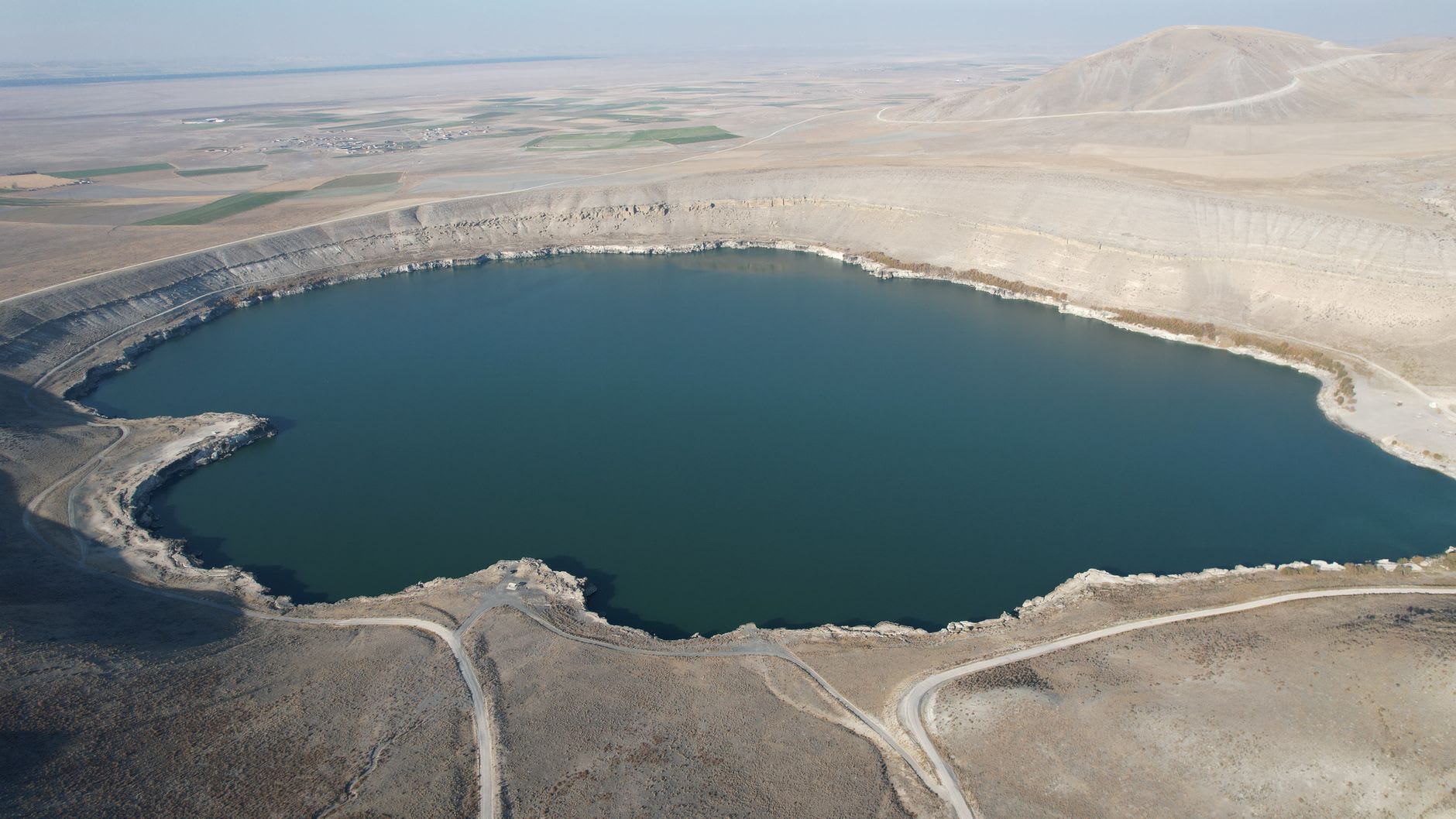
Meke is a maar — a type of volcanic crater formed not by a cone building up from a lava flow, but by an explosion of steam when rising magma meets groundwater. The explosion blasts a circular hole in the earth, which then fills with water to form a lake. The Karapınar volcanic field contains several maars, but Meke is the most dramatic because of its island: after the maar formed, a second eruption broke through the lake floor and built the tuff cone that now sits in the middle of the water. The result is a geological double feature — a volcano inside a crater lake — and it has been there for somewhere between six and twenty thousand years.
The water level has been dropping significantly since the 1970s, partly due to agricultural irrigation from surrounding wheat farms. When I visited in September, the lake was perhaps a third of its historical depth, and the shoreline was a band of white mineral deposits — salt and calcium carbonate — ringing the receding water line. This gives the lake a strangely formal appearance, like something decorated deliberately. The island cone, fully exposed, had goats on it. I don’t know how the goats got there, and the one local man I saw on the road — a farmer in a tractor — didn’t seem to find this worth explaining when I flagged him down and asked.
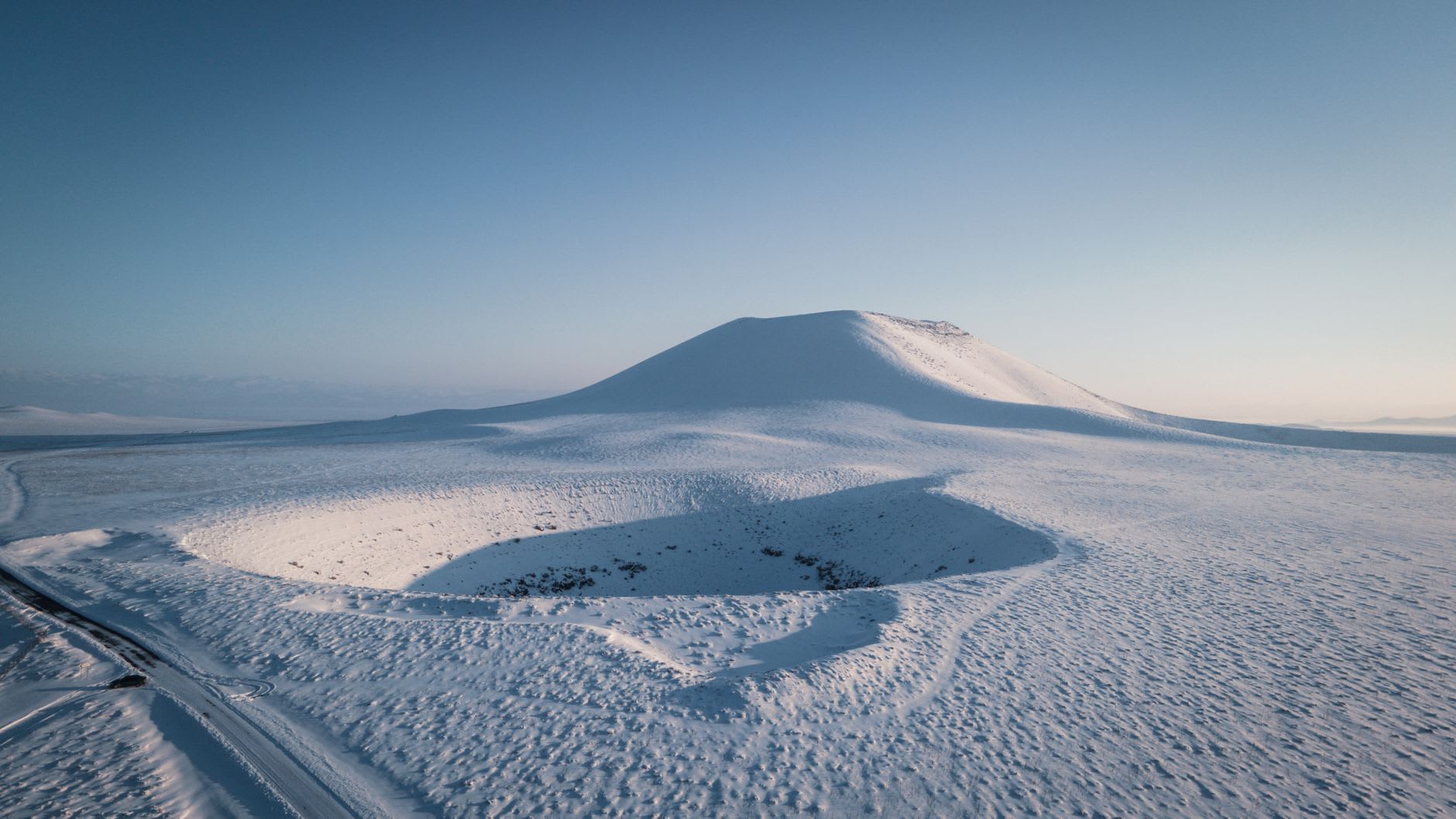
There are no facilities at Meke: no café, no ticket office, no toilet, no interpretive signs in any language. The surrounding land is private farmland. The silence is absolute except for wind and occasional birdsong — wading birds work the shallow margins in the early morning. I had the place entirely to myself for the full hour I was there, which is a sentence that wouldn’t be possible within fifty kilometres of Göreme. The plateau hands you these places if you follow the brown signs. Most people don’t. Their loss is direct and arithmetical: the emptiness and the strangeness of Meke compound each other, and alone is the correct way to encounter a volcano inside a lake inside a wheat field on the central Anatolian steppe.
When to go: April through October. The road from the D330 is passable but rough; a standard car can manage it in dry conditions. Go at dawn for the light and the birdlife. There are no facilities — bring water and anything you plan to eat.