Hattusa
"Before there was a Troy to burn, there was Hattusa, and it ran half the known world."
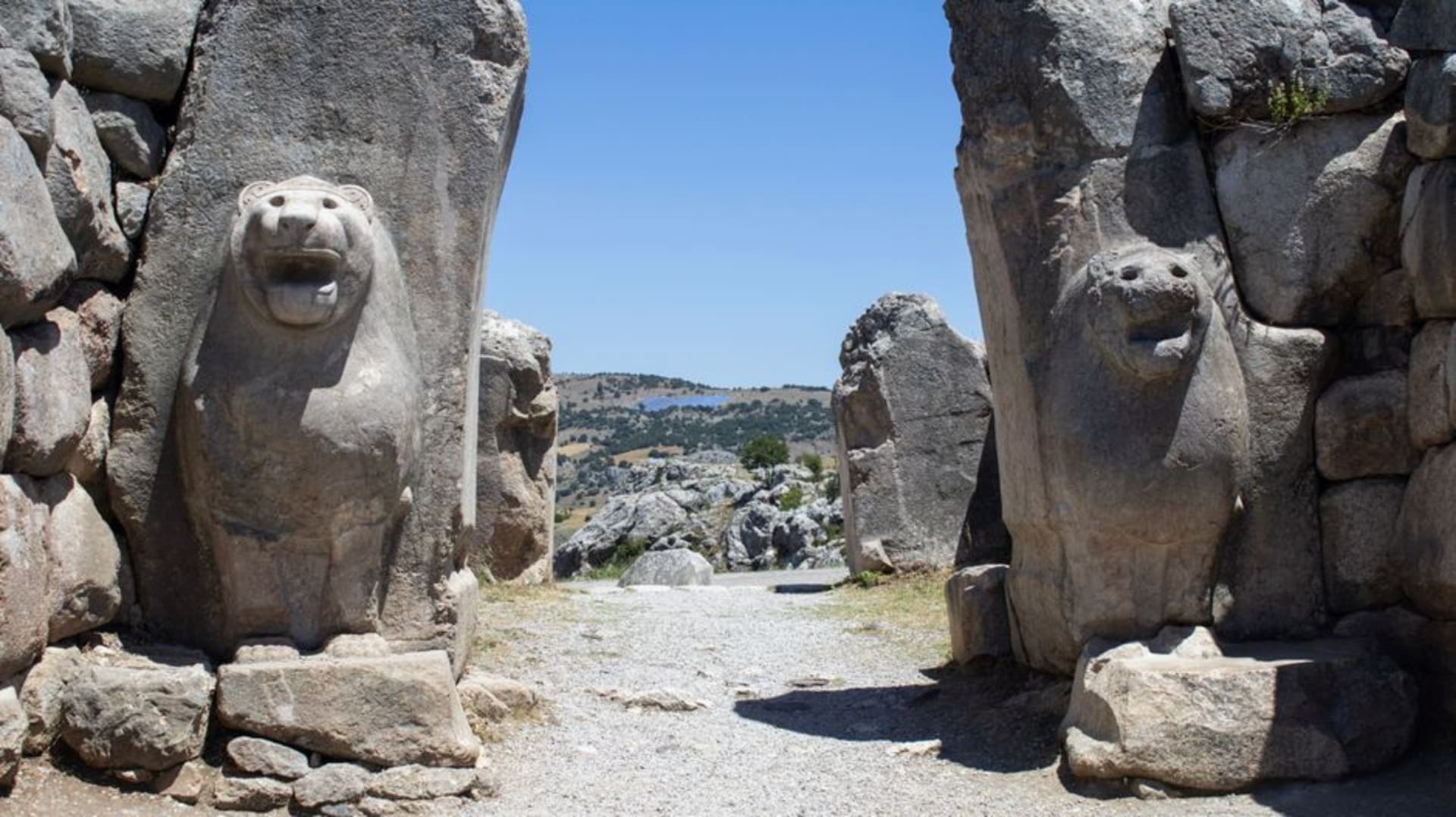
The sprawling ruined capital of the Hittite Empire, its cyclopean walls and lion-carved gates standing on the empty plateau since long before Troy fell.
I’ll admit I underestimated Hattusa before I got there, expecting a modest scatter of foundation stones like a lot of Bronze Age sites turn out to be. Instead I spent nearly five hours walking a site so large — the ancient capital walls enclose well over a square kilometre of hilly terrain — that I never fully covered it on foot in a single visit. This was the capital of the Hittite Empire, which for several centuries in the second millennium BC rivaled Egypt and Assyria as one of the dominant powers of the ancient Near East, and which fought Ramesses II to a standstill at the Battle of Kadesh before the two empires signed what’s often cited as history’s oldest known peace treaty, a copy of which sits in Istanbul’s archaeology museum while another was found right here.
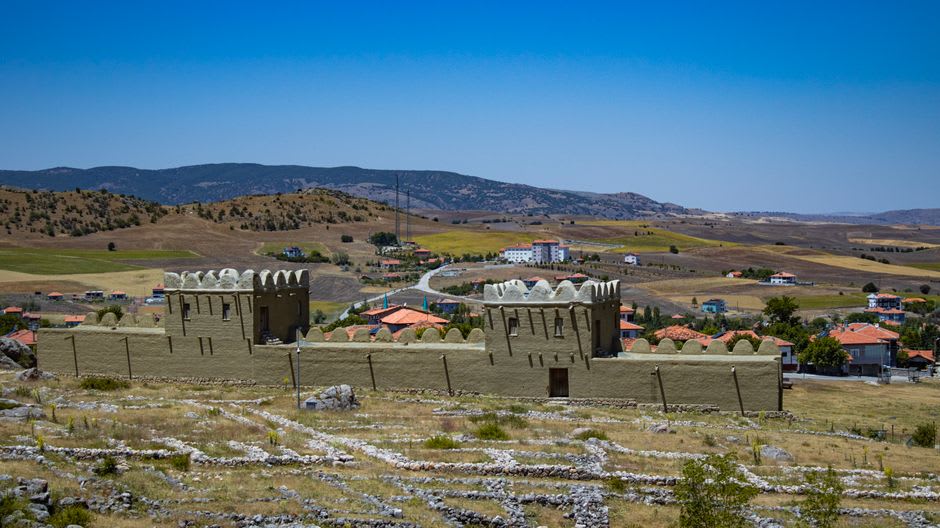
The site’s standout feature is its gates, three of which survive well enough to be genuinely striking: the Lion Gate, flanked by two carved stone lions whose faces have softened with 3,300 years of weather but whose posture — mid-roar, guarding the threshold — still reads clearly; the King’s Gate, with a relief of a striding warrior god that archaeologists long mistook for a king, hence the name that stuck even after the correction; and the Sphinx Gate at the site’s southern high point, from which the view across the empty plateau makes it obvious why this location was chosen — you can see anyone approaching from kilometres away. A reconstructed 65-metre stretch of the original mudbrick-and-stone city wall, rebuilt using period techniques by German archaeologists, gives you a genuine sense of scale that the eroded original ramparts elsewhere on site no longer convey on their own.
A short walk away, in a natural rock sanctuary called Yazılıkaya, dozens of Hittite gods are carved in procession along the stone walls of two open-air chambers — an entire pantheon, marching in relief toward a central scene of the storm god Teshub and his consort. Standing there almost entirely alone on an overcast afternoon, the only sound wind moving across the empty steppe, I felt something I don’t often get from ruins: not awe exactly, but a kind of vertigo about time. This was the seat of an empire that negotiated as an equal with pharaohs, and today it’s a windswept hillside in rural Çorum province that most travelers to Turkey have never heard of.
When to go: Late spring through early autumn — the site is fully exposed with no shade and the plateau wind can be relentless in winter. Budget a full day, ideally with a car, since the site is spread across several kilometres and Yazılıkaya sits a short drive from the main entrance.