White Sands
"White Sands at dusk turns the desert into something you'd have invented if you were trying to describe silence."
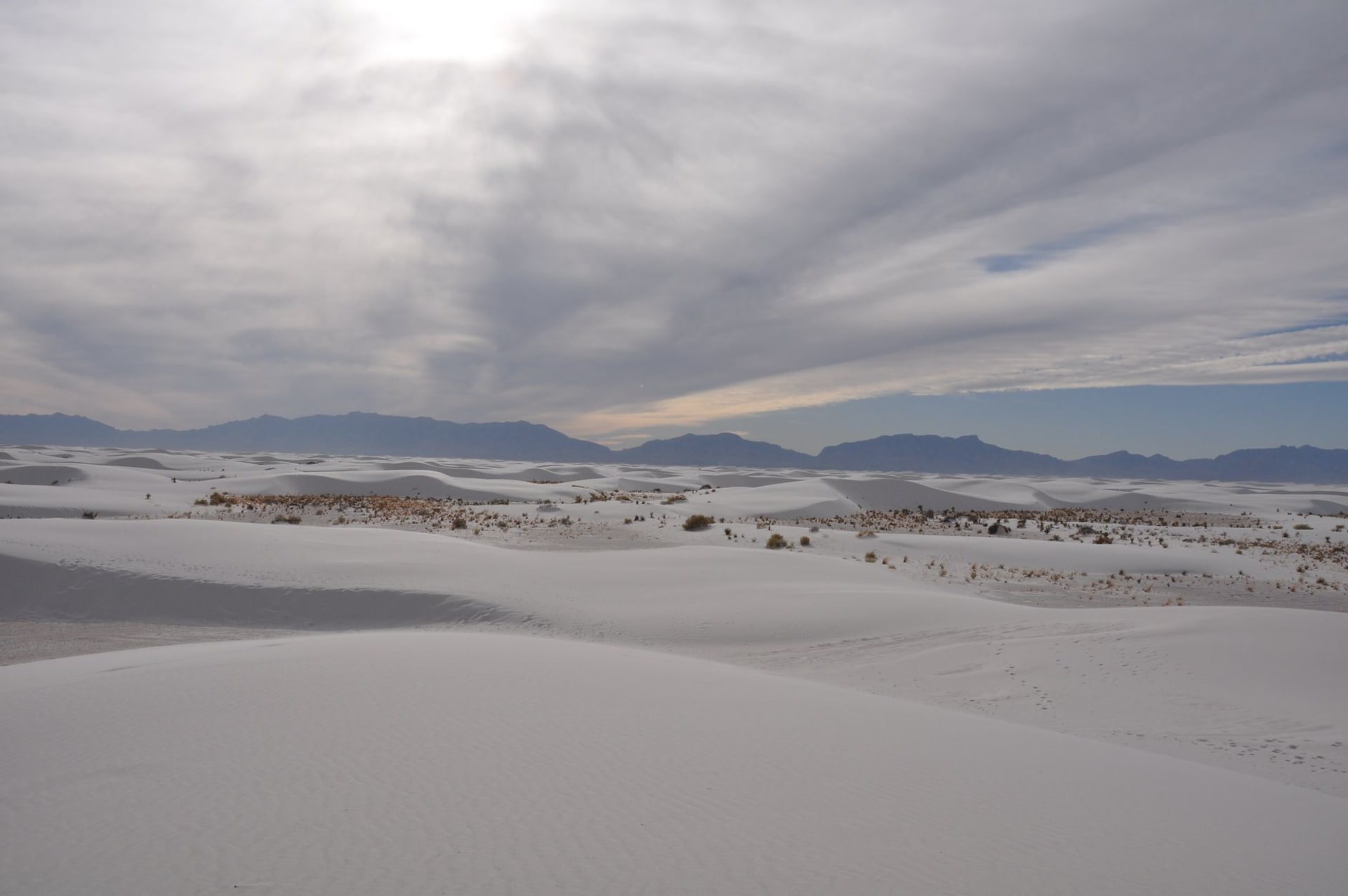
White Sands sits in the Tularosa Basin of southern New Mexico, hemmed in by the San Andres and Sacramento mountain ranges, surrounded by a missile testing range, accessible by a single road through the scrub — and completely unlike anything else in the Southwest or anywhere else I’ve been. The gypsum dunes are white, genuinely white, and walking into the park for the first time I kept expecting the color to resolve into something more recognizable. It didn’t. The sand stays white — blindingly so at midday, softening to cream and pale rose as the sun descends.

Gypsum dissolves in rainwater, which is why gypsum dunes are rare — in most climates the rain would slowly carry the mineral away. But the Tularosa Basin has no drainage to the sea. Whatever falls in, stays in. The water evaporates and the gypsum is deposited, and the wind does the rest, sculpting the mineral into dunes that migrate slowly northeast at a rate of thirty feet per year. The interpretive signs explain all this carefully, and I read them, but the fact that doesn’t leave me is simpler: the dunes are being gradually eaten by an adjacent lake — Lake Lucero — which is dry most of the year and white with gypsum crystals when it is. The whole system is a closed loop.
I went twice in the same day. First at midday, when the white dunes were almost too bright to look at directly and the sky had a bleached quality and the few other visitors were carrying sleds for riding down the steeper slopes. I slid down one dune on a plastic disc I’d rented at the gift shop and felt momentarily eight years old in the best possible way. Then I drove back in for the sunset. The park stays open two hours after official closing specifically for sunset viewing, and this is the correct time: the dunes go from white to cream to the softest imaginable pink, and the mountains around the basin catch the last light and the sky turns colors that have no business existing in the same sky simultaneously. I sat on a high dune and watched it happen and was one of perhaps fifteen people spread across a landscape that felt endless.

The Alkali Flat Trail is the most immersive option for hiking — five miles across the heart of the dune field, away from the road, with the surrounding mountains visible but distant. Carry more water than you think you need. The white sand reflects heat upward as well as light outward, and dehydration is a faster problem here than in dunes of ordinary color.
When to go: October through April for bearable daytime temperatures. Sunset visits are worthwhile year-round. Summer afternoons are seriously hot — the reflective gypsum amplifies rather than absorbs heat — but the full-moon nights are famous locally, and the park opens for special evening programs when the dunes glow silver under a New Mexico moon. The missile range occasionally closes the access road for a few hours during testing; check the park website before driving a long way.