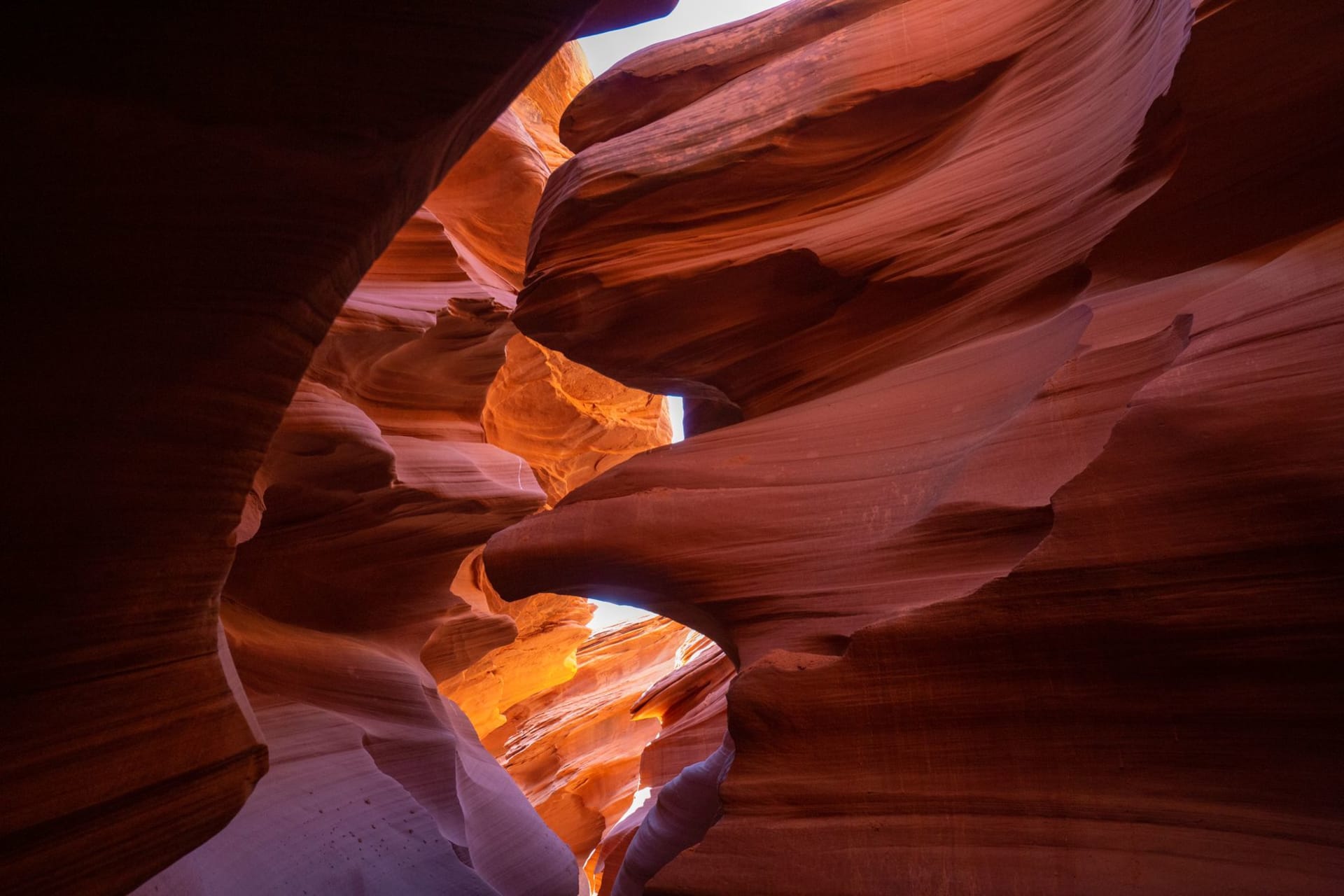
Antelope Canyon
"Every photograph you've seen of Antelope Canyon is accurate and none of them is sufficient."
There is a moment, roughly four steps into Antelope Canyon, when the world above — the hot flat plain of the Navajo Nation outside Page, the parking lot, the other tourists you’ve just been standing with — ceases to exist. The walls close to a couple of meters on either side, the sandstone rising in sinuous curves forty feet above you, and the light changes quality entirely. It comes down from the slot above in a color that has no name in the standard vocabulary — somewhere between rose and copper and the inside of a peach — and it bounces between the walls so many times before reaching the ground that by the time it hits the sand, it is entirely ambient. You are standing inside color.
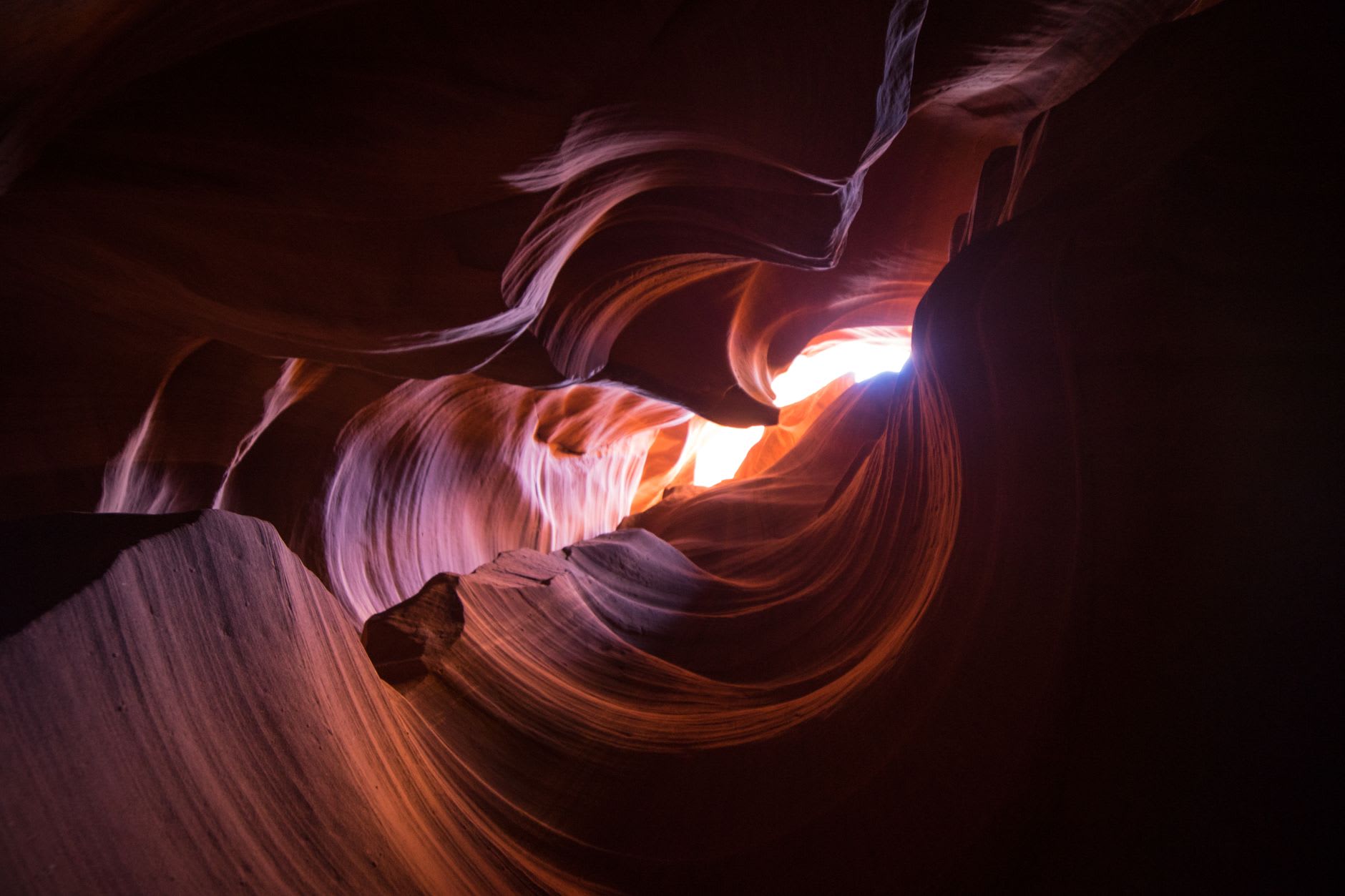
Upper Antelope Canyon (Tsé bighánílíní — the place where water runs through rocks) is the more accessible section, the one with the famous light beams that appear when the sun hits certain angles between 10 a.m. and noon from April through September. I went in late May, which is near the peak of the light beam season, and the guide — a Navajo man named Lester who carried a tripod for guests who wanted long exposures — positioned us in the exact spot at the exact time and the shaft of light came through a crack in the rock overhead and landed on the sand in a column so clean it looked artificial. I understand, in that moment, why photographers have dedicated entire careers to this single location.
The canyon was formed by flash floods carving through Navajo sandstone over millennia — the same floods that remain a real danger today. Access is by Navajo-licensed tour only, which is not bureaucratic interference but a practical safety arrangement: the guides know when the sky to the north looks wrong, and they get people out before water comes through the narrows. In August 1997, eleven people died in a flash flood here. The guides take weather seriously, and so should you.
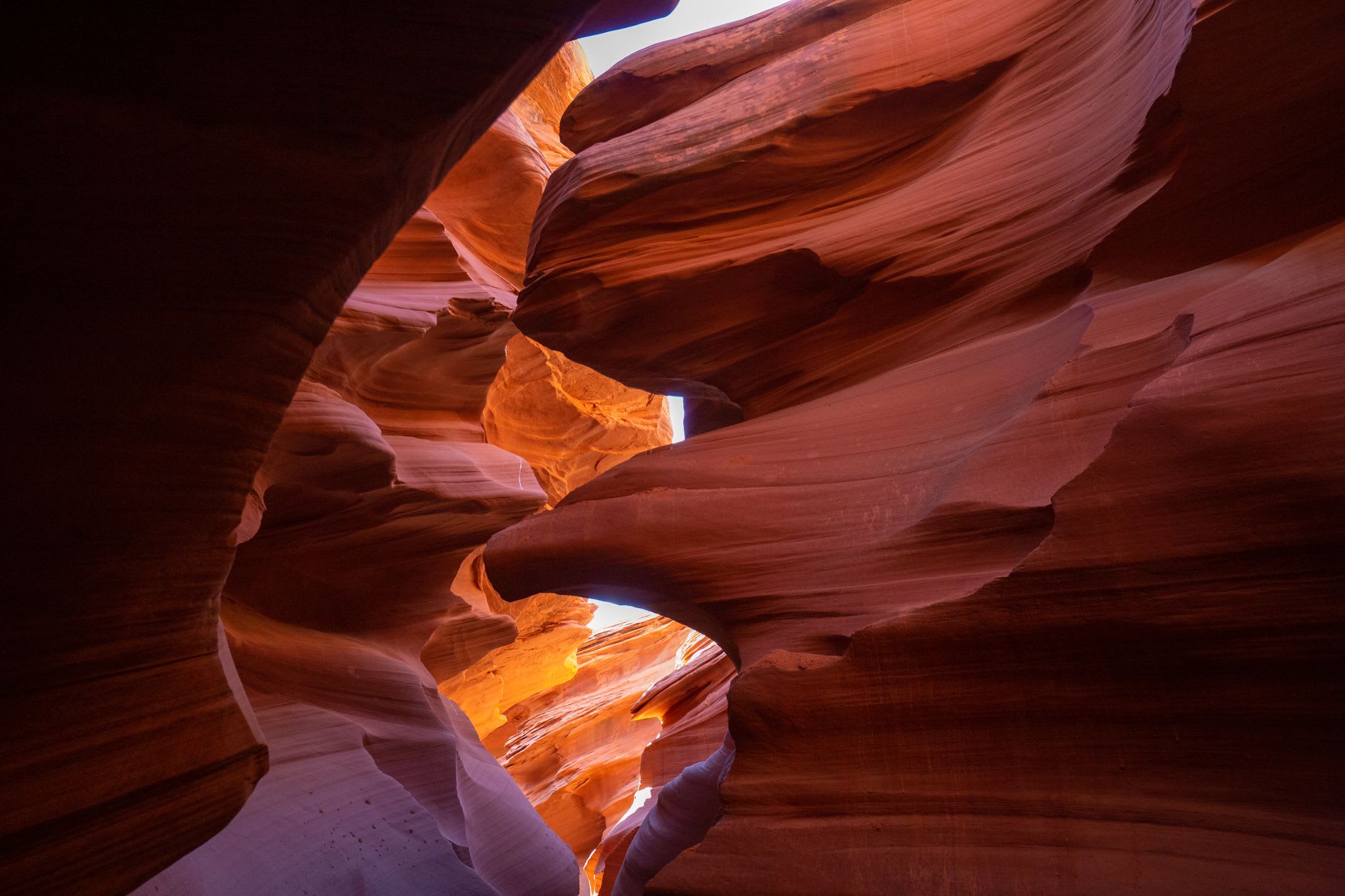
Lower Antelope Canyon (Hazdistazí — spiral rock arches) is longer, less photographed, and requires climbing through ladders to access. I preferred it for exactly those reasons — fewer people, more of the canyon to absorb, and the rock formations are if anything more varied. The colors shift from orange to purple to cream as you descend, depending on the angle and the time of day.
When to go: April through September for the light beams in Upper Canyon, with peak intensity around the summer solstice in June. The canyon is open year-round but winter light is softer and the beams less defined. Book tours well in advance, especially for the midday light-beam slots — they sell out weeks ahead in summer. Morning and late afternoon tours have fewer people and more interesting shadow play on the walls.