Yurimaguas
"The cargo boat left at midnight, which is when most Amazon cargo boats leave most Amazon ports, and by dawn we were deep into something I hadn't expected."
The cargo boat left Yurimaguas at midnight, which is when most cargo boats leave most Amazon river ports, and by morning we were well into the Huallaga River’s lower reach, the jungle pressing in on both banks while passengers ate breakfast from vendors who walked the decks with baskets of food balanced on their heads. Yurimaguas is where the road from Lima ends and the river system begins — a junction point that accumulates a particular kind of traveler: overland crossers, hammock-hangers, people whose itineraries have quietly given up on timetables and are now operating on river logic instead.

The town sits on a hill above the Huallaga’s confluence with the Cahuapanas, and it wears its function as a transit hub with a certain unpolished pride. The central market is excellent — one of those markets where the supply chain is visibly the river and the jungle, and where the fish are identified by proper Amazonian species names rather than the generic labels of more tourist-oriented places. Doncella. Gamitana. Boquichico. Women from surrounding communities had come in by canoe with bundles of fresh herbs, palm hearts, and the small spiky fruit of the huito, which stains anything it touches a deep blue-black that lasts for days. I bought a kilo of camu camu at a price that made me feel I had been overpaying for it in Iquitos, and ate most of it sitting on the malecón watching the boats load.
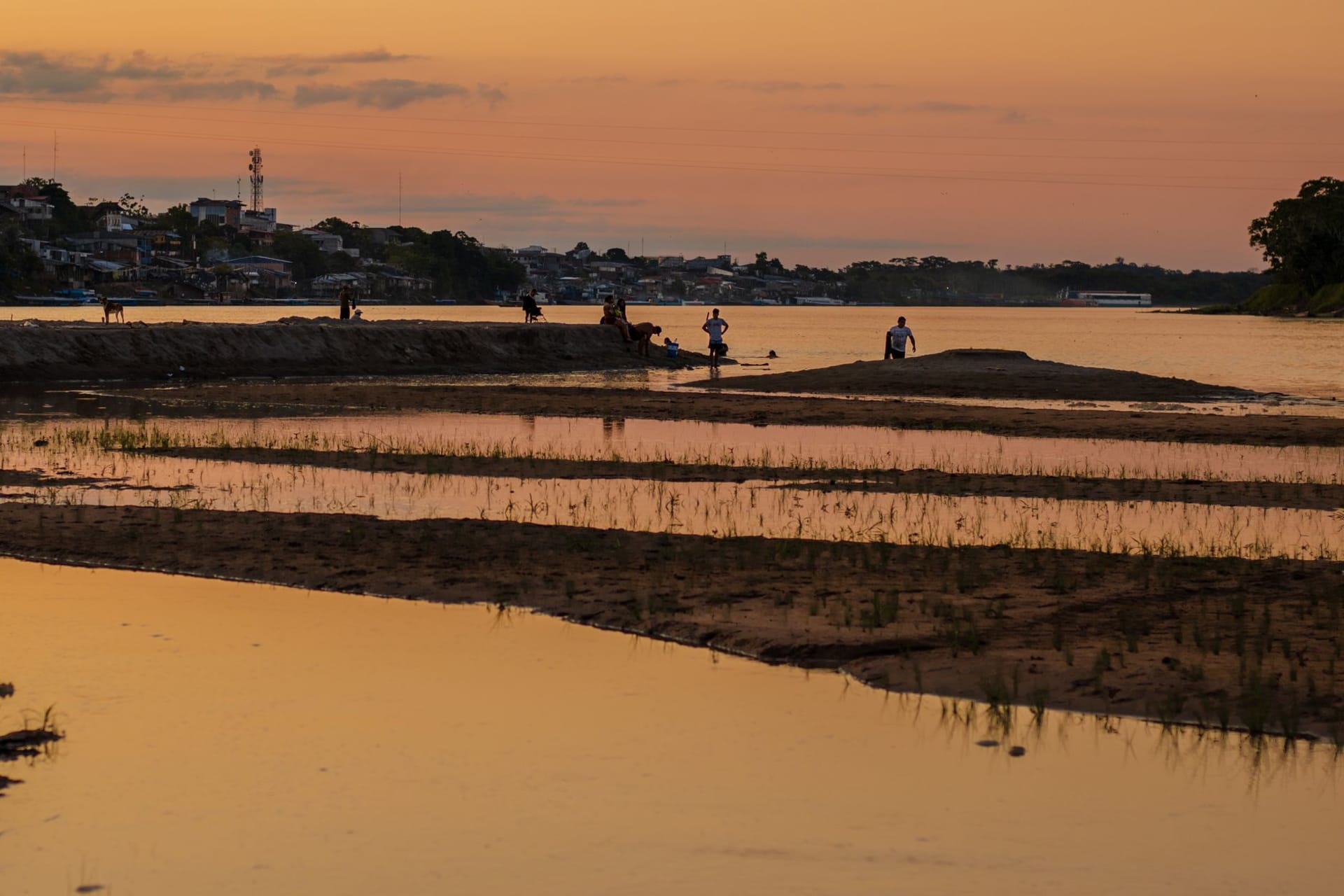
The malecón at dusk is the best time to understand Yurimaguas. The Huallaga is not the widest of the Amazon’s tributaries but it is wide enough here that the opposite bank looks like a distant country — unbroken forest right to the water’s edge with no sign of habitation, no clearings, no smoke. A mist comes off the water as the air cools and the sky goes orange-pink behind the western treeline, and for a moment the town stops performing its function as a transit hub and just sits with the river the way it always has, the way it was sitting with the river before anyone built a road from Lima.

The boat I took down the Huallaga toward Lagunas — the gateway to the Pacaya-Samiria reserve — left at midnight as scheduled, which in this context means it left at two in the morning. I had a hammock strung between two poles on the upper deck, my bag wedged under me, and I lay there watching the jungle on both banks slide past in the dark, the occasional light from a riverbank community blinking through the trees. Someone was playing cumbia on a phone somewhere below me. The river smelled of mud and vegetation and distance. It took nine hours and I would do it again without hesitation.
When to go: Year-round — Yurimaguas functions in all seasons because the river is its purpose and purpose doesn’t have a dry season. The boat journey downriver to Lagunas, the Pacaya-Samiria entry point, takes eight to twelve hours depending on the vessel. The road from Tarapoto to Yurimaguas (two to three hours) is mostly paved and reliable in all but the worst rain.