Tambopata National Reserve
"The howler monkeys started at four thirty and the birds came in layers above them — by five the whole forest was a sound you felt in your sternum."
The lodge was an hour by boat from Puerto Maldonado, but it felt like a different planet. The Tambopata River runs clear and dark — tannic, the color of strong tea — and the forest on both banks was primary growth, unbroken canopy stretching to the horizon in every direction. My first morning I woke before five to what I can only describe as the full orchestral version of the Amazon: howler monkeys beginning their bass-line roar while the birds responded in layers from the understory upward, until the dawn chorus was something physical in the chest. I lay in the mosquito net and listened without moving for twenty minutes before I remembered to reach for my notebook.

Tambopata’s great spectacle is the Colpa de Guacamayos — the macaw clay lick, one of the largest in South America. Several hundred macaws and dozens of parrot species gather each morning on an exposed clay face to eat the minerals that neutralize the toxins in their fruit-heavy diet. I arrived at the hide before sunrise and waited in the dark while the clay lick began to fill. First the small parakeets in the high trees, working at the edges. Then the blue-and-yellow macaws in pairs, then the scarlets in larger groups, until the entire face was moving with color and the noise was something you needed to adjust to before you could hear the individual voices inside it. I sat there for three hours and would have sat longer. The guide eventually touched my shoulder and pointed at the sky.
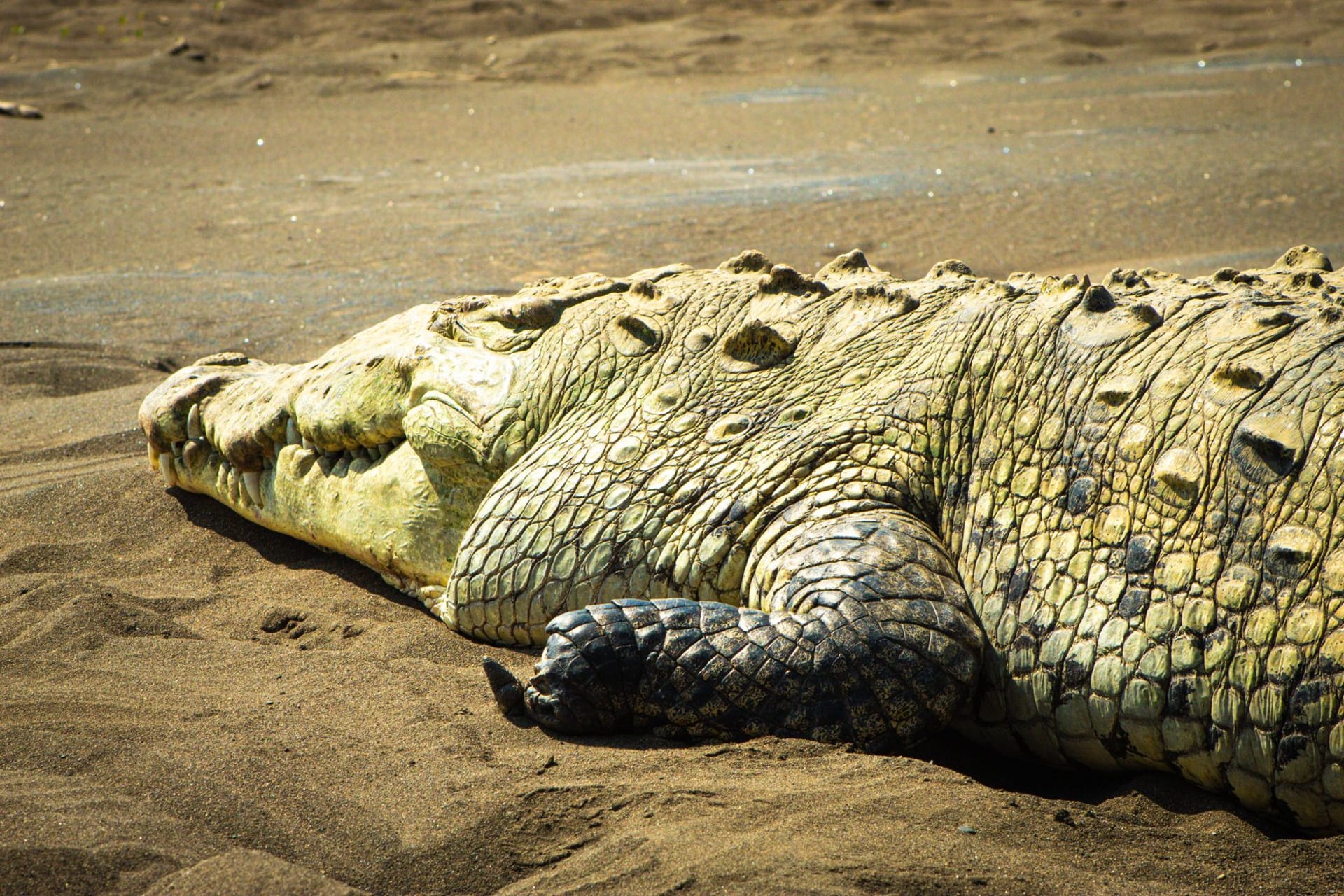
The forest around the lodge offered its own slower rewards over the remaining days. A tree trunk covered so densely with army ants that the bark seemed to breathe. A family of emperor tamarins in the lower canopy — tiny, mustached, watching me with the frank curiosity of animals that have made a calculation about your danger level and found it acceptable. A black caiman on a log so still I nearly stepped on it on a night walk, the guide’s arm catching mine with a casual sureness that spoke to long practice. In the evenings, the night walks produced their own sequence of revelations: a tarantula in a silk tube at the base of a root buttress, a sleeping potoo on a bare branch, the eyeshine of spiders in the leaf litter catching the headlamp beam like scattered diamonds.

The Tambopata also rewarded stillness. On the afternoon of the third day I sat for two hours on a river bank without moving and counted forty-seven bird species without binoculars, including a sunbittern doing its threat display — spreading its wings to reveal the enormous eye patterns on the primaries — at something moving in the grass three meters away. This kind of payoff requires nothing more than patience and a willingness to stop treating the forest as something to move through.
When to go: June through October for the clay lick, which is most reliable when the river is at its lowest and the macaws are most concentrated. July and August book out months in advance — plan accordingly and reserve directly with lodges that have exclusive or near-exclusive access to the colpa. The journey from Puerto Maldonado to deep-reserve lodges takes two to four hours by boat depending on the destination.