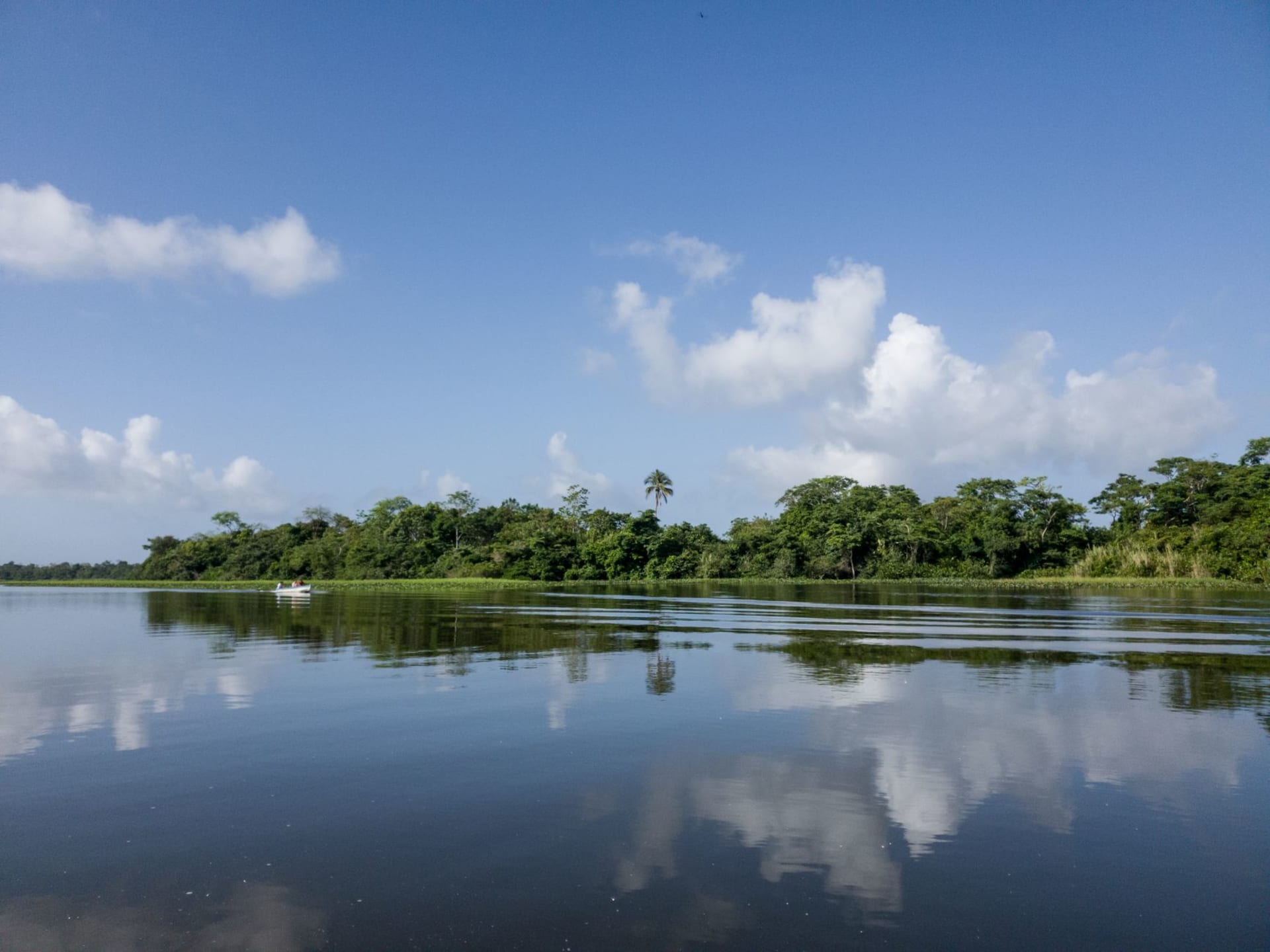
Río Yarapa
"The guide said the nearest road was five hundred kilometers away. I felt something release in my shoulders that I hadn't known was there."
The Río Yarapa branches off the Ucayali somewhere south of the Pacaya-Samiria’s eastern boundary, and the lodges along its banks were, for a long time, among the most remote tourist accommodation in the Peruvian Amazon. Getting there required a full day by speedboat from Iquitos — the first hours on the wide brown Marañón, then the narrowing tributaries, then the last two hours in a channel so tight the vegetation brushed both sides of the boat. When I arrived, my guide told me we had passed the last community two hours back, and the nearest road was five hundred kilometers away. I felt something release in my shoulders that I hadn’t known was holding.

The Yarapa is a blackwater river — tannic and clear, the color of dark tea held up to the light — and the contrast with the brown Ucayali is immediate and visual at the confluence, the two colors mixing in slow motion over several hundred meters. The boto dolphins appeared on the second morning, a group of pink individuals and a smaller cluster of grey tucuxi, working together through a narrow bend in the river while my guide paddled our canoe in their wake. The botos came impossibly close — one surfaced two meters from the hull with its long, slightly upturned snout and the small, sideways eye of something that has been navigating flooded forest in the dark for millions of years. The smell is fish and something musky. The sound is a breath that seems too large for the body.
Five nights on the Yarapa produced a sequence of sightings I am still organizing in memory: a troupe of black spider monkeys moving through the high canopy with a fluid speed that made the trees look like a road; a horned screamer standing at the river’s edge at sunset with the expression of a bird that has decided the world is simply beneath its attention; a potoo on a bare snag after dark, its eye opening briefly in the headlamp beam and then closing again as if I were a minor inconvenience. The caimans were everywhere once you learned to see them — the low profile, the stillness, the way the eyes caught the lamp and held the light.

The nights were what I keep returning to. No light pollution of any kind — the darkness that city-dwellers have forgotten exists, complete and physical and inhabited by sound. The Milky Way was so dense overhead it looked textured, and the river beneath it was a black mirror reflecting the stars so precisely that lying in the canoe I couldn’t always locate the horizon. I woke early every morning without an alarm, which says something about what the Amazon does to the rhythms you arrive with. By the fourth morning I had stopped trying to translate the forest’s logic into terms I already knew, which is, I think, the beginning of actually being somewhere.
When to go: June through October for the clearest skies, lowest water, and best trail conditions. The journey from Iquitos is a full day in each direction — commit to at least four nights at the river to absorb the travel and settle into the forest’s pace. Fewer than three nights and you’ll spend the whole time adjusting and then leave before the adjustment pays off.