Pucallpa
"Pucallpa is not pretty and makes no apology for it, and within a day I'd stopped wanting it to be anything other than itself."
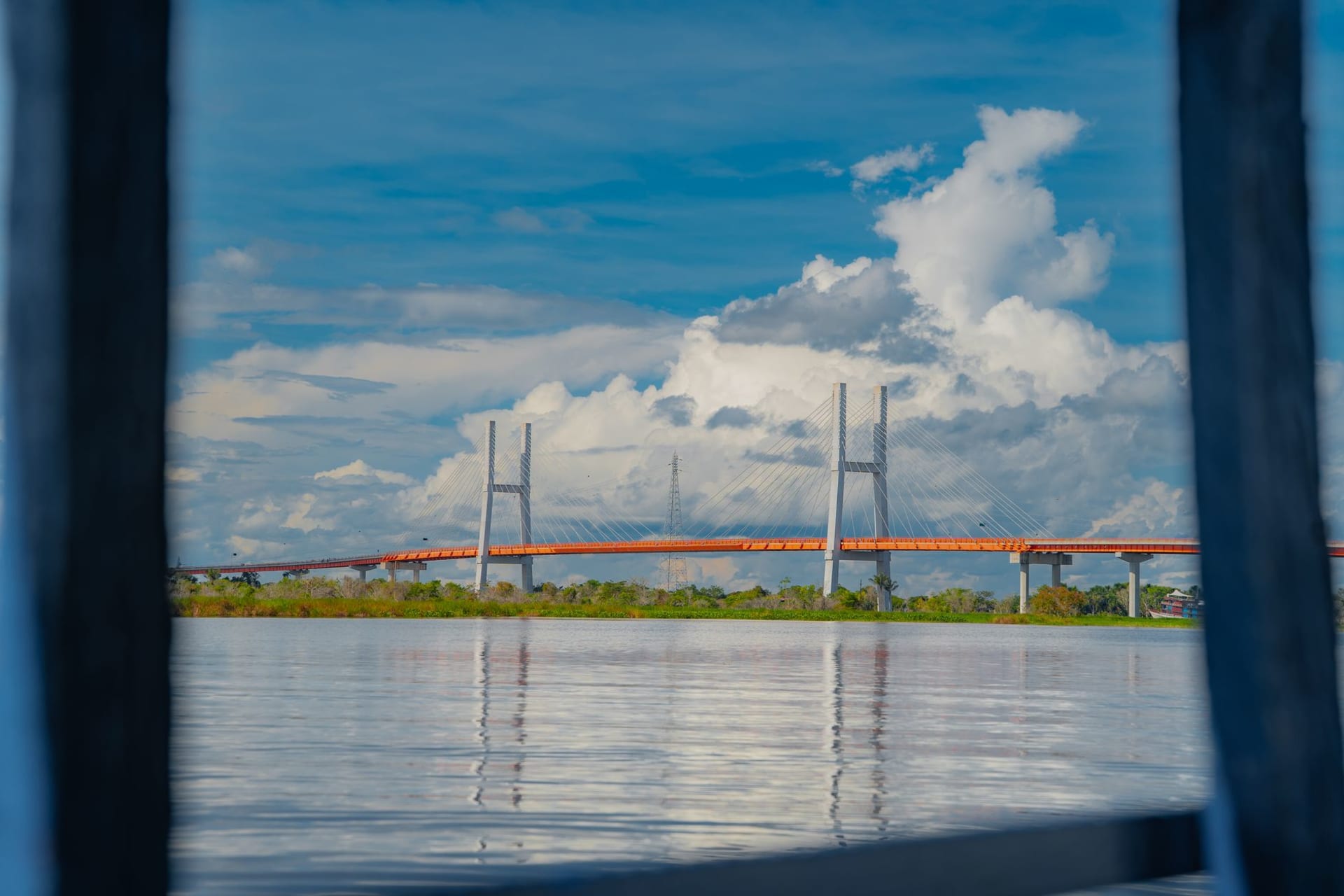
Pucallpa gets a bad write-up, and arriving there I understood why and then slowly stopped caring. It’s a hot, sprawling, motorbike-choked port on the Ucayali River, one of the Amazon’s great tributaries, and it has none of the photogenic decay of Iquitos or the postcard tidiness anyone expects of a jungle gateway. It’s a working town — timber, oil, fish, commerce flowing up and down the river — and the heat sits on it like a wet cloth. But Pucallpa is also one of the few major Amazon cities you can actually reach by road from the Andes, and that accessibility, plus what lies just outside it, makes it worth the discomfort.
The lake just outside town
The thing that redeems Pucallpa, immediately, is Yarinacocha, an oxbow lagoon a short drive from the centre. It’s a curve of calm water left behind by the shifting Ucayali, ringed by villages and forest, and it functions as the city’s lung and weekend escape. Lia and I hired a peke-peke — a long wooden boat with a tiny, deafening engine that gives the craft its onomatopoeic name — and spent an afternoon putting slowly around the lake, watching pink river dolphins surface and roll in the brown water with a sound like someone exhaling.

The dolphins were a genuine surprise — I’d associated boto, the Amazon pink dolphin, with deeper wilderness, and here they were a fifteen-minute boat ride from a city of hundreds of thousands. Our boatman cut the engine and we drifted, and for ten minutes the only sound was the lake and the occasional soft surfacing breath nearby. It is, in its quiet way, one of the better wildlife moments I’ve had in the Amazon, precisely because it came without ceremony or a hefty lodge price tag.
Shipibo art and a different geometry
What stayed with me longest, though, was the Shipibo-Conibo presence around the lake, particularly in the village of San Francisco. The Shipibo are renowned for a visual tradition unlike anything else in the Amazon — intricate geometric patterns called kené, said to be visualizations of songs and of the order of the cosmos, applied to textiles, ceramics and skin. I watched a woman embroider a cloth freehand, no template, the maze of interlocking lines emerging with absolute confidence, and bought one directly from her, which felt better than any gallery transaction.

She explained, through a younger relative translating, that the patterns aren’t decorative in the way I’d assumed — that they carry meaning, that a song can be ‘read’ from a design and sung back. I won’t pretend I fully grasped it; the framework is genuinely different from how I’m wired to see the world. But standing in that village, with the lagoon behind me and that dense, singing geometry in my hands, I felt the specific pleasure of encountering a way of thinking I hadn’t known existed. Pucallpa, the unlovely port, had delivered the most quietly profound afternoon of the whole stretch.
When to go
The drier months from roughly May to October make road access from the highlands and boat travel on the river more reliable. Pucallpa is hot and humid year-round; base yourself near Yarinacocha rather than in the centre, hire a peke-peke for the lagoon and the dolphins, and visit the Shipibo villages respectfully and buy directly from the artists.