Iquitos
"The mototaxi driver told me Iquitos was the best city in Peru. By my third evening, I was starting to think he might be right."
The airplane circles over brown water and green canopy before the grid of streets materializes below — a city of half a million people with no road connecting it to the rest of Peru. That fact alone would make Iquitos worth the trip, but the city turns out to have its own logic, its own rhythm, its own smell: diesel and river mud and something sweet I could never quite identify, maybe the rotting vegetation of the várzea at low water. I took a mototaxi from the airport into the center and the driver told me, unprompted, that Iquitos was the best city in Peru. He said this with the flat certainty of someone stating a geographical fact.

The Plaza de Armas is surrounded by buildings with wrought-iron balconies that came from Eiffel’s workshops in Paris, shipped upstream at the height of the rubber boom when the Amazon was producing fortunes and Iquitos was their capital. The Casa de Fierro — the Iron House — stands at one corner, its corrugated iron walls painted cream, slightly absurd in the heat. Rubber money flowed through here like the river itself, and then it stopped, and the city found another gear. You can feel both eras walking the grid: the faded grandeur of the boom years and the improvised commerce of the present. Men sleep in hammocks on the balconies. Women sell camu camu juice from plastic jugs. The river smell finds you anywhere within three blocks of the waterfront.
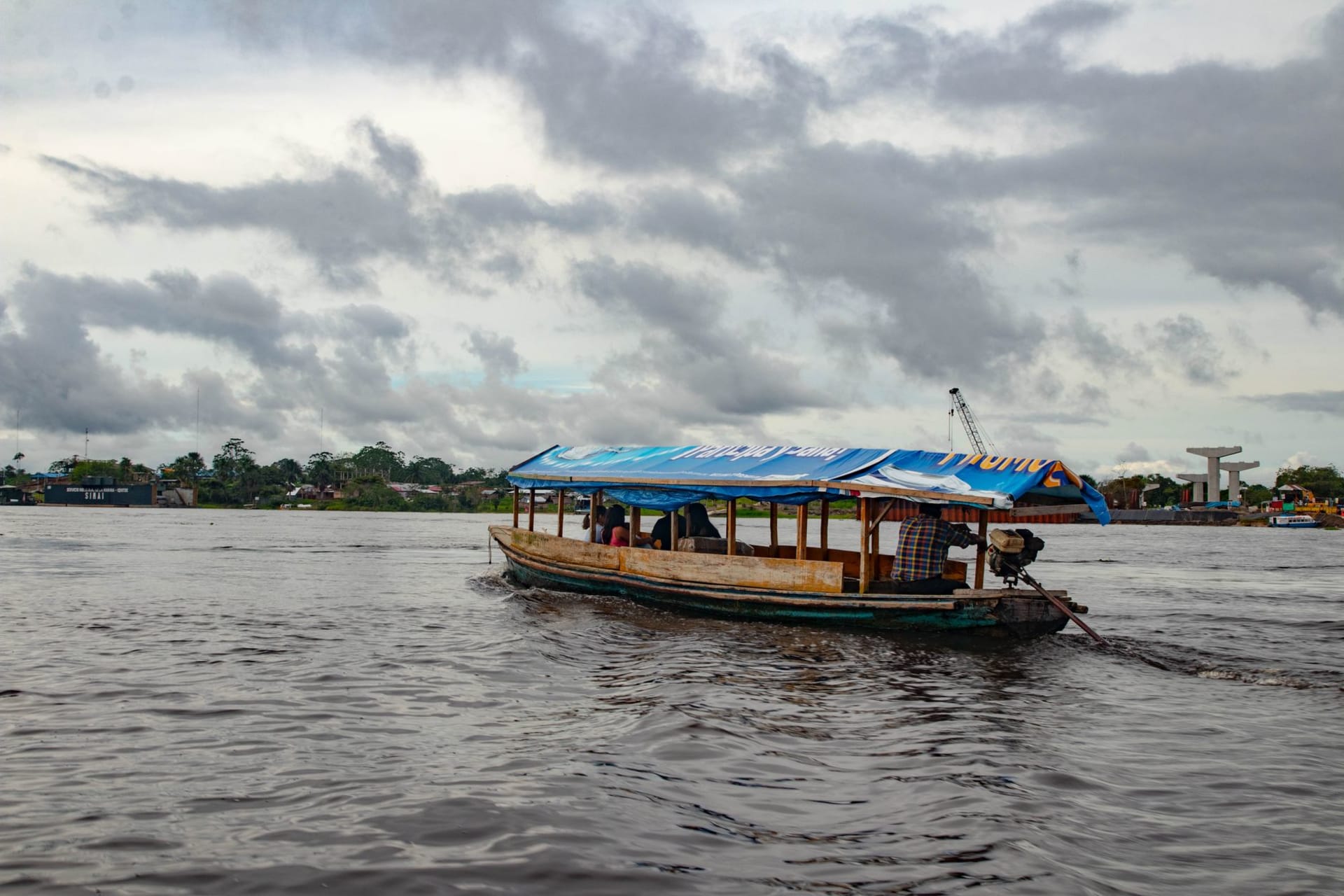
The Malecón Tarapacá runs along the riverbank and at dusk it becomes the social center of the city — families eating on benches, motocars circling, boats pushing upriver with cargo stacked to improbable heights. I sat there most evenings with a cold beer and the peculiar satisfaction of being somewhere genuinely hard to get to. The brown water of the Amazon stretched south toward the confluence with the Marañón, wider than I could see across. A riverboat was loading for a three-day journey downstream, its deck already hung with hammocks in a dense multicolored tangle.

The food in Iquitos rewarded the kind of slow attention the heat encouraged. Inchicapi, a peanut and chicken soup, at a corner restaurant where the owner had been serving the same recipe for thirty years. Patarashca, a whole fish wrapped in bijao leaves and grilled over charcoal until the leaf fragrance penetrates the flesh. Camu camu juice that arrives looking orange and tastes like lime and vitamin C and something else entirely. At the Mercado San Juan on the city’s edge, the stalls selling jungle remedies — sangre de grado, uña de gato, aceite de copaíba — sat next to stalls selling phone cases and sportswear, and the whole scene had the easy coexistence of a city that has long since stopped being surprised by its own contradictions.
When to go: June through October for low water, accessible trails, and concentrated wildlife on any excursion out of the city. November through May brings serious rain and opens the flooded forest to canoe access. There is no bad time — just different versions of Iquitos. Budget at least two full days in the city itself before heading into the jungle; most itineraries don’t, and most itineraries are wrong.