
Sarayaku
"Sarayaku didn't feel like a destination. It felt like being let inside a decision the whole world should have to make."
A Kichwa territory on the Bobonaza River where the forest itself is treated as a living, rights-bearing being.
Getting to Sarayaku is its own kind of lesson in patience. Lia and I looked at the map in Puyo and realized there were really only two ways in: a puddle-jumper flight on a five-seater plane, or two days by canoe down the Bobonaza. We chose the plane going in and promised ourselves the river coming out, mostly because I wanted to see the community’s territory the way generations of Kichwa families actually have — from water level, not from three thousand feet. The flight alone told me something about scale: we were flying over roughly 135,000 hectares of unbroken forest in Pastaza province, and somewhere down there was a community that had taken on an entire government and won.
That win is not an abstraction here — people talk about it like it happened last month, not in 2012. Our host, a Kichwa guide named Franco who’d grown up between the river and the forest trails, walked us to a stretch of jungle still scarred with old seismic testing lines from an oil company that entered without Sarayaku’s consent back in the ’90s. He explained, calmly, how the community fought that all the way to the Inter-American Court of Human Rights and won a landmark ruling against the Ecuadorian state — and how Ecuador’s own Constitutional Court reaffirmed it again in January 2024, just eighteen months before we showed up. Standing on ground that had literally been the subject of international human rights law, drinking chicha someone’s grandmother had fermented that morning, was a strange and humbling kind of history lesson.
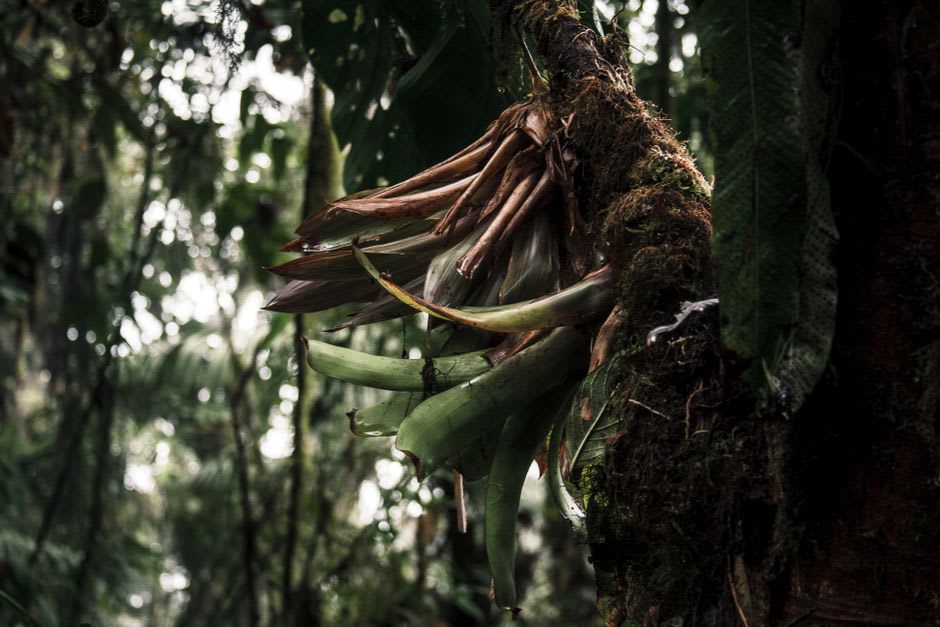
What stayed with me longest, though, was the idea Franco kept returning to: Kawsak Sacha, the Living Forest. It’s not a metaphor for Sarayaku, it’s closer to a legal and spiritual framework — the forest as a sentient, rights-bearing entity, not a resource to be managed. The community has used that concept to seek protection for more than 144,000 hectares against mining and drilling. One afternoon he took us to a lagoon he called a place of spirit guardians and asked us, genuinely, to lower our voices near it. I’ve been to a lot of rainforests. I have never been asked to be quiet out of respect quite like that.
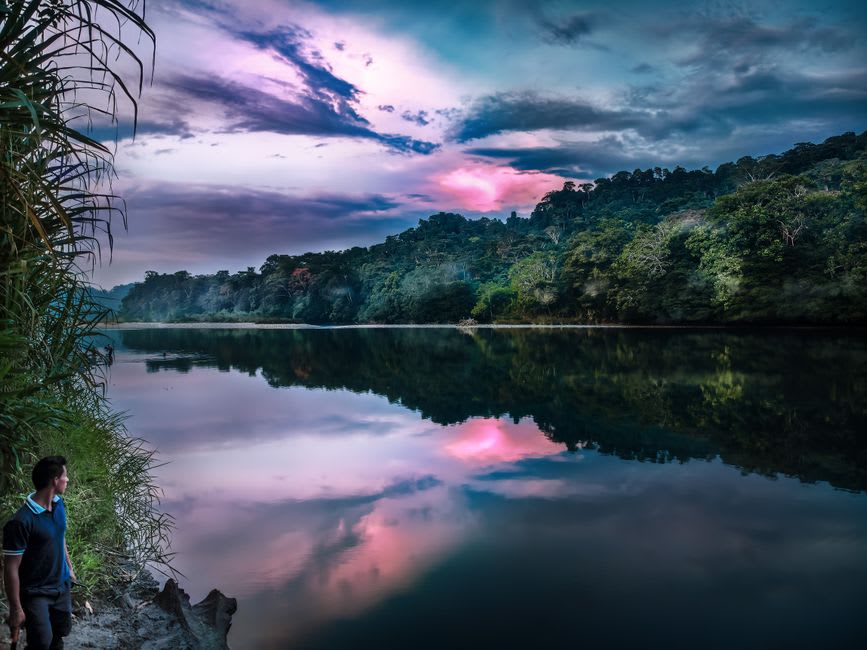
We stayed in one of the community-run lodges, ate grilled tilapia pulled from the river that same day, and spent an evening listening to an elder describe how the legal fight and the forest knowledge are really the same project, not two separate things. Lia said afterward that it was the first time a trip had made her think about land rights and not just landscapes. I think that’s exactly what Sarayaku is trying to do — and it’s working.
When to go: Aim for the drier months, roughly October through February, when the Bobonaza is calmer and river travel to and from the community is far more predictable.