
A stilted, solar-powered lodge deep in Achuar territory, reachable only by small plane, where the rainforest still sets the rules.
I’d flown into a lot of remote airstrips before, but never one where the pilot cut the engine and just said, “Achuar territory, welcome.” Getting to Kapawi means a puddle-jumper out of Shell, low over an unbroken green ceiling with no roads visible anywhere, and by the time we touched down on the dirt strip by the Pastaza River, Lia had her nose against the window the whole way. There’s no other way in. That isolation is the point — this stretch of southeastern Ecuador, right up against the Peruvian border, is Achuar land, and Kapawi exists because the Achuar decided it should.
What struck me first wasn’t the wildlife, it was the ownership story. The lodge opened in 1996 as a joint venture, but by 2008 the Achuar Nationality had taken over the whole operation — building, boats, decisions, everything. Our guide, whose uncle had worked construction on the original cabins, told us this over breakfast like it was the most obvious thing in the world, not something worth remarking on. I kept thinking about how rare that actually is in this industry.
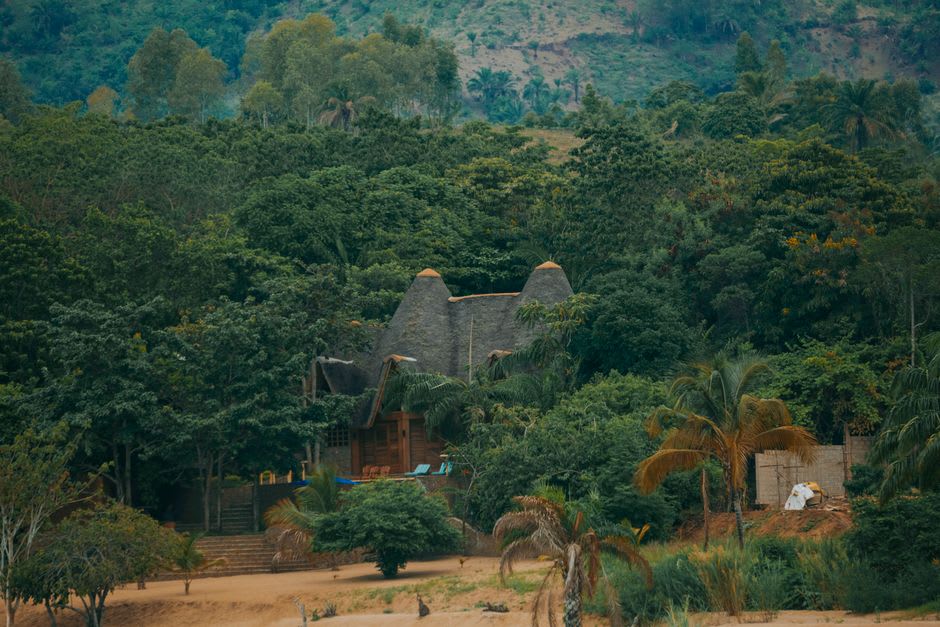
The cabins themselves are raised on stilts, thatched in traditional Achuar style, and run entirely on solar power — no generator hum at night, just river sounds and, once, something large moving through the water right below our floor that our guide identified the next morning as a giant otter. We paddled out to an oxbow lake near dawn one morning and watched a pair of pink river dolphins surface twice, unhurried, before vanishing back under. Lia, who’d been skeptical about the whole “no wifi for four days” plan, didn’t mention her phone once.
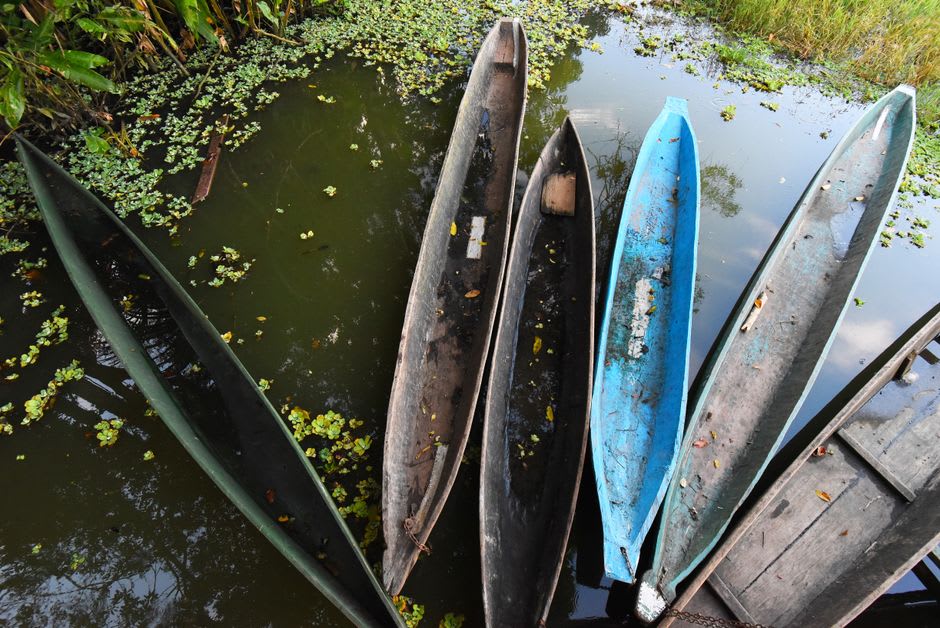
What I keep coming back to, months later, is how little Kapawi tries to perform “untouched wilderness” for you. It just is that, because the people who run it live there. We spent an afternoon in a nearby Achuar community, and it felt less like a tour stop and more like being tolerated as guests in someone’s actual life — which, honestly, is exactly what it was.
When to go: We went in the dry season, roughly October to February, and I’d steer you the same way — flights in and out are far more dependable then, and the wildlife along the oxbow lakes tends to show up more reliably too.
Keep exploring
More from Ecuadorian Amazon
 amazon-ecuador
 Lago Agrio
An oil boomtown that became a contamination case study — and the most honest gateway into the northern Amazon.
Explore amazon-ecuador
 Limoncocha
A black-water lagoon biological reserve in the Ecuadorian Amazon famous for its caimans, hundreds of bird species, and the eerie red glow of reptile eyes after dark.
Explore amazon-ecuador
 Macas
A small Amazonian city in Shuar territory where you can see Sangay volcano erupting at breakfast and reach primary jungle by lunch.
Explore amazon-ecuador
 Misahuallí
A jungle village so small the monkeys outnumber the guest beds — and the monkeys know it.
Explore amazon-ecuador
 Puyo
The last city before the jungle takes over completely — where the cloud forest exhales and the Amazon begins.
Explore amazon-ecuador
 Sani Isla
A Kichwa community on the lower Napo that turned forest knowledge into its own economy before the oil companies could.
Explore