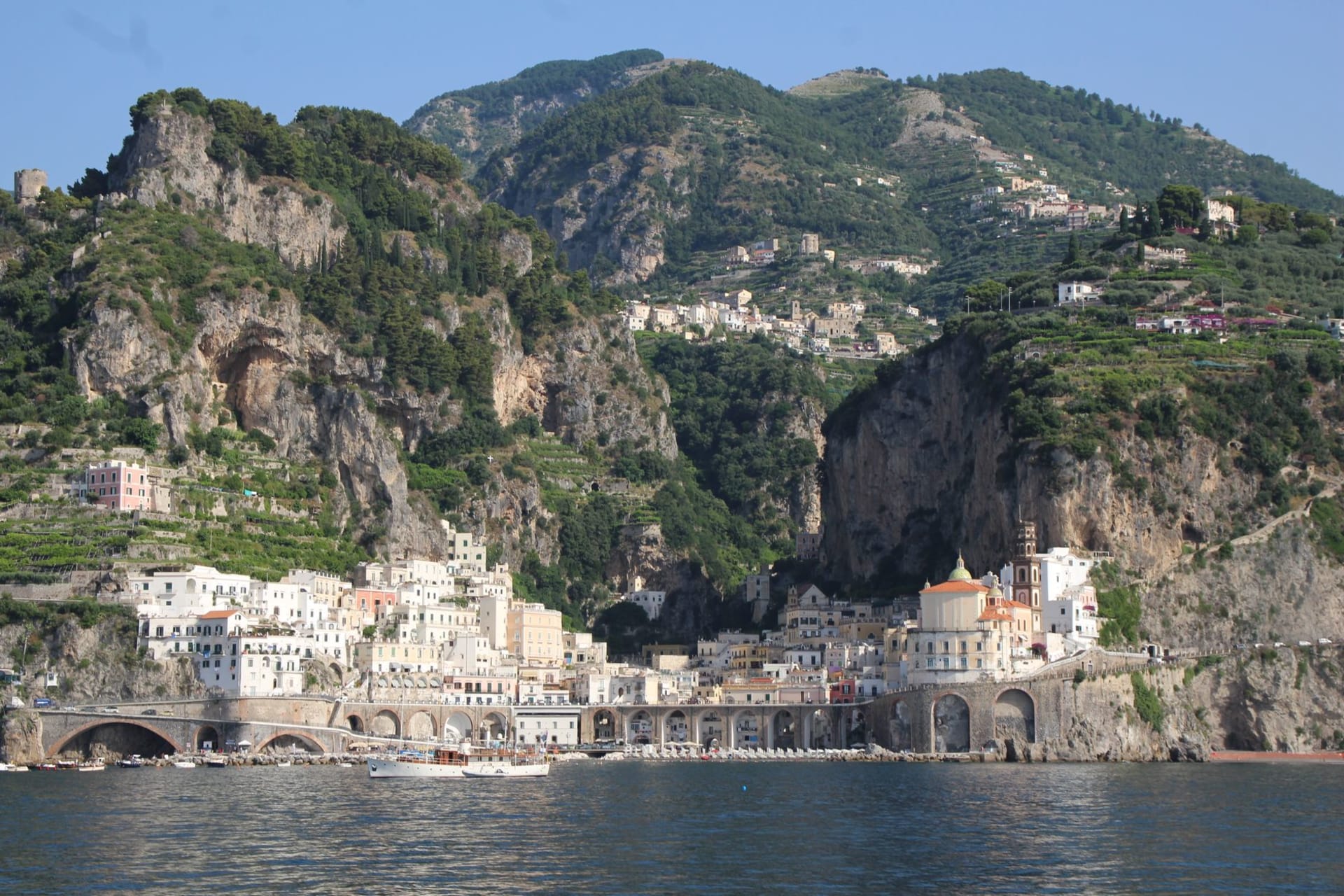
Amalfi Town
"The cathedral steps at nine in the morning, empty, the sun just catching the mosaic — I stood there longer than made any rational sense."
What catches you first in Amalfi town is the smell — a layered thing of coffee and salt and the sharp green sweetness of lemon, which comes from everywhere here and settles into the fabric of the place like a territorial claim. I walked in from the ferry dock along the lungomare and then turned up into the town through the arch at the base of the Piazza del Duomo, and there it was: the cathedral of Sant’Andrea, its Arab-Norman facade rising up a wide staircase, the mosaic glittering in the morning light. It is one of those facades that operates on a completely different register from whatever you were thinking about thirty seconds before you saw it. The black and white geometric patterns in the arches, the golden Christ above the doorway, the bronze doors cast in Constantinople in 1066 — it stopped me cold at the bottom of the stairs.
The piazza below the cathedral is the social heart of the town. Old men play cards under awnings. Tourists photograph the fountain. By midday it’s packed; by nine in the morning it’s yours. The best granita di limone on the coast is served from a small stand near the far corner of the piazza, made with sfusato amalfitano lemons — a local variety that has been grown on these coastal terraces for a thousand years, large and elongated with a rind so thick and fragrant you can use the empty shell as a cup. The granita is not sweet in any familiar way. It’s intensely, almost aggressively citric, with a coldness that feels medicinal in the July heat.

Behind the cathedral, the town unfolds into a network of covered arched lanes — sottopassaggi — and stepped alleys that climb the slopes of the Valle dei Mulini. Follow the valley upstream and you reach the Museo della Carta, one of those museums that shouldn’t work on paper (sorry) but absolutely does: an old paper mill converted into an exhibition about the medieval paper industry that made Amalfi rich and famous across the Mediterranean. The machines still work. A staff member demonstrated the process with water and linen pulp and a wooden frame and produced a sheet of paper that came out with the texture of something that had been made by hand because it had been made by hand. Amalfi was producing paper when most of Europe still used parchment.
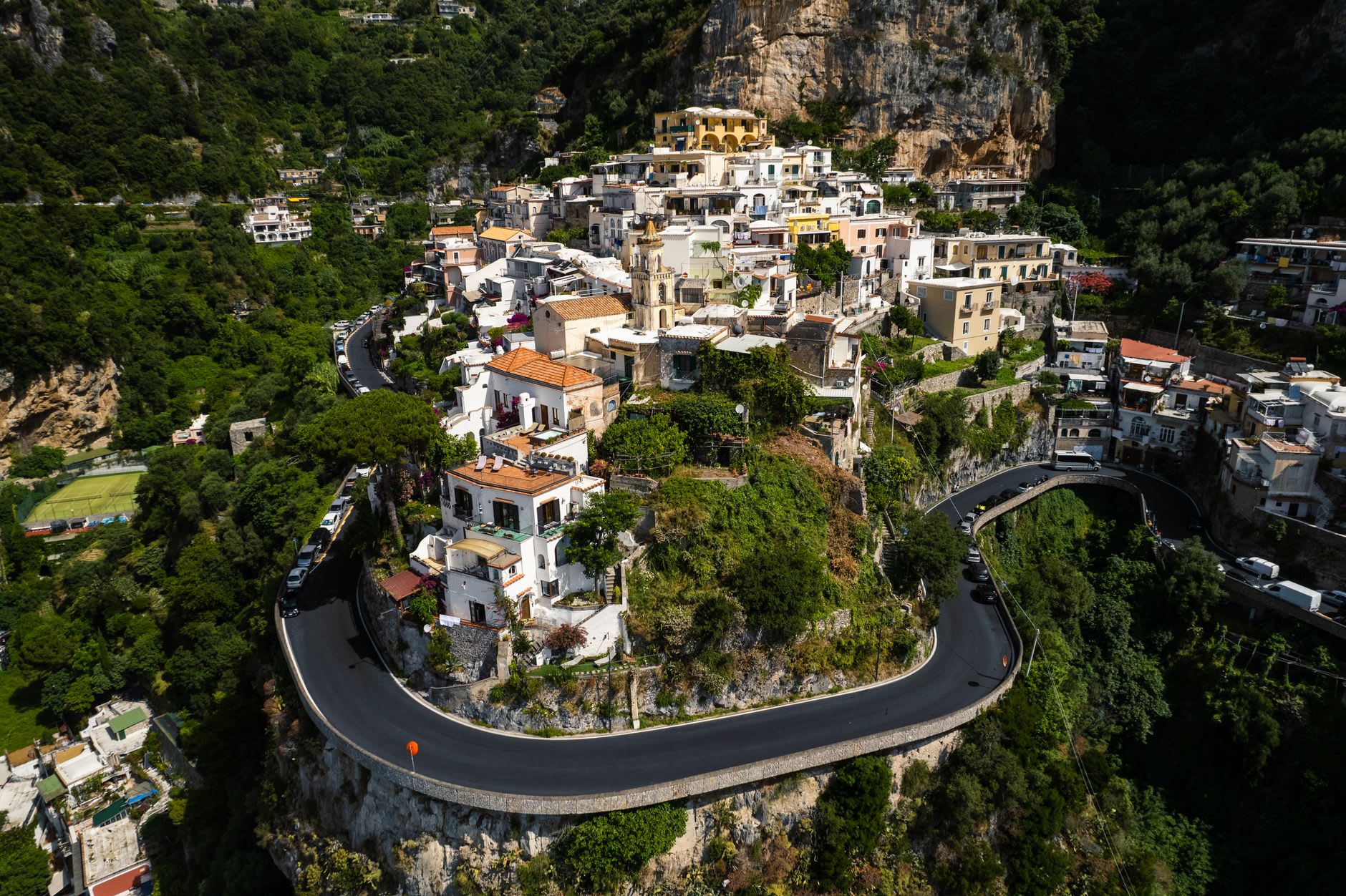
For eating, the lemon profiteroles from Pasticceria Pansa on the piazza are worth whatever small embarrassment they cause when you eat them standing outside and the cream goes everywhere. The restaurant at the back of the fish market near the port does a spaghetti al pomodoro with local San Marzano tomatoes that is so stripped of pretension it circles back around to being brilliant. Amalfi town is smaller than you expect and more human-scaled than Positano — there are still apartments above the shops where people actually live, washing strung across the alleys, children doing homework at bar tables in the afternoon.
When to go: May and October are ideal. In May the sfusato lemons are at peak fragrance and the light on the cathedral facade at dawn is worth setting an alarm for. October brings lower prices and longer golden-hour evenings. Avoid August if you value your sanity — the town is genuinely gridlocked, the piazza is wall-to-wall, and the granita lines wrap around the block.