Kaysersberg
"The covered bridge has defended this village since the fourteenth century. The Gewurztraminer has been doing the same work longer."
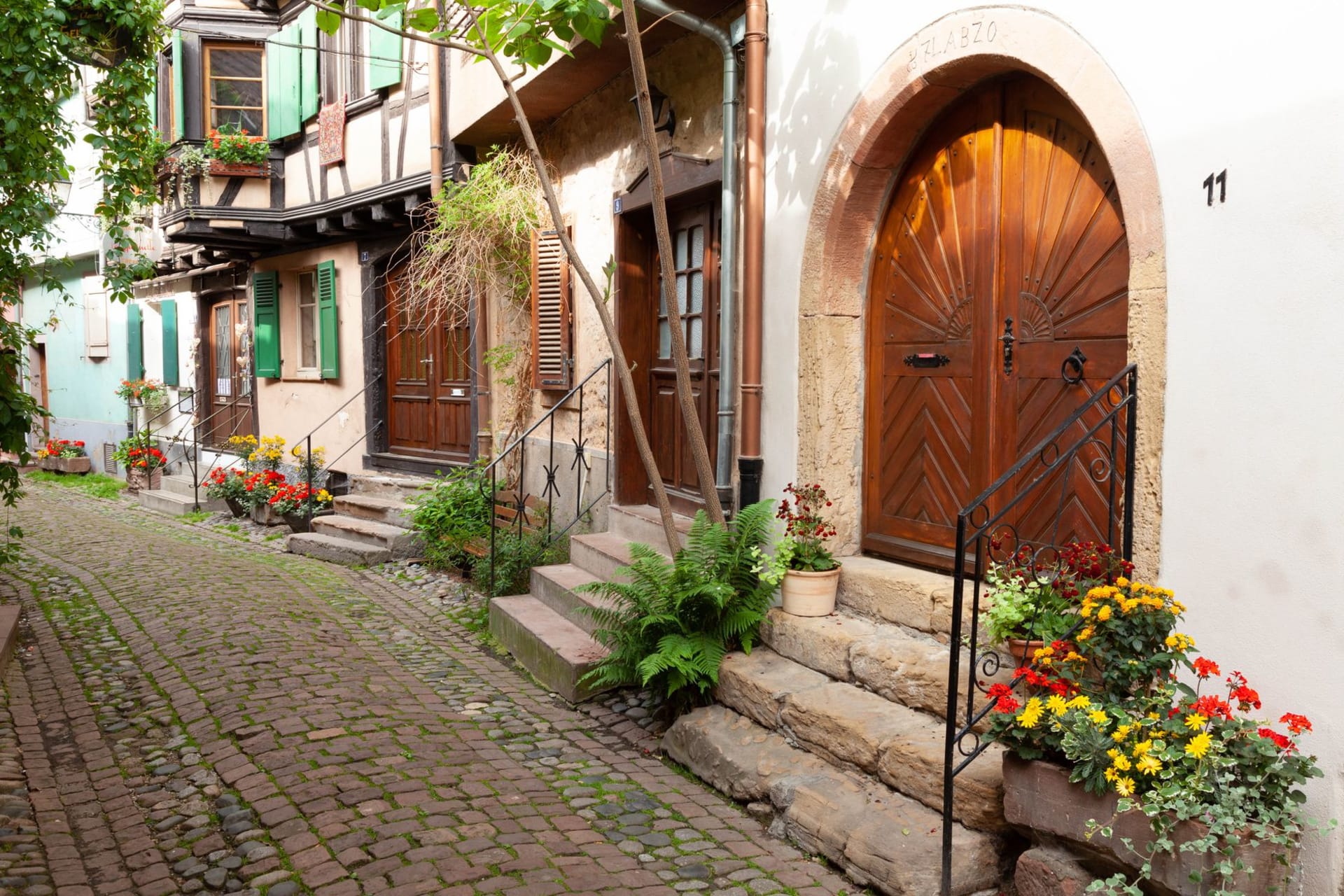
The Weiss river runs clear and fast through Kaysersberg, narrow enough that you can hear it from most streets in the old center, and the fortified covered bridge across it is the kind of thing that makes you stop and reconsider the purpose of a bridge. It was built in the fourteenth century, reinforced in the sixteenth, and has a tower and a small room that once served as a guardhouse, and it still carries foot traffic across the river with the same mild indifference it has maintained through seven centuries of French and German and French again. I stood on it for ten minutes while the water moved below me and a cat negotiated the stone parapet, and neither of us felt any particular urgency.
I’d come partly because of Albert Schweitzer, who was born here in 1875 in a house on the main street that now serves as a museum. The museum is modest and specific — his piano is there, along with letters and photographs from his time in Gabon — and visiting it while already drunk on the village atmosphere produces a particular feeling I can only describe as temporal vertigo. This man who spent decades in equatorial Africa building a hospital was born in this honey-colored medieval village and played the organ in this church. The gap between those two settings is so large it becomes a window onto something about what a life can contain.
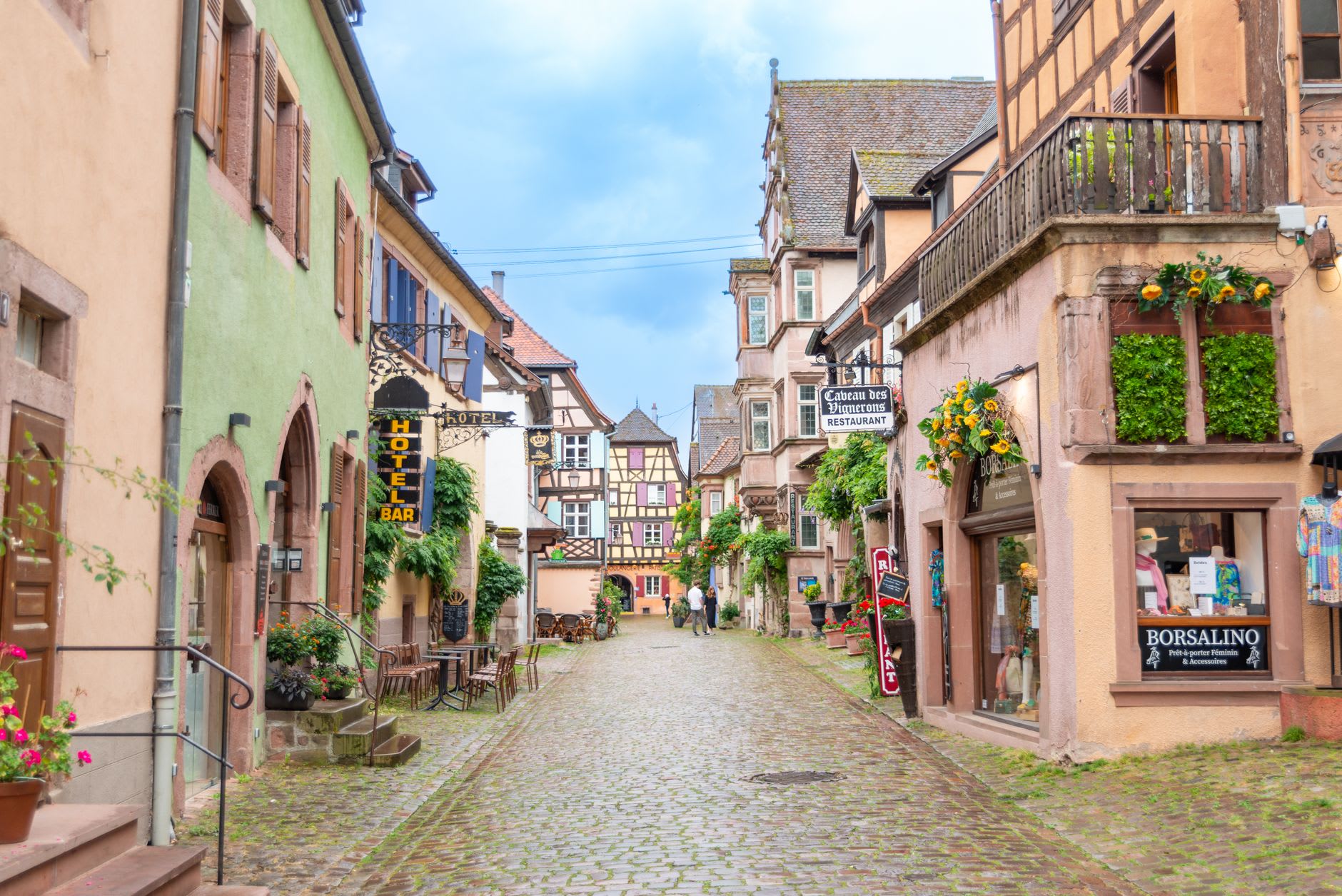
The food in Kaysersberg is among the best I ate in Alsace. There is a winstub near the central fountain that was, on the October Tuesday I visited, full by noon and refusing walk-ins for the evening — which in a village of three thousand people suggests the food earns its reputation. I had baeckeoffe — the slow-cooked meat stew sealed under a pastry lid — done perfectly here for the first time. The meat had been marinating in Pinot Blanc for long enough that the wine was present in every bite but not overwhelming, the vegetables still had texture, and the pastry was more bread-like than flaky, which I had not expected and which was entirely correct.
The castle ruin above the village is a short steep climb from the main street and offers the canonical view: the Weiss valley below, the village’s rooflines and church tower, the vineyards climbing the slopes around it, and the Vosges forest above. The castle itself was built in the thirteenth century and half-destroyed in the Thirty Years’ War, and what remains is atmospheric enough without restoration — just roofless walls and a view that earns the climb.
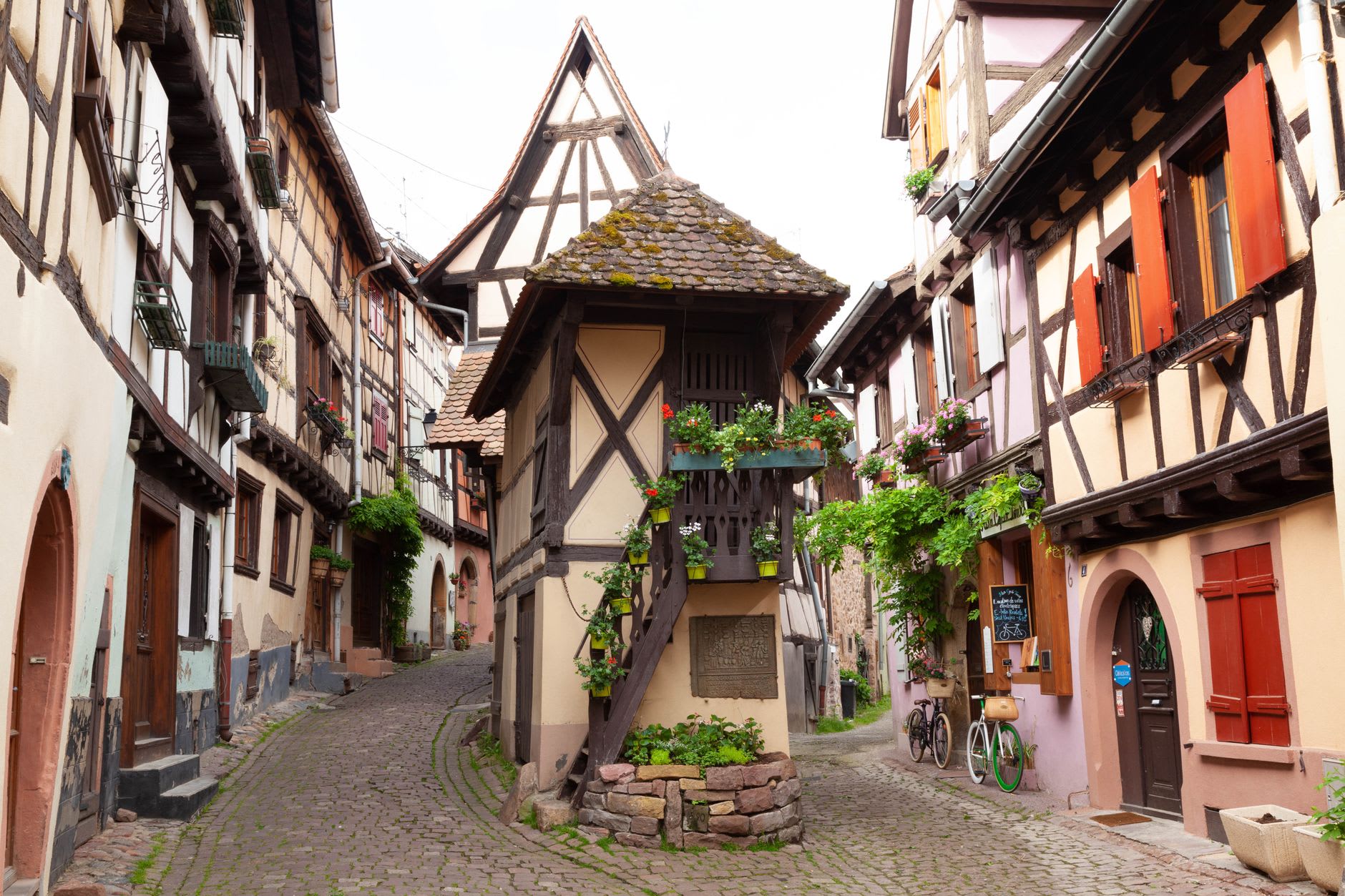
The local wine domaines produce primarily Gewurztraminer and Riesling from the Schlossberg and Furstentum grand crus. Buy directly from the producers on the main street — most have cave doors that open directly onto the pavement — and let them tell you which vintage to drink now and which to hold. They know. The Gewurztraminer from a ripe year on the Schlossberg drinks like concentrated autumn itself: all dried rose petal and lychee and something mineral underneath that keeps it from being merely showy.
When to go: October is ideal — harvest energy, full cellars, and the river light in that season is extraordinary. March and April for quiet walks and blossom. The Christmas market here is small enough to remain human-scale, unlike Colmar or Strasbourg, and the village handles December with a certain unhurried dignity.