Tamanrasset
"Tamanrasset has the pace of somewhere that understands exactly how much time it has."
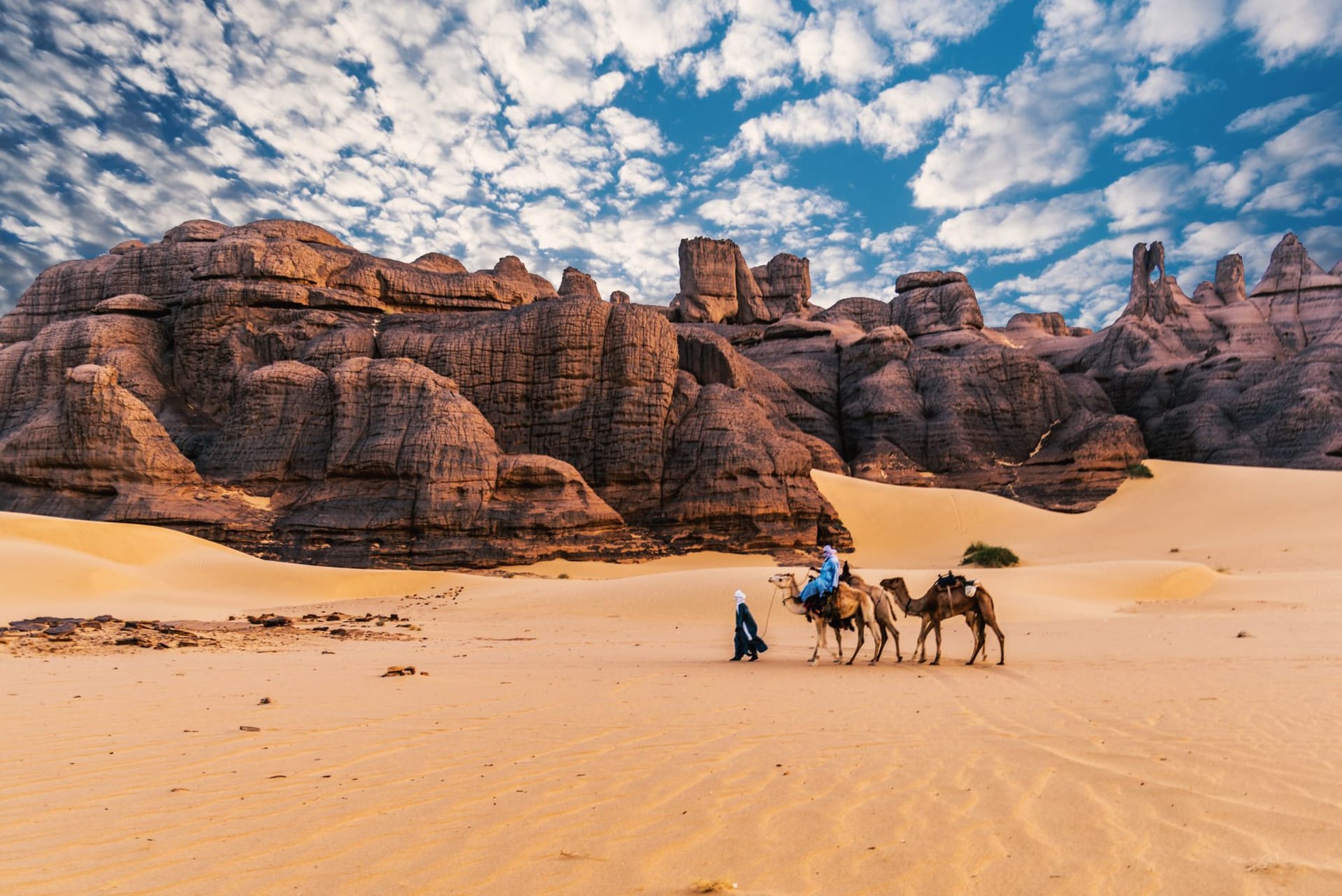
The flight from Algiers to Tamanrasset takes two hours and crosses what appears to be, from the air, an entirely featureless planet — raw desert with no break, no color variation except the subtle gradations from pale tan to dark rust that the different rock formations produce at altitude. Then the Ahaggar mountains appear: a dark volcanic massif rising from the plain, not dramatic in height but absolutely singular in texture, like a geological fist pushed up from below. Tamanrasset sits at the foot of this massif at 1,400 meters elevation, which means it is, by Saharan standards, almost cool. The air has a quality I hadn’t expected — dry and clean and carrying something faintly mineral that I kept trying to identify.
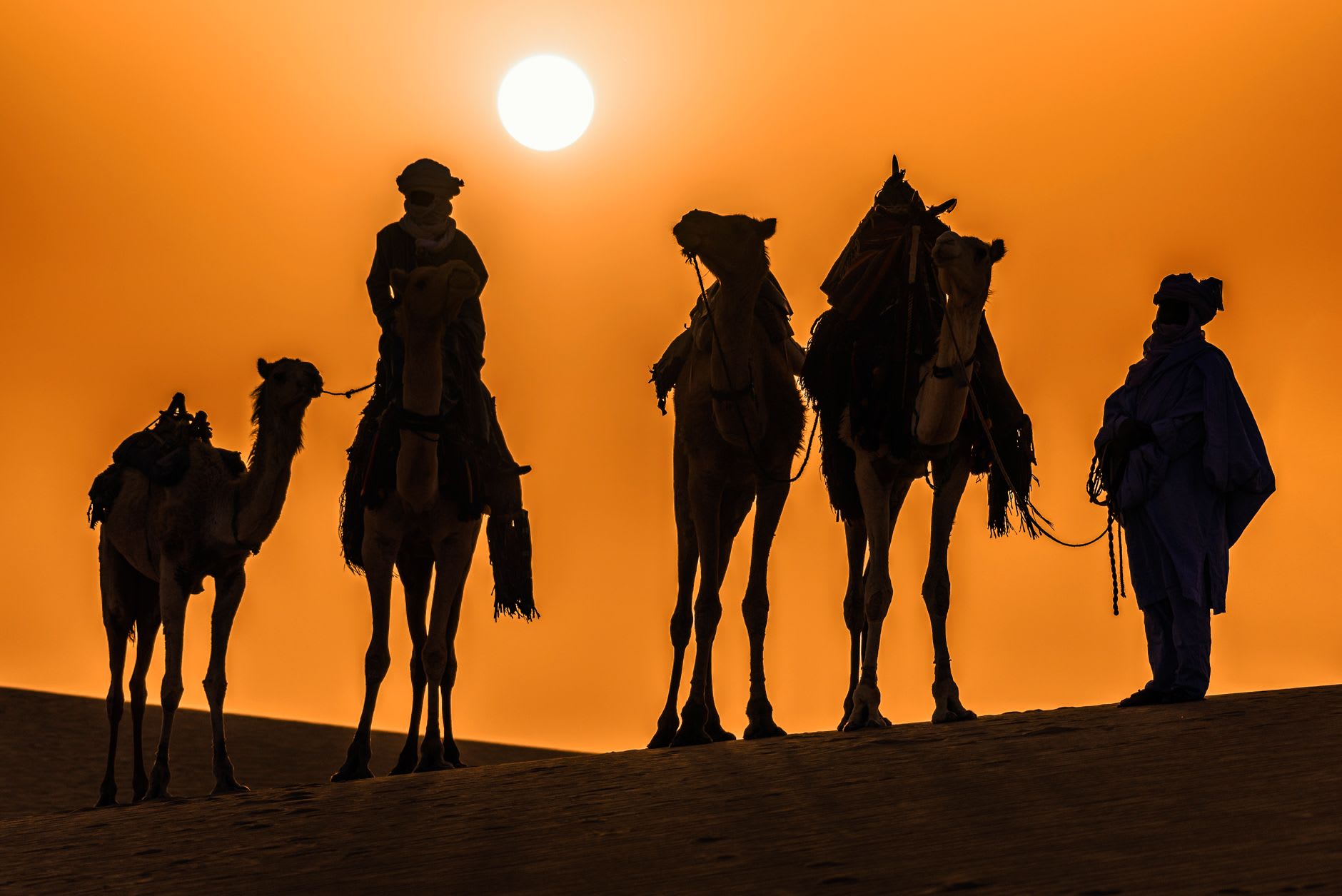
The town is primarily Tuareg — the nomadic Berber people of the central Sahara who have organized trans-desert trade and movement for two millennia. In Tamanrasset you encounter them not as a tourist exhibit but as the dominant cultural and commercial presence. The market sells camel saddles and silver amulets alongside phone chargers and bags of rice. Men in the deep indigo robes of the desert sit in tea houses taking the third glass of tea (which has a different sweetness than the second, something more settled about it) with the unhurried attention of people for whom leisure is not a luxury but a practice, a daily discipline against the false urgency of the modern.
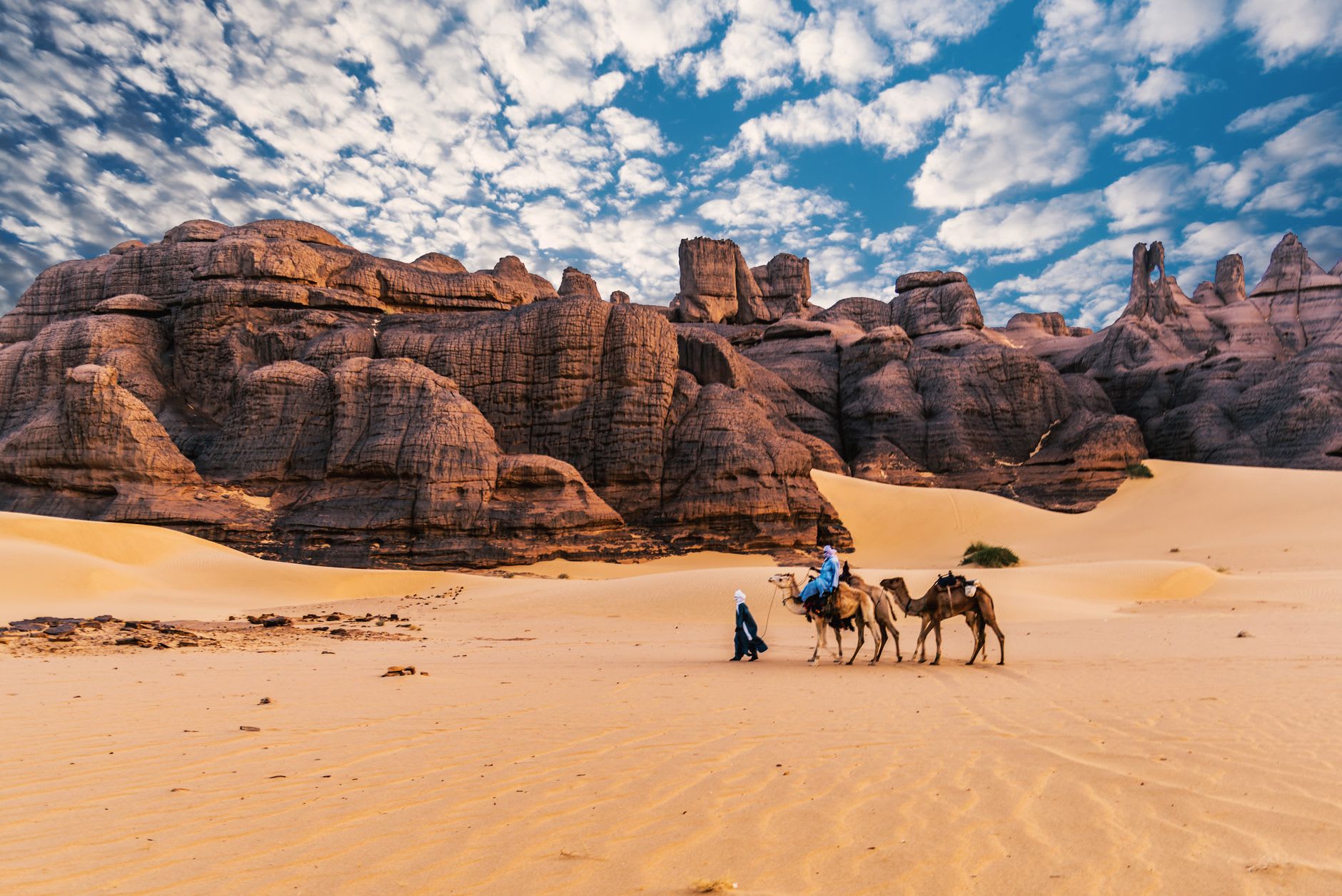
I hired a guide and a Land Cruiser for two days in the Ahaggar. We drove on piste — not roads, just compressed tracks through the rocks — into the heart of the plateau. The landscape shifted with each hour: fields of black basalt covering the ground entirely, then sudden corridors of ancient orange sandstone, then open basins where a fine sand had gathered and the tracks ran fast and smooth. We camped the first night near a well and my guide, Hassan, made a fire with wood he’d brought from town because there is no wood in the Ahaggar. He made tea in the Tuareg way — three rounds, each progressively sweeter, poured from height to create the froth that means it’s properly made — and we sat until the fire died without any particular conversation and without any discomfort from the absence of it.
The Hermitage of Charles de Foucauld sits on a hilltop above the town — a simple stone structure where the French priest lived from 1905 until his death in 1916. It has become a quiet pilgrimage site, not heavily visited. I walked up at dawn and found a view that I suspect de Foucauld stood in front of daily for eleven years: the Ahaggar to one side, the flat desert spreading to the horizon on the other, and the town below beginning its slow morning start in the particular orange light that arrives here before the day bleaches everything out.
When to go: October to February. November and December hit an ideal middle ground — enough warmth during the day to walk comfortably in shirtsleeves, cold enough at night to make the fire and the tea make complete sense. Avoid entirely from May to September; the temperatures reach levels that are simply incompatible with being outside without specific preparation.