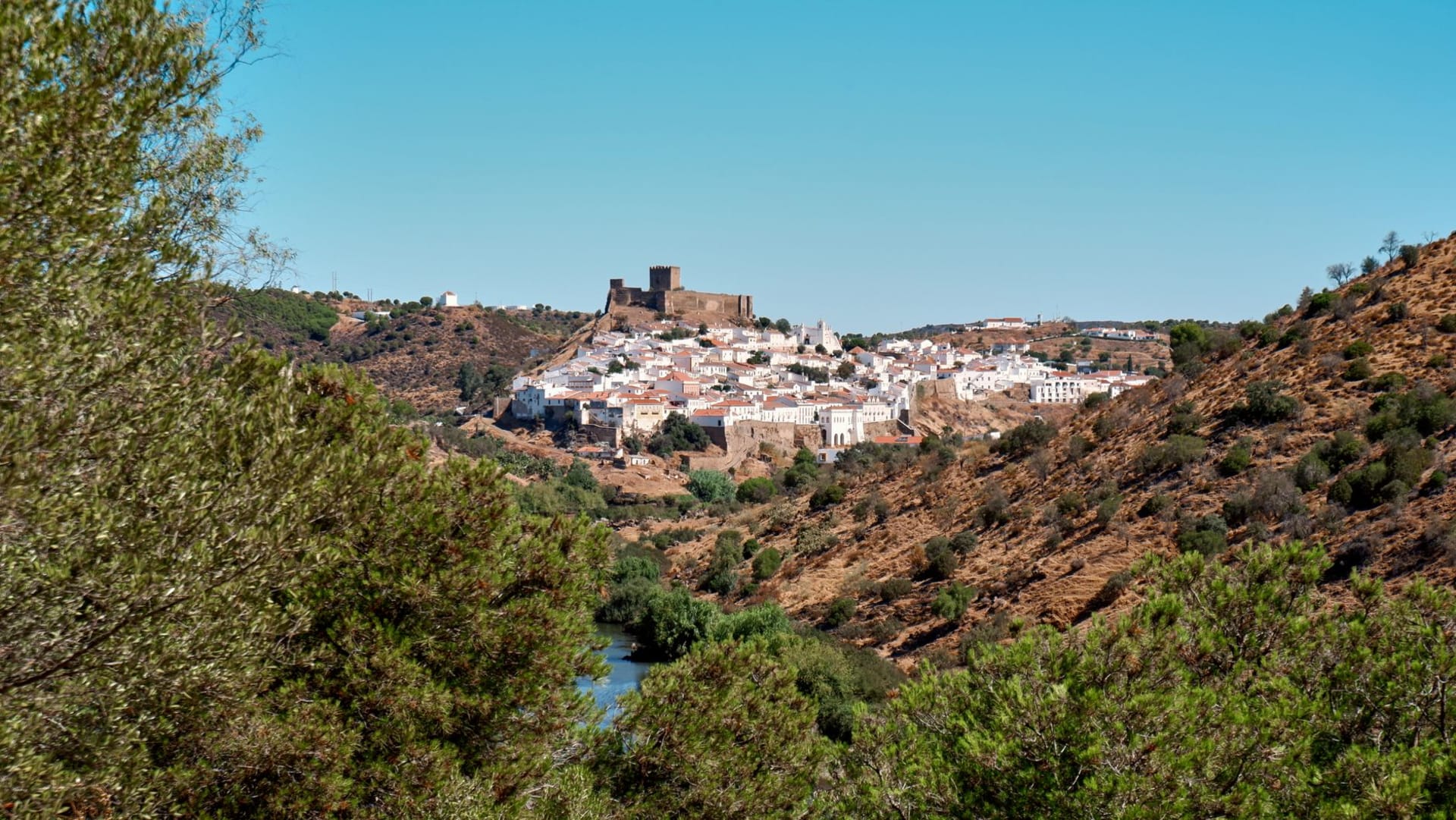
Mértola
"Mértola ends Portugal in a way that feels intentional — as if the country decided to go no further south."
The road south to Mértola passes through a landscape that gradually empties of everything except cork oaks, cistus scrub, and a quality of light that gets progressively more concentrated and yellow the further you go. By the time the village appears above the confluence of the Guadiana and the Oeiras rivers, the heat is southern in a different register — not the baking summer heat of Évora but something drier, more absolute, like being inside a kiln that has been cooling for centuries. I drove the last stretch along the riverbank with the windows down and the smell of water and hot stone coming in together, and when I parked and looked up at the village on its promontory, white walls and castle above the dark river, I had the feeling of arriving somewhere that had been waiting at the end of things for a long time.
Mértola was a significant port and trading city during the period of Islamic rule, when it was known as Mirtulah, and the Islamic heritage here is more present and more carefully acknowledged than anywhere else in Portugal. The parish church occupies a building that was a mosque from the twelfth through the sixteenth century, and though it was Christianized — a nave added, the qibla turned into an apse — the horseshoe arches of the original structure survive in the interior, and the mihrab is still visible in what became the sacristy. Standing inside it, I felt the usual discomfort of places that have been forcibly converted, and also the particular weight of a building that has been prayed in by different people for twelve continuous centuries.
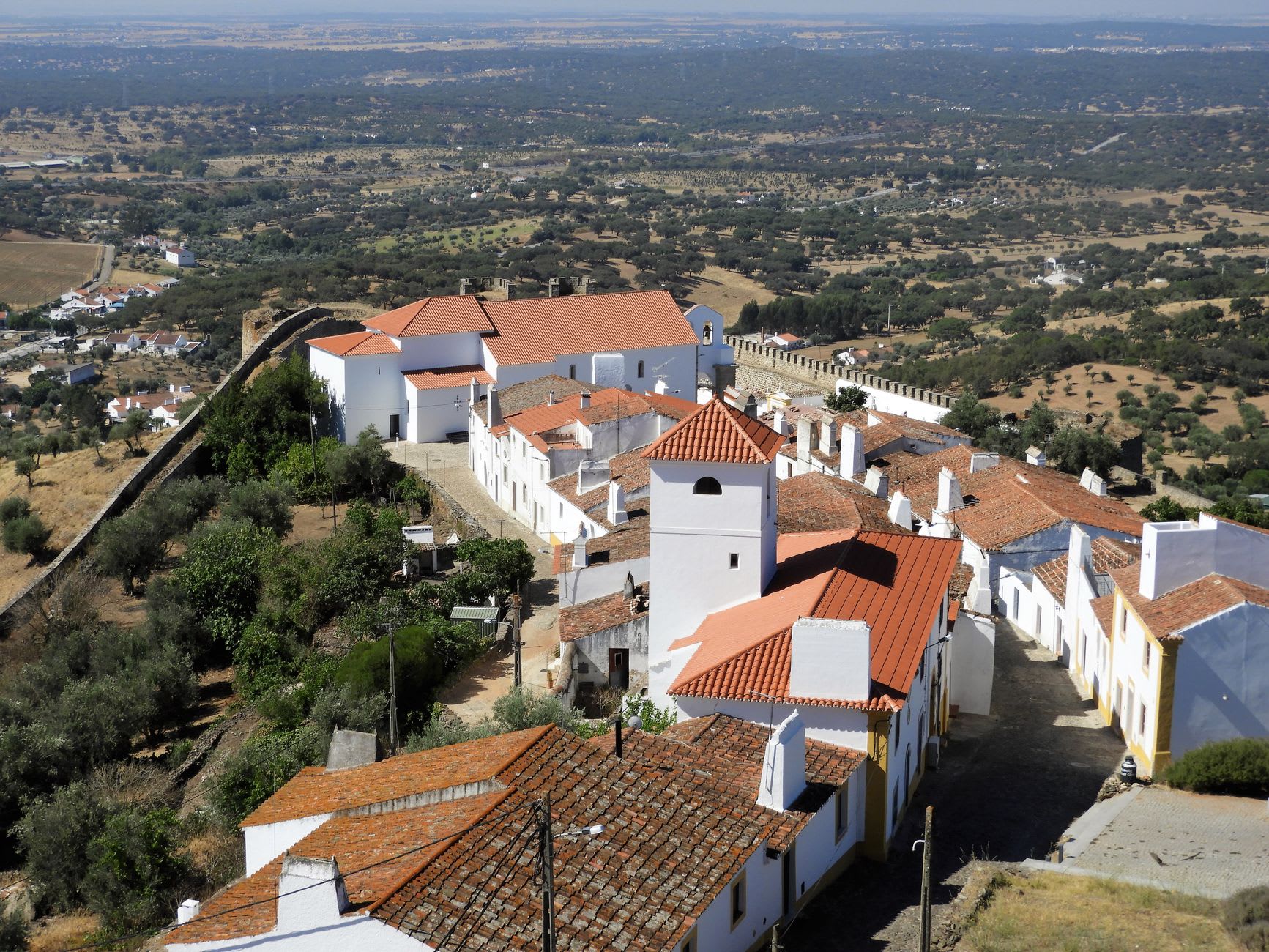
The village’s museum network — a series of small collections distributed through historic buildings — is worth the combined ticket if you have an afternoon. The Islamic room contains jewelry, carved capitals, and domestic objects of striking refinement, evidence that this was a city of real sophistication and trade. The Roman room beneath the main square reveals the layers: Roman Myrtilis below Islamic Mirtulah below Portuguese Mértola, the same hill accommodating successive civilizations with a pragmatism that the historians call continuity and that locals simply call home.
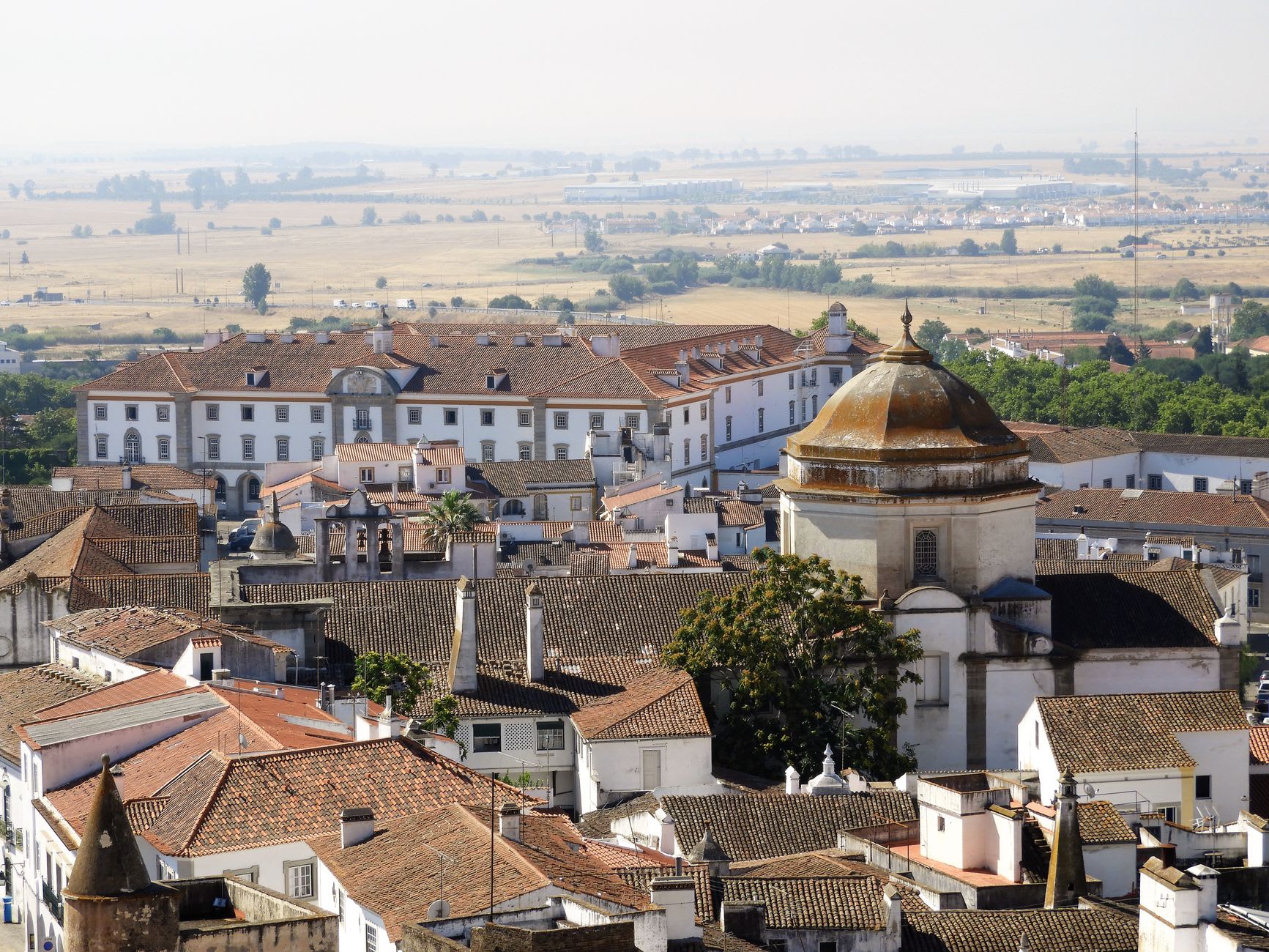
I ate dinner on the terrace of a restaurant overlooking the river, watching the last light go out on the Spanish hills across the Guadiana. A local wine from the Alentejo’s southernmost vineyards, a plate of grilled lamprey in season, and the absolute silence that descends on Mértola after nine in the evening, broken only by frogs from the river. There are perhaps seven hundred people living here now. The population has been declining for decades. The place wears this without apology, the way a fortress wears the moss that has grown up its walls — not as decay, but as another kind of permanence.
When to go: March and April, when the air is cool and the riverbanks are green, and the Festival Islâmico has not yet brought the summer crowds. October is also fine, when the river runs lower and the birdwatching — Mértola sits in one of Europe’s most important raptor corridors — is at its best.