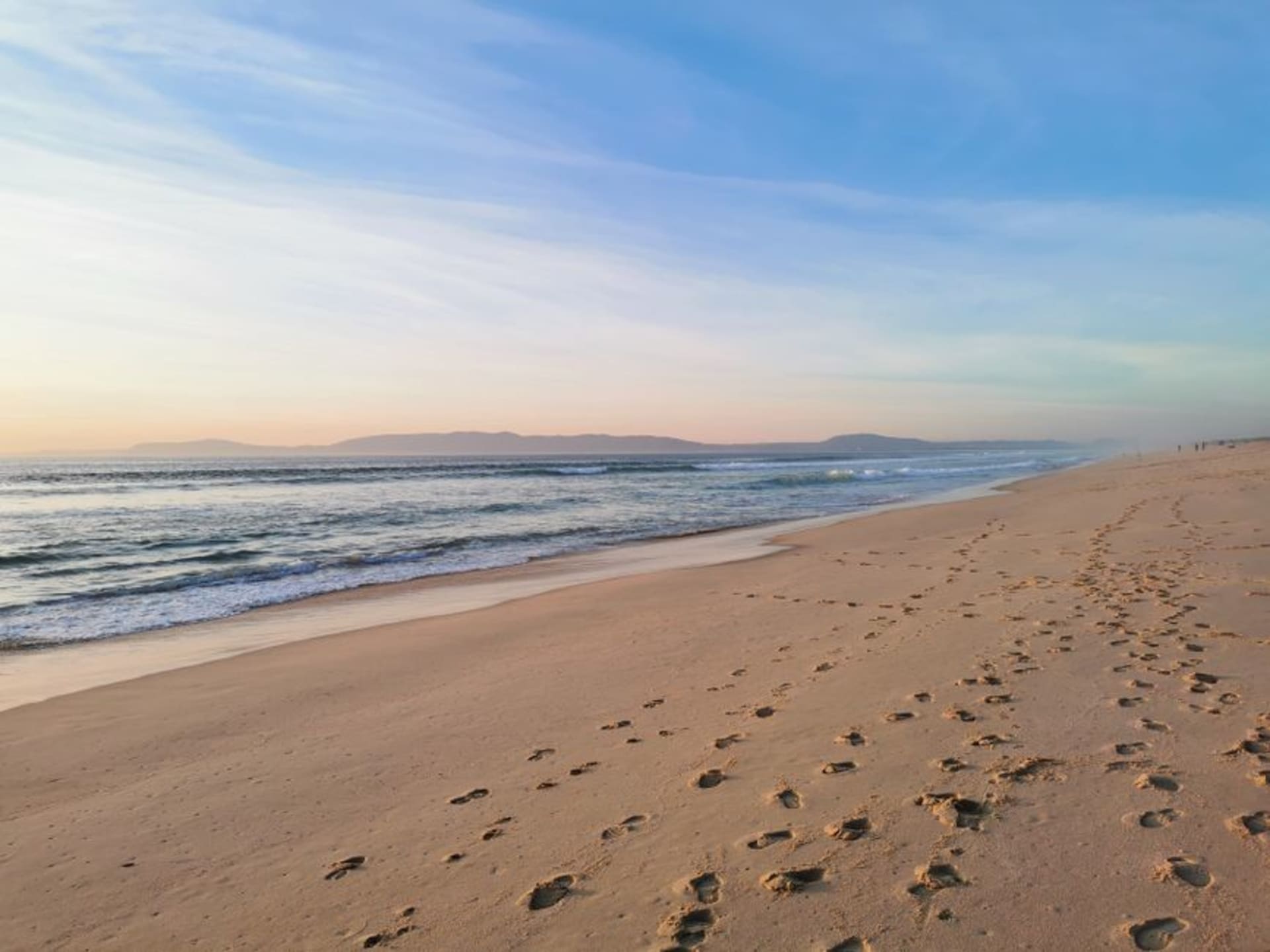
A former rice-farming village where thatched fishermen's huts meet pine dunes and a wide Atlantic beach, quietly beloved by architects and dolphins alike.
We almost drove past the turnoff. There’s no grand sign announcing Comporta, just a narrow road cutting through rice paddies so flat and green they look painted on, the Sado Estuary glinting somewhere behind them. Lia was the one who spotted the first thatched roof, a low, whitewashed hut with a peaked straw cap that looked more like something from a history book than a place people still live in. We’d heard Comporta described as the Portuguese Hamptons, all minimalist beach houses and architects on holiday, but what struck me first was how much of it still smelled like a working village — mud, salt, cut reeds — before it smelled like money.
We stayed three nights at a small guesthouse just outside the village center, close enough to walk to Praia da Comporta every evening. That beach is absurd in scale: a single unbroken run of pale sand backed by pine-covered dunes, with those same thatched huts dotting the tree line like they’d grown there. One evening I ate grilled robalo with my feet still sandy at a shack-style restaurant that couldn’t have had more than eight tables, watching the light go orange over the dunes while Lia argued with the waiter, in her improving Portuguese, about whether the local wine was better cold.
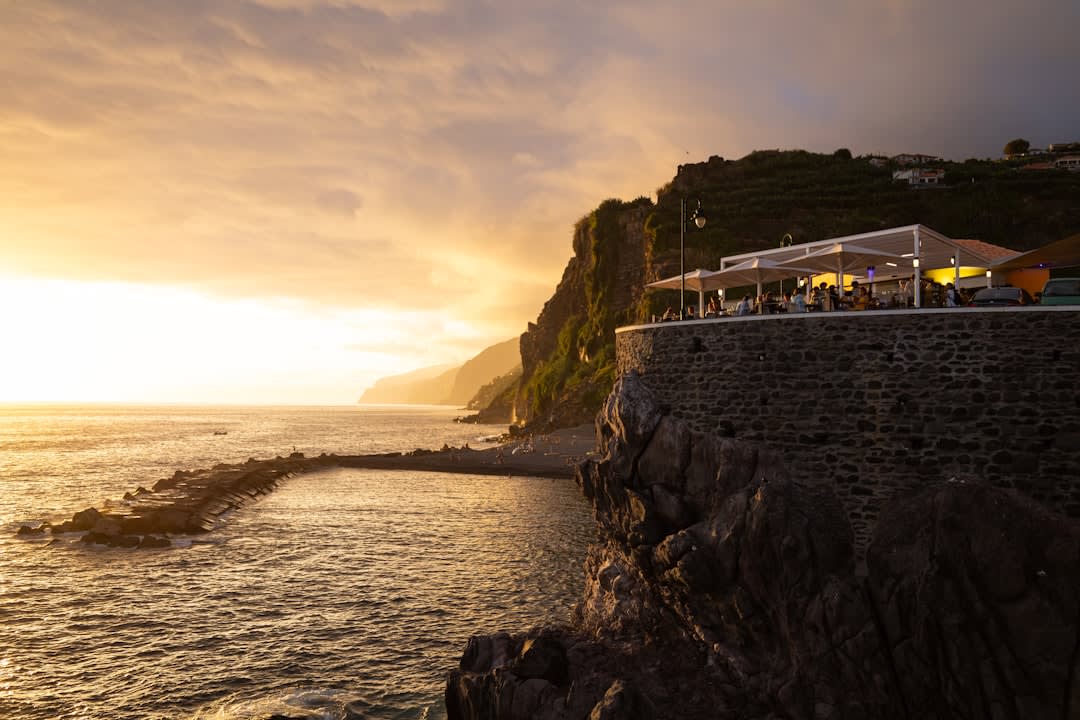
What I didn’t expect was the dolphins. We took a small boat out into the Sado Estuary on our second morning, more out of curiosity than expectation, and within twenty minutes a pod of bottlenose dolphins was surfacing alongside us, unbothered by the boat, weaving between the reed banks where the estuary narrows toward Setúbal. Our guide said they’ve lived in this stretch of water for generations, protected now within the nature reserve, and that locals barely remark on them anymore. I found that hard to believe until I saw a fisherman mending nets nearby without even looking up.
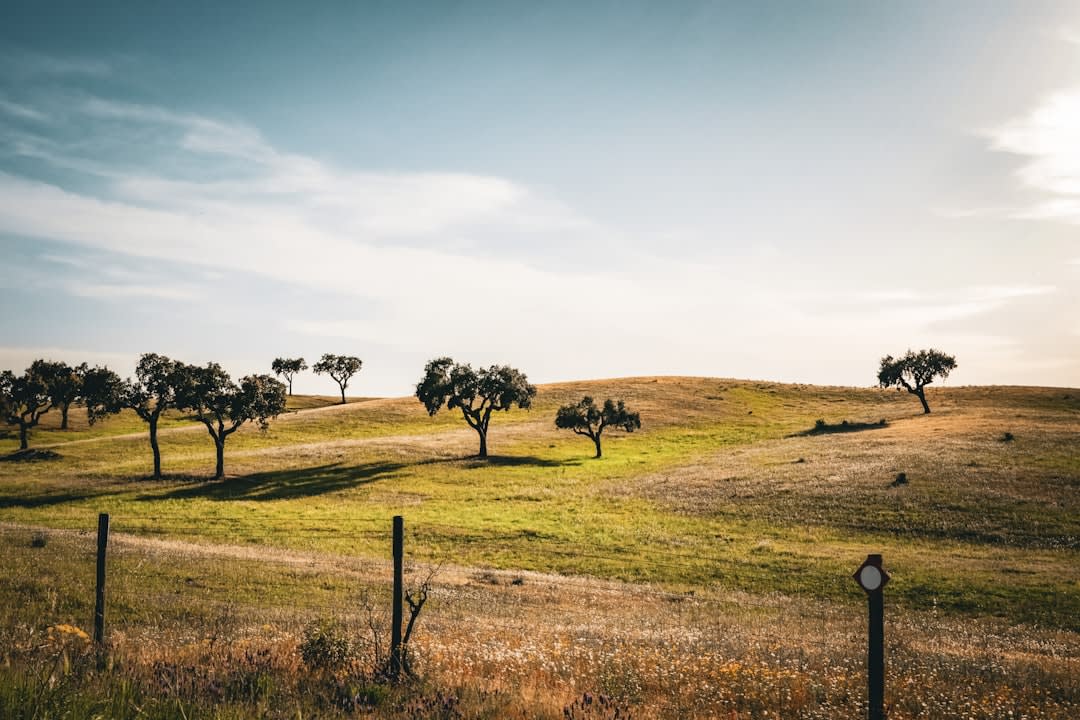
What lingers most, though, is the restraint of the place. Nobody’s building anything tall. The beach shacks are still beach shacks, even the expensive ones. Comporta seems to understand that its rice paddies and its dunes are the whole point, and everything since — the design crowd, the quiet boutique hotels — has just learned to build around that instead of over it.
When to go: June or September get you the same warm, easy beach weather without the crowds that fill Comporta’s narrow roads in August.