Waterton Lakes
"Waterton is where the prairies end so abruptly you can stand with one foot in grassland and the other in mountain and both feel like they're correct."
I came to Waterton on a recommendation from a park warden I’d spoken to in Banff who said, with the particular emphasis of someone sharing something they’d rather keep quiet, that Waterton was “what Banff looked like before the world found out.” I drove south from Calgary and then southwest across open ranchland and then suddenly the mountains rose directly from the prairie floor without the usual foothills buffer. It was the most abrupt mountain front I had seen anywhere — you could see the geological fault line expressed in real time in the landscape, where the Rockies’ thrust sheets had ridden over the prairie formation. The town of Waterton sits in a narrow valley at the northern end of Upper Waterton Lake, which extends south across the US border into Glacier National Park.
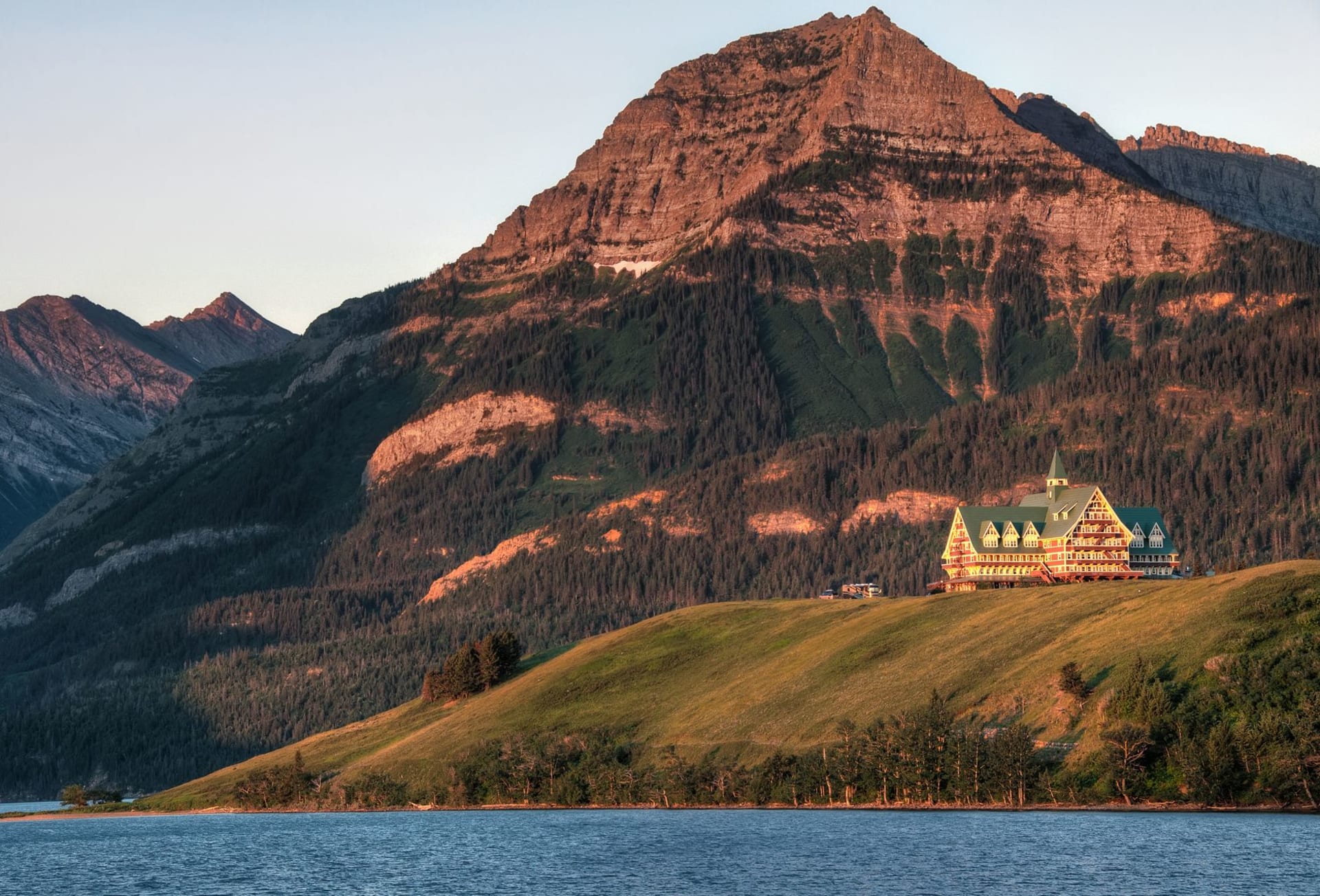
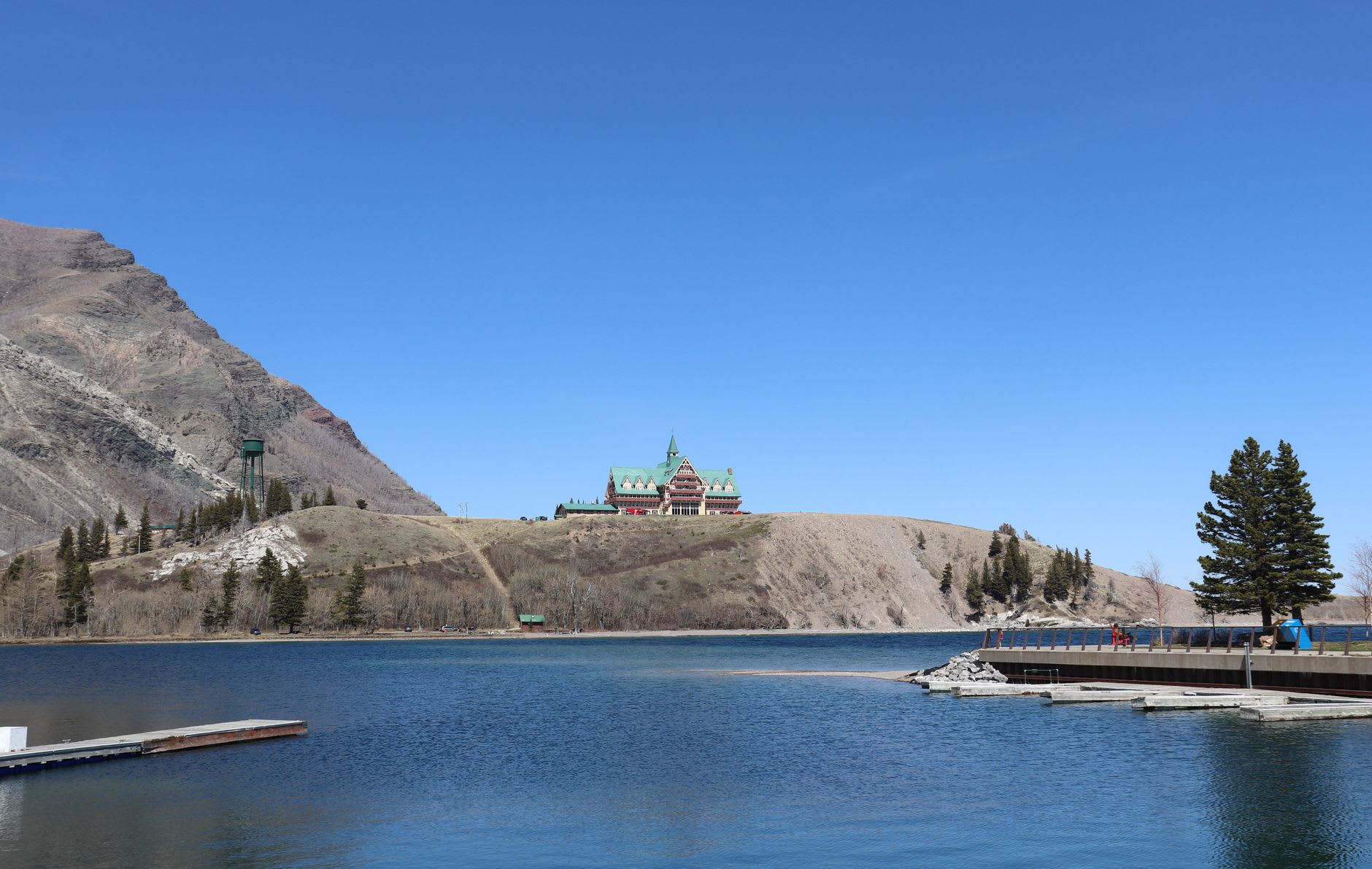
The population of Waterton Park townsite is around two hundred and fifty people in summer. There is one main street with a few restaurants, a bakery that opens at seven and sells out of cinnamon buns by nine, and a hotel — the Prince of Wales — that sits on a bluff above the lake and looks like a Swiss chalet designed by someone who had only seen Swiss chalets in paintings. The hotel opened in 1927 and Great Northern Railway had it built to draw American tourists from the south. It is too large for the setting and looks exactly right in it, which is something that happens in the Rockies occasionally.
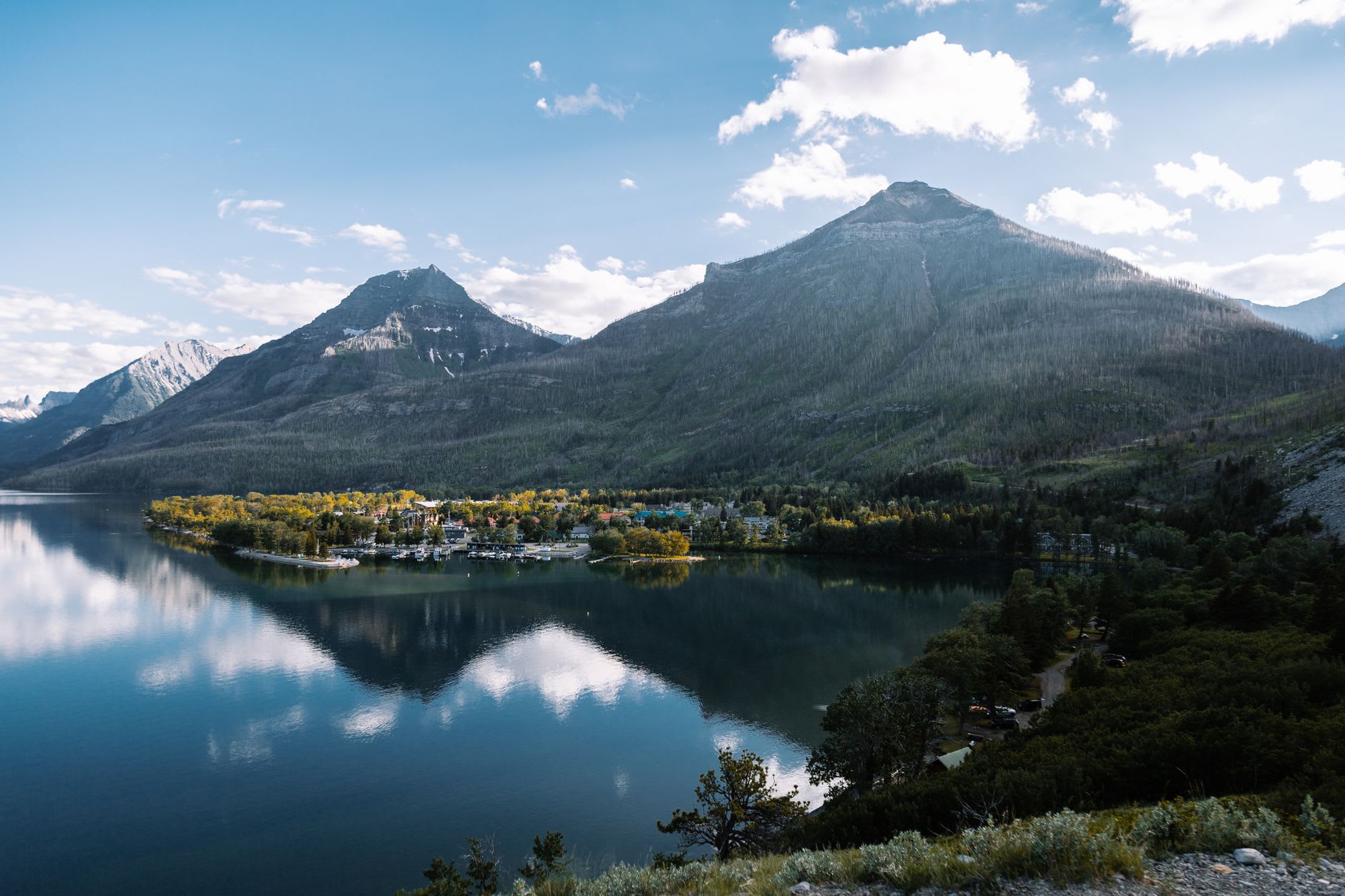
The wind in Waterton is not weather. It is a geographical condition. The valley funnels the westerlies off the mountains with a consistency and force that gives the town its nickname — “the windiest spot in Canada,” which is contested but feels accurate when you’re walking into it. Trees on the western slope lean east in permanent deference. I watched a woman’s hat travel thirty metres in three seconds and keep going toward the lake. Dining on the terrace of any restaurant is a negotiation between the pleasure of the view and the wind’s view of your napkins. None of this is a complaint — the wind is part of what Waterton is, part of the reason the wildflowers in the meadows above town are short and low to the ground and extraordinarily concentrated in colour.
The Carthew-Alderson Trail runs twenty kilometres from Waterton townsite through high alpine terrain to Cameron Lake, crossing Summit Lake and several other high tarns, passing through areas that were burned by the 2017 Kenow Wildfire and are now growing back in ways that are ecologically interesting and visually strange — ghost forests of standing grey trunks surrounded by explosions of fireweed and new spruce. The regeneration has its own beauty, different from what was there before, and the views from Carthew Ridge extend in every direction including south into Montana, which gives you the peculiar sensation of being able to see two countries simultaneously.
Because Waterton forms the Canadian half of Waterton-Glacier International Peace Park with Montana’s Glacier National Park, there is a boat that runs the length of Upper Waterton Lake in summer, crossing the international border and docking briefly at a US customs post in the middle of the wilderness. I took it on a cloudy afternoon and sat at the bow watching the mountains close in on both sides as we moved south, the water going from blue-green to dark grey under the cloud. The mountains here are tilted differently from Banff — more colourful in their layering, reds and greens in the rock faces from mineral content — and the scale is more intimate, less imperial.
When to go: Late June through September. July brings the full wildflower season, which in Waterton is exceptional due to the convergence of prairie and mountain ecosystems. September for lighter crowds — Waterton never gets truly crowded but September has a particular quality of solitude. Avoid high-wind days for the Carthew-Alderson if you want to stop and enjoy the views rather than hold on.