
Moraine Lake
"Standing on the Rockpile at Moraine Lake at dawn, I understood for the first time why people set alarms in the dark just to see water."
The road to Moraine Lake closes to private vehicles every morning at 6 a.m. from June through October — Parks Canada started enforcing this after the parking lot routinely filled by sunrise and the resulting traffic backed up fifteen kilometres. So you take a shuttle from Banff or Lake Louise, or you get there before the cutoff, which means leaving before 5 a.m. I did the latter, driving the fourteen-kilometre access road in darkness with a thermos of coffee growing cold in the cupholder, following a single pair of taillights ahead of me that disappeared around a bend. When I parked and walked to the Rockpile — a moraine boulder field that provides a raised viewing point — the lake was a dark grey under a sky still full of stars.
Then the light came.
It arrives first on the Tower of Babel, the most prominent of the Valley of the Ten Peaks that ring the lake’s southern shore. A thin line of orange appears on that jagged summit, then spreads slowly across the peaks in sequence, each one catching the light like a relay. The lake itself holds its darkness for another ten minutes while the peaks glow, and then the sun clears the eastern ridgeline and the water goes from charcoal to deep blue-green to the saturated turquoise that makes every photograph look manipulated — though no manipulation has occurred.
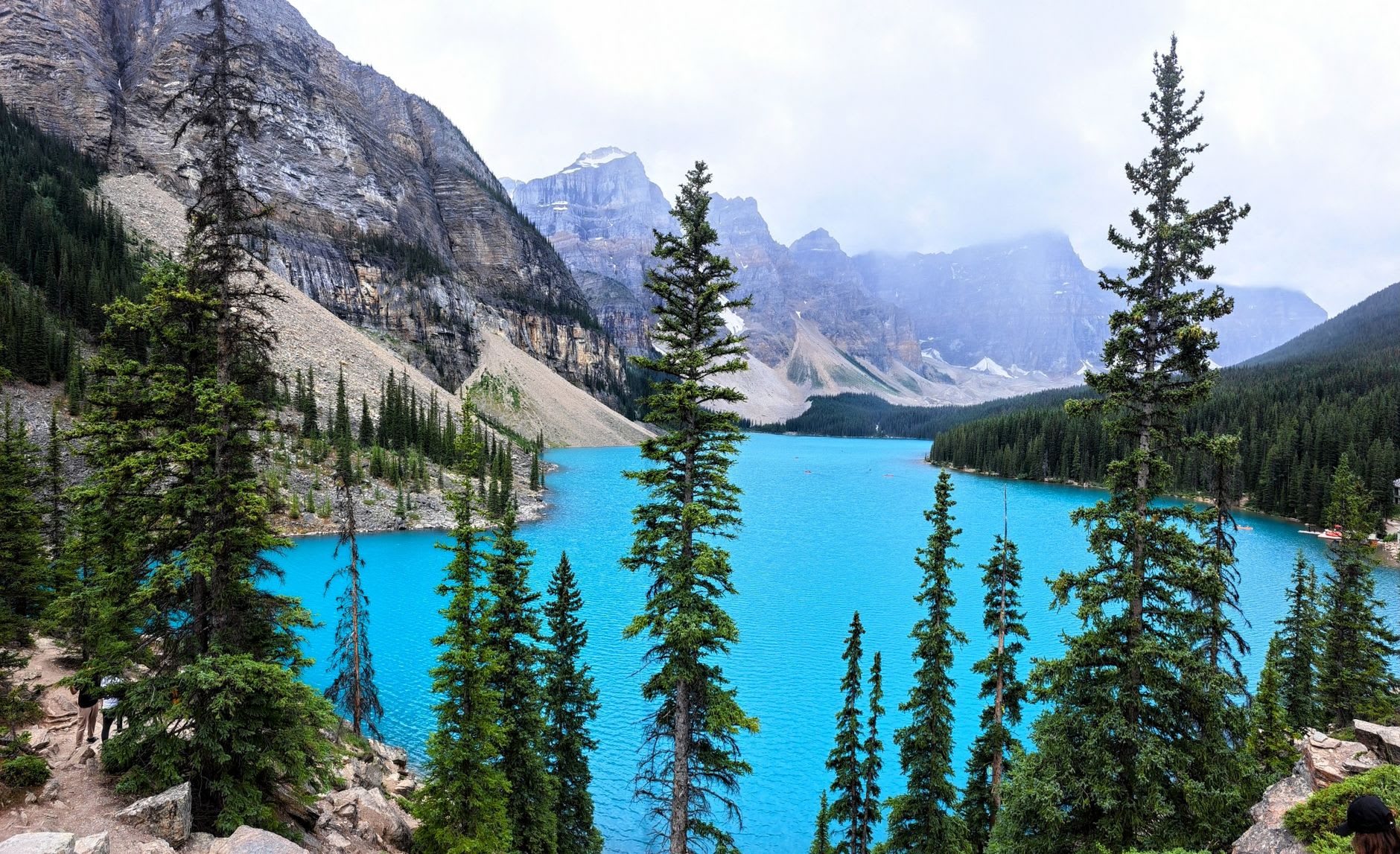
There is a legitimate debate, which Canadians engage in with the seriousness usually reserved for constitutional questions, about whether Moraine Lake surpasses Lake Louise. The turquoise of Moraine Lake runs colder, more intensely blue-green. The encirclement of peaks is more complete — Lake Louise has its glacier, but Moraine Lake has ten distinct summits pressing in from three sides. The scale is more legible: you can see where the mountains end and the sky begins, which at Lake Louise sometimes gets lost. I find myself on the Moraine side of this debate, though I hold the position loosely because the comparison is something like asking whether Monteverdi is better than Bach.
The lake is small enough to walk around — two kilometres end to end — and the trail to the end of the far shore passes through forest and opens onto the bouldered delta where the stream that feeds the lake emerges from the mountains. This is where the colour shows best: standing in shallow water at the far end, looking back toward the peaks, with the turquoise running from your feet to the distant outlet where the canoe dock floats orange against the blue. The lake-level perspective is completely different from the Rockpile view, more intimate, less composed.
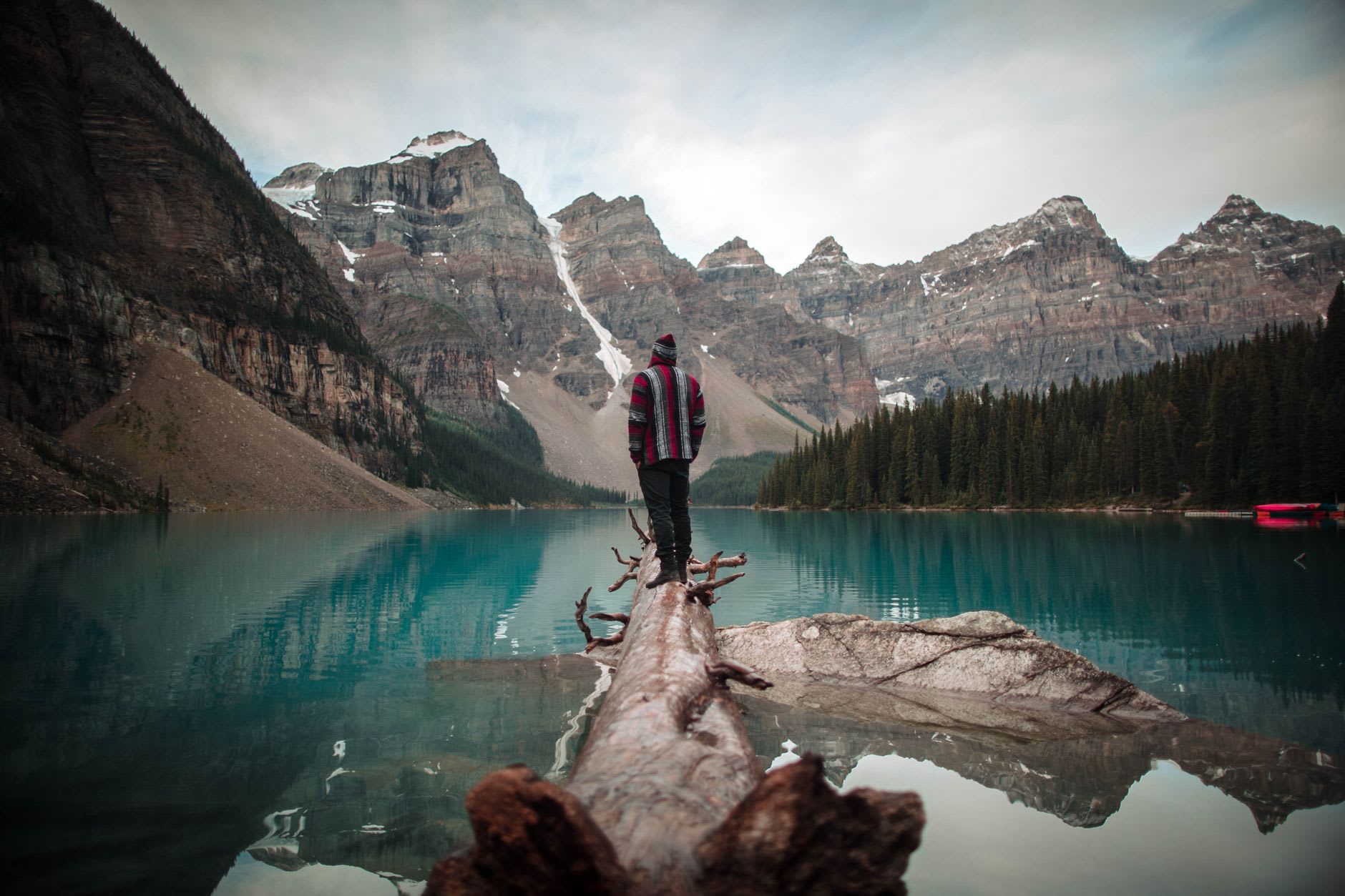
The canoe rental opens at dawn on most days and the boats are gone within an hour. I didn’t get one on my first visit but came back a second morning specifically for it. The experience of being on the water, looking back at the Rockpile from the lake’s surface, with the sound of the glacial stream at the far end and the cold coming off the water in small waves — this is the version of Moraine Lake I keep returning to in memory, not the photograph from the boulder field but the sensation of being inside the image rather than looking at it.
When to go: Mid-June through mid-September, though the road access restrictions make early arrival non-negotiable. June has snow on the peaks and the lake sometimes partially frozen — a different and more austere beauty. Early September for thinner crowds and the first cold clarity of autumn light. Never July or August weekend afternoons — the shuttle waits alone are enough to erode the experience.