Larch Valley
"The larches in October are doing something that deciduous trees in autumn usually don't — they're making the mountains look startled."
The trail to Larch Valley starts at Moraine Lake and climbs five hundred metres through dense spruce forest that gives nothing away. You gain altitude for an hour, the trees close around you, and you begin to wonder whether the elevation gain is worth it, whether the valley above is genuinely different from the forest you’re moving through. Then the spruce thins, the slope flattens, and the valley opens in front of you — and if you’ve come in the first two weeks of October, the larches are burning.
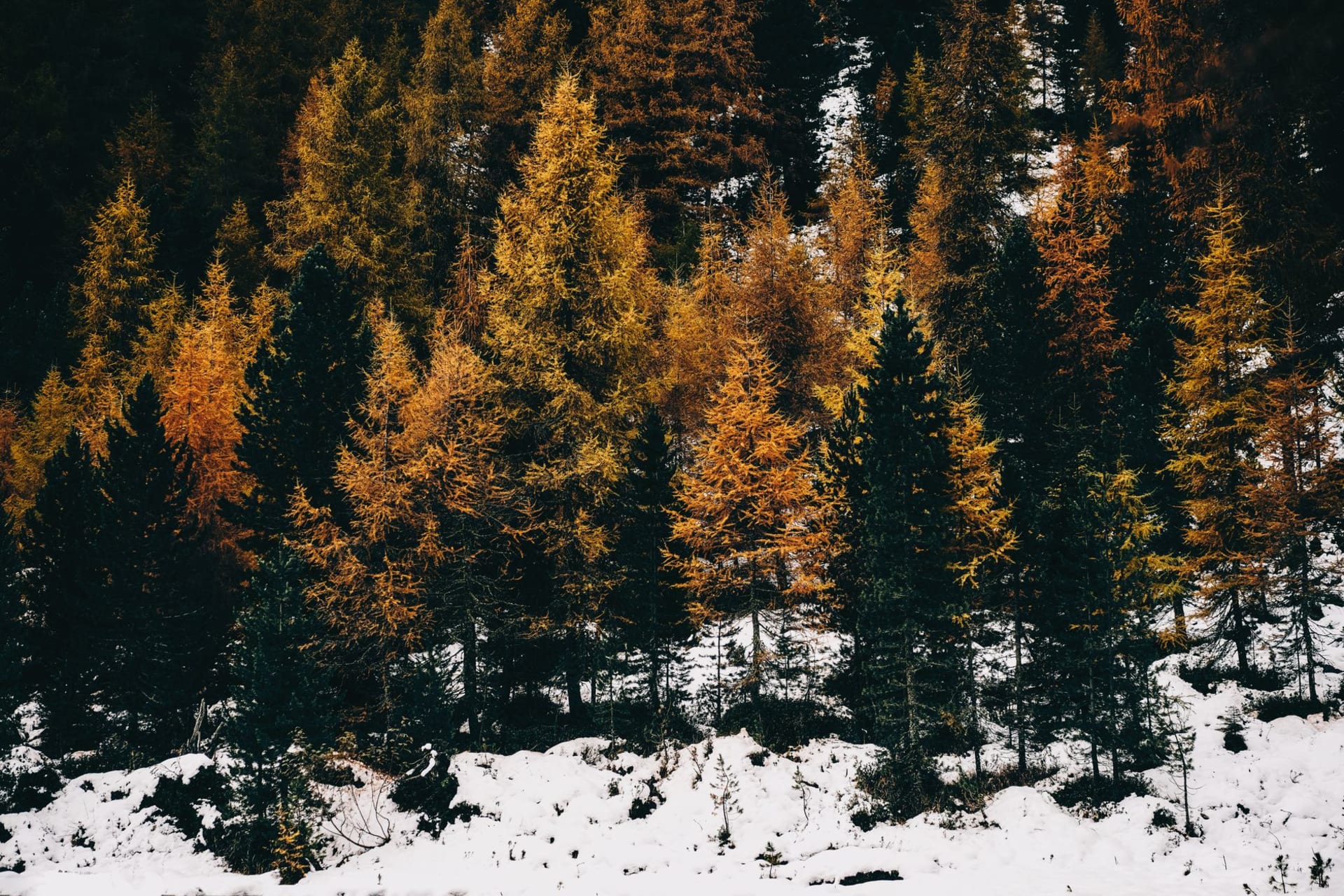
Larch trees are the only conifer in the Canadian Rockies that turns colour in autumn. They spend the summer looking like ordinary alpine trees — fine needles, light green, unremarkable alongside the spruce. Then in late September they yellow, and in early October they flame orange-gold, and the effect in Larch Valley, where they grow in dense clusters at the edge of the meadows and in the rockfall below the peaks, is something that stops the conversation. I had been hiking with a man I’d met at the trailhead and we had been talking the whole way up, and when we came out of the spruce into the valley we both went quiet without deciding to.

The season is genuinely brief. A hard frost can strip the needles in twenty-four hours, and two consecutive warm weeks can delay the peak so that it happens in late October with snow already on the ground. The sweet spot is a seven-to-ten day window that moves around year to year, and local hiking forums go into a particular kind of collective anticipation in late September, tracking the yellowing, posting daily photographs from the valley. I checked obsessively for three days before committing to the drive, then drove four hours to Banff on a Thursday because the weekend would have meant sharing the trail with four hundred other people who had made the same calculation.
Sentinel Pass, which continues above the valley, rises to 2,611 metres and offers views of both the Larch Valley basin and the Paradise Valley on the other side. The climb from the valley floor to the pass is steep and exposed, the trail switching back through talus and thin soil, and the larches don’t grow above a certain elevation so the upper half is grey rock and sky. But the pass is worth the extra effort for the perspective — from up there, you can see the scale of what the larch season is doing to the landscape, the patches of gold distributed through the grey like something deliberate, like someone had planned it.

There are no services in Larch Valley. No café at the top, no heated shelter, no one selling anything. What there is: a high alpine silence that the wind moves through in gusts, the smell of cold rock and dying season, the particular quality of October light at altitude that comes in low and golden and makes the larches look like they’re lit from inside. I sat for an hour near a small tarn that was half-frozen, eating crackers and cheese and watching the clouds make patterns on the valley floor below, and felt the satisfaction that comes specifically from having gone somewhere most people didn’t bother to.
When to go: The first two weeks of October, and no other time — in summer it is a pleasant but ordinary alpine meadow, and the specific larch colour that makes it worth the hike only exists for those two weeks. Weekdays only. Start early — the Moraine Lake shuttle fills by 6 a.m. on October weekends and parking is chaos. Bring more layers than you think necessary: the valley sits above 2,100 metres and the wind off Sentinel Pass is serious.