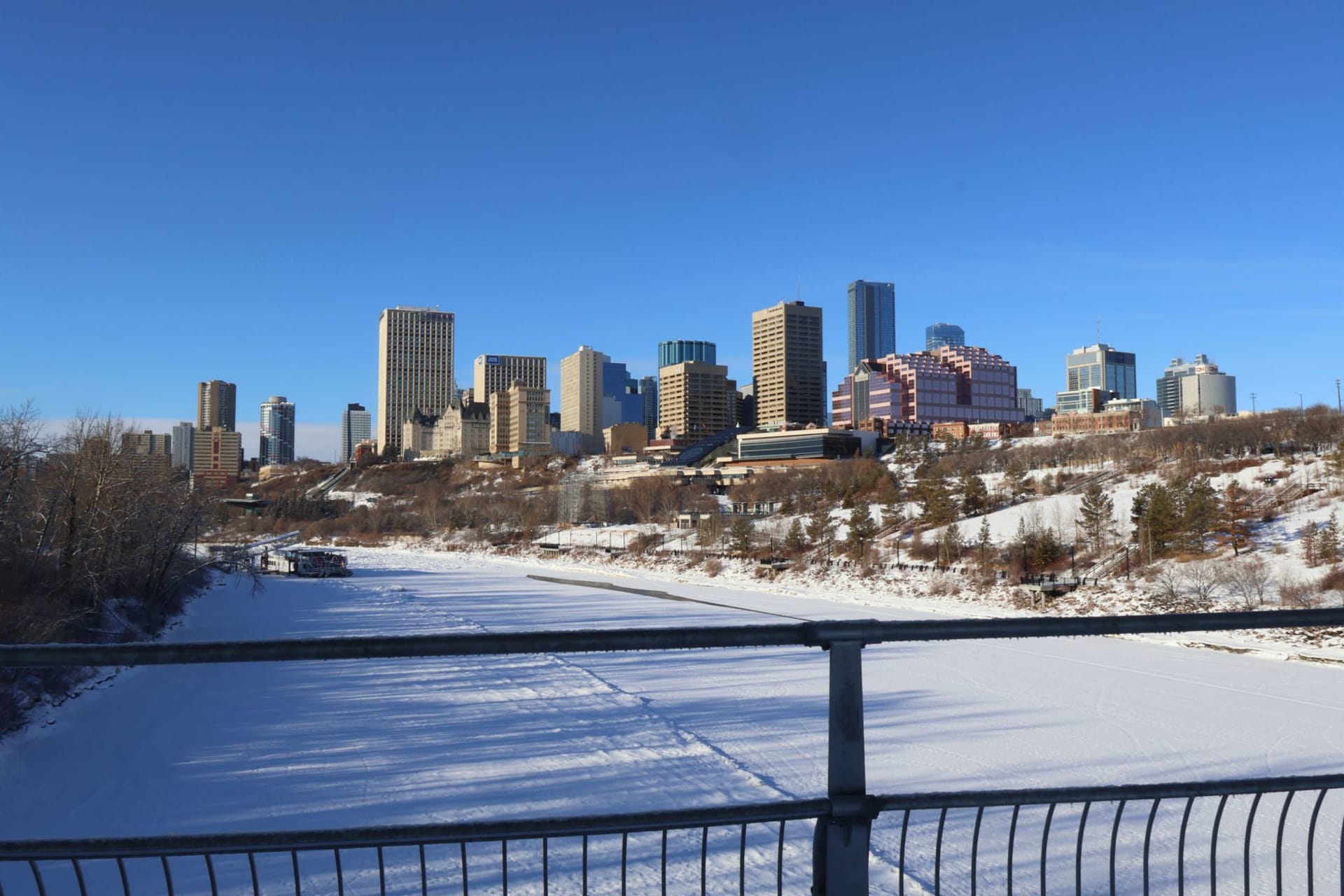
Edmonton
"Everyone told me Edmonton was just the city you drove through to get to Jasper. That is wrong, and the people saying it have not eaten at the right restaurants."
Edmonton is the city that Albertans who live in Calgary faint mention with a certain careful neutrality, and that outsiders treat as the geographic preamble to Jasper. I arrived with low expectations after a week in the mountains, expecting a northern prairie city doing its functional best. What I found instead was a place with a river valley that would be the centrepiece of any city in the world, a food scene of genuine ambition, and a festival culture built on the understanding that six months of serious cold requires serious compensation.
The North Saskatchewan River cuts through Edmonton in a broad valley that contains the largest urban parkland system in Canada — 160 kilometres of connected river valley park, accessible by trail along both banks, with ravines and wooded slopes and a bottom flat wide enough for cycling paths and athletic fields. Walking this valley in late September, with the aspen trees in full gold and the air carrying that particular northern autumn smell of leaf mould and cold moving water, I felt the pleasure of unexpected natural beauty inside a city. The valley doesn’t announce itself from street level — you have to go looking for it, which is why so many people who drive through don’t find it.

The Old Strathcona neighbourhood, south of the river, has been Edmonton’s Bohemian district since the city had enough culture to need one. The main drag along Whyte Avenue runs for maybe fifteen blocks and concentrates an unusual density of coffee shops, used bookstores, music venues, and restaurants that have been there long enough to have regulars. The Sugarbowl café on Gateway Boulevard has been serving coffee and eggs and a community of writers and musicians since 1993 and shows no signs of updating its formula, which seems like the right call. I ate brunch there on a Sunday and the place had the particular warmth of somewhere that has never tried to be anything other than exactly what it is.
The food scene in Edmonton has been quietly serious for longer than its national reputation suggests. The city has a significant South Asian and East Asian population — the largest Somali diaspora in Canada, substantial Indian and Chinese communities — and the restaurant landscape reflects this in ways that are not performative. A meal at a Gujarati place on 97 Street left me thinking about the texture and seasoning of its undhiyu for three days. A Korean spot in Millwoods was doing things with short rib that I hadn’t encountered anywhere else. Edmonton doesn’t have a food identity the way Calgary does with beef — it has something more varied, less legible from the outside.

In summer Edmonton runs something like one major festival per week for the entire season — Fringe Theatre, Folk Music Festival, Heritage Days, K-Days, the Street Performers Festival. The Fringe is worth planning around specifically: it’s the largest fringe theatre festival in North America, runs for eleven days in August in the Old Strathcona streets and venues, and produces a density of theatre, comedy, and experimental performance that operates on a completely different logic from commercial culture. You buy a program, you circle shows at venues that hold fifteen people or two hundred, you take chances on things described in three sentences, and you find extraordinary things in rooms you would otherwise never enter.
When to go: June through September for the festival season and the river valley in full leaf. October for the aspen gold — the valley turns in the second week of October and is spectacular for about two weeks. January and February are brutally cold (minus 20°C is a regular Tuesday) but the city functions fully and the food scene doesn’t take the winter off, and there is a certain pleasure in a city that refuses to be stopped by its own climate.