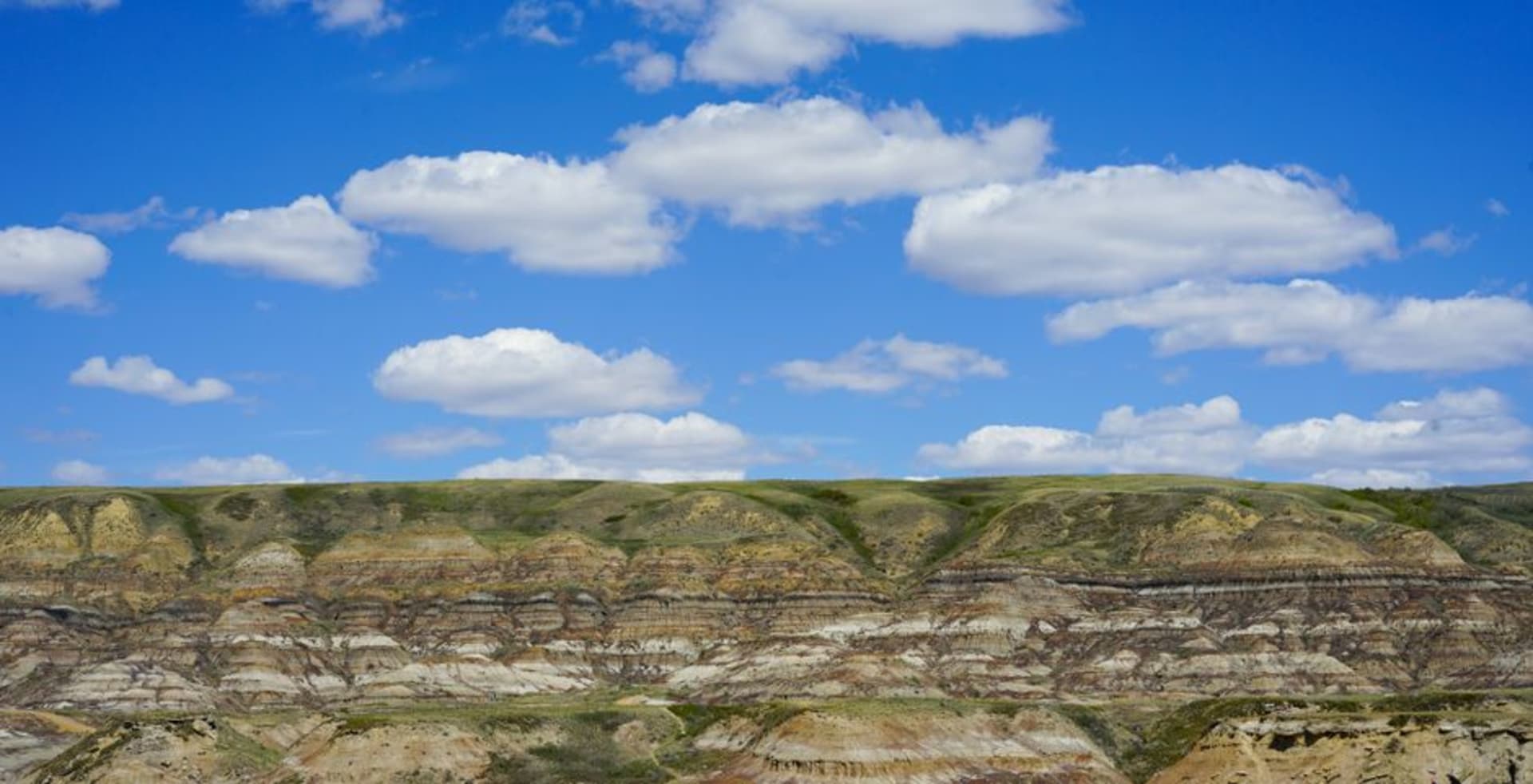
Cypress Hills
"Cypress Hills is the highest point between Labrador and the Rockies, and almost nobody outside Alberta has heard of it."
A forested plateau rising eight hundred metres above the surrounding prairie on the Alberta-Saskatchewan border, cool and pine-scented in a province otherwise defined by open sky.
I’d been told repeatedly that Alberta’s landscape breaks cleanly into two halves — mountains in the west, flat prairie in the east — and Cypress Hills is the exception nobody mentions until you get there. It rises unexpectedly out of the southeastern grassland, straddling the Alberta-Saskatchewan border, a forested plateau reaching nearly fifteen hundred metres that was never touched by the last glaciation the way the surrounding plains were, which means the ecology up here is genuinely different — an island of lodgepole pine and fescue meadow stranded above an ocean of grass, holding plant and animal species you won’t find for hundreds of kilometres in any direction.
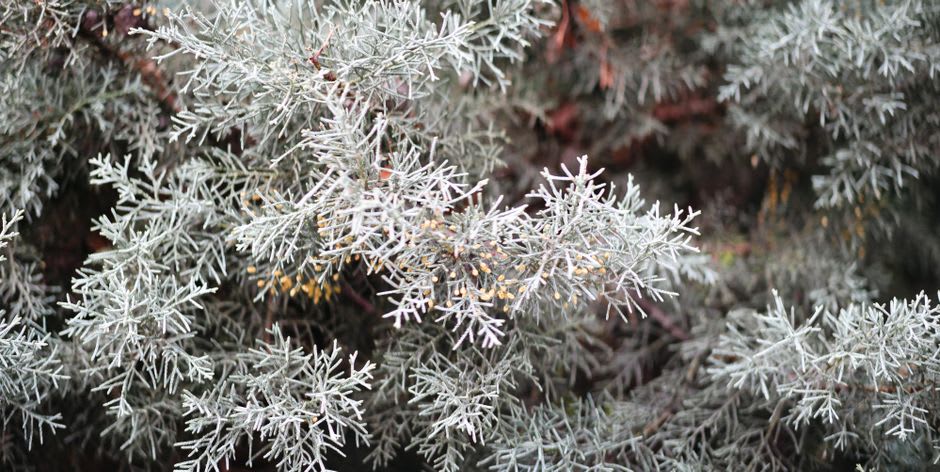
Driving up out of the prairie, the temperature actually drops as you climb, and the air changes from the dry grass smell of the plains to something resinous and cool. I stopped at a pullout partway up just to look back the way I’d come — the prairie stretching flat to the horizon in every direction below, this green island rising out of it like something misplaced by geography. The Cypress Hills got their English name from a mistranslation, incidentally: early French-speaking traders called the lodgepole pines here “cyprès,” the French word for a different tree entirely, and the mistake stuck for a couple of centuries.
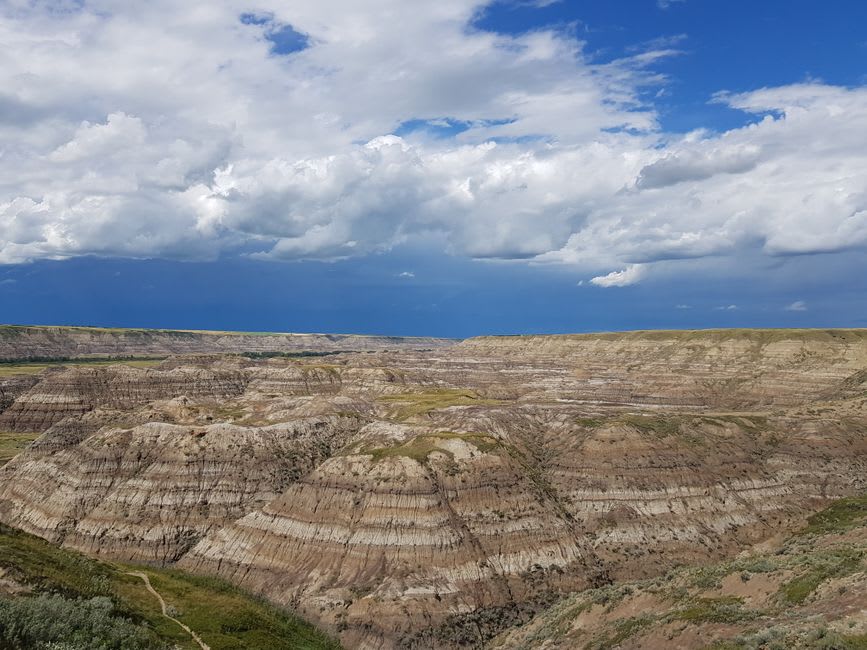
Fort Walsh, on the Saskatchewan side of the park, marks the site of a former North-West Mounted Police post built in the 1870s partly in response to the Cypress Hills Massacre, a brutal 1873 conflict between American wolf hunters and a Nakoda camp that became a founding grievance in Canadian-Indigenous relations and helped spur the creation of the Mounted Police itself. The park today, though, mostly just feels peaceful — I hiked a section of trail through fescue meadows thick with wildflowers, watched a pair of deer work through the underbrush entirely unbothered by me, and camped a night under a sky that, like Elk Island, is protected as a Dark Sky Preserve, one of only a few in Canada.
When to go: June through September for hiking, wildflowers, and warm enough evenings to make the most of the stargazing. The elevation means nights stay cool even in midsummer, so pack a layer regardless of the season.