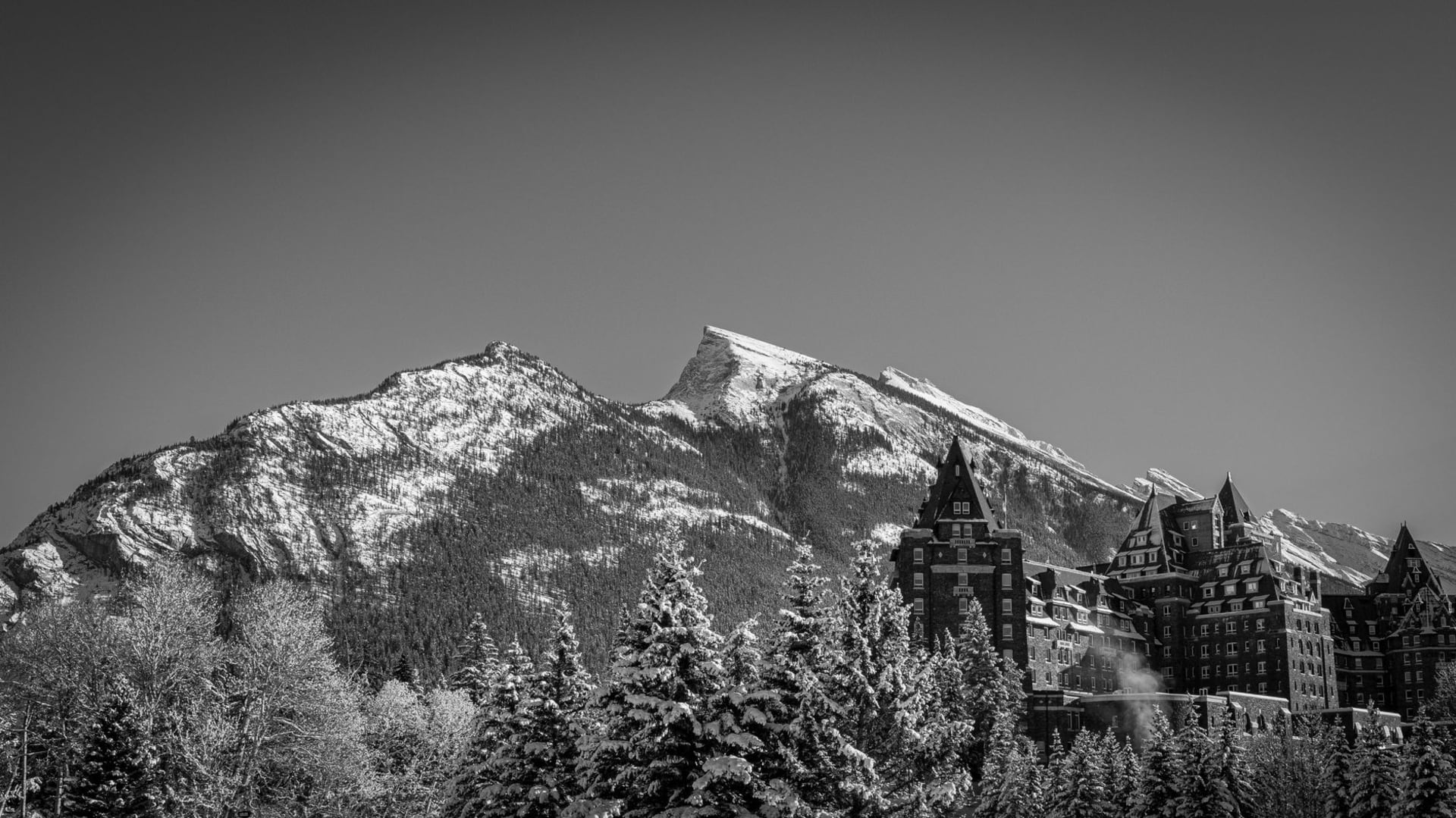
Banff
"Banff is what happens when a railway company accidentally builds a spa town in paradise and the mountains refuse to let it be ordinary."
I drove into Banff just after dark on a September evening, and the first thing I noticed was the smell — cold pine, something mineral from the river, a faint sweetness I couldn’t name until I saw frost forming on the car windows. The Bow River runs right through town, and when I crossed the bridge I could hear it moving fast in the dark below me. The streets were lit and busy in that particular late-season way, where the summer crowds have thinned but the mountains haven’t yet been swallowed by early-winter grey. It felt like arriving at exactly the right moment.
Banff townsite itself is smaller than its reputation suggests — about eight thousand people, one main street, a handful of blocks in any direction. What gives it weight is the containment: it sits inside Banff National Park, which means development stops abruptly at the edge of town and the wilderness begins without ceremony. Elk wander down Banff Avenue at dusk with the unhurried confidence of locals. The mountains — Cascade, Rundle, Norquay — crowd in on three sides and make the horizon feel close, intimate, almost oppressive until the eye adjusts and accepts that this is simply what here looks like.

The hot springs up on Sulphur Mountain were the reason the town existed in the first place — three railway workers stumbled onto them in 1883 and eventually the Canadian Pacific Railway saw the commercial logic. The Upper Hot Springs pool still operates, and soaking there in late October with snow falling lightly and the temperature a few degrees above freezing is an experience that justifies the cliché. The water smells faintly of sulphur, which you stop noticing after about three minutes, and the steam rises in columns that drift sideways on any wind. It is not glamorous. It is exactly right.
The food in Banff has improved considerably since the days when a town feeding ski tourists could get away with anything. There are now proper restaurants doing genuinely interesting things — a place on Caribou Street was serving bison tartare with pickled chanterelles when I was there, and the servers knew the sourcing. The grocery store on Marten Street, small and expensive as mountain-town groceries always are, had wild sockeye salmon from BC and local elk sausage that I ate cold in my car the next morning while the temperature outside read minus four.

What the town does better than almost anywhere I’ve been is manage the transition between civilisation and wilderness. You walk out of a coffee shop and ten minutes later you’re on a trail with no other humans visible. The Fenland Loop along the Forty Mile Creek is nothing dramatic — flat, forested, thick with the sound of birds — but it reminded me that wilderness proximity is different from wilderness access, and Banff gives you both. The grand landscapes are elsewhere in the park. The town itself is for arriving, eating well, and remembering that most of the world’s mountains do not have this quality of morning light.
When to go: Late June through September for hiking and green valleys. October for golden larches and dramatically reduced crowds. January through March for skiing at Sunshine Village and Lake Louise ski area — excellent snow, serious terrain, and a town that doesn’t empty out when the leaves fall.