Shkoder
"Shkoder sits between mountains and water, belonging fully to neither and perfectly to both."
Gateway to the Albanian Alps, this ancient city beside Europe's largest Balkan lake moves at a bicycle pace through its own long history.
I arrived in Shkoder on a late afternoon when the light was doing something I had never seen it do anywhere else — landing flat and gold across the surface of Lake Shkodra until the water looked like hammered bronze. The bus from Tirana had dropped us on the edge of the city, and Lia and I walked the last stretch along the lakefront road with our bags cutting into our shoulders and neither of us minding at all.
The Pace of the Sheshi Demokracia
The pedestrian heart of the city is the Sheshi Demokracia, a wide square that functions less as a monument to the democracy it was named for and more as a slow stage for daily life. Families circle it in the evening, old men read newspapers outside the cafés on Rruga Kole Idromeno, teenagers argue over shared plates of fergese — the thick pepper and cottage cheese dish that I ate four times in three days and would happily eat four more. The city has bicycles everywhere, rented from stands or left unlocked against walls as if theft were simply not part of the local imagination. I borrowed one for an afternoon and felt immediately that this was the correct speed for understanding Shkoder: slow enough to catch the detail in the carved Ottoman-era facades, fast enough that the mountains to the north kept shifting their angles as I moved.
Rozafa and the Weight of Old Stories
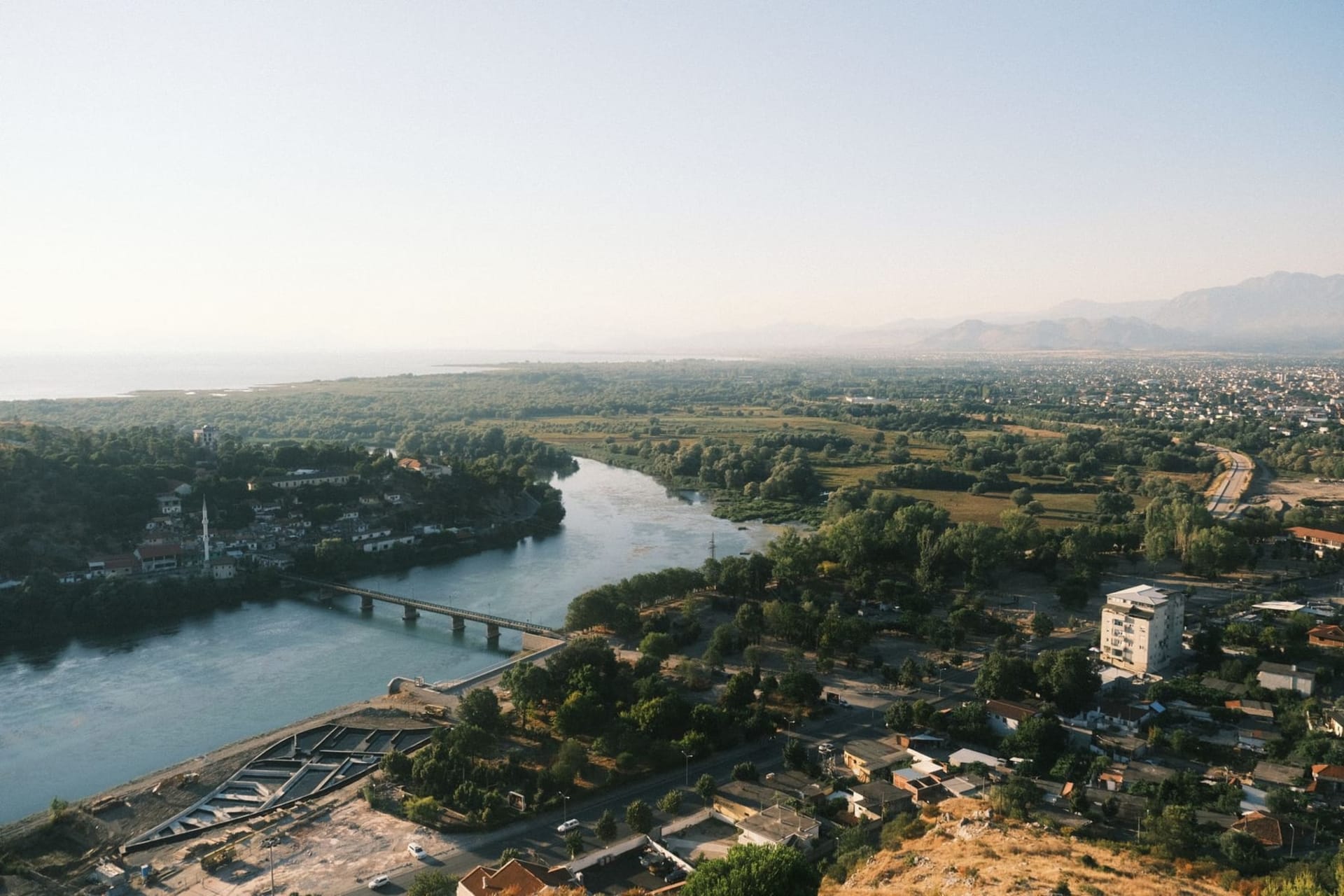
Rozafa Castle sits on a limestone hill above the point where the Buna and Drin rivers meet, and climbing it in the early morning — before the heat settled in — I found myself nearly alone among stones that have been fought over by Illyrians, Romans, Venetians, and Ottomans. The views from the ramparts are genuinely staggering: the lake on one side, the mountain range of the Prokletije on the other, and the city spread quietly below like something that has decided not to hurry.
What I did not expect was the small museum inside the castle walls, where a guide told me the legend of Rozafa herself — a woman bricked into the foundations so the walls would hold — with such calm matter-of-factness that the story stayed with me for days. Not as horror, exactly, but as the particular weight a place carries when its founding myth is one of sacrifice.
The Streets Below the Castle
The old bazaar quarter below the castle is where Shkoder feels most itself: narrow lanes with copper workshops, a mosque and a Catholic church within two minutes of each other, the smell of grilled corn and diesel mixing in the afternoon air. I bought a bag of dried figs from a woman who wrapped them in newspaper without being asked. Small city courtesies like that, unremarkable to the people who live there, tend to be what I remember longest.
When to go: April through June offers mild temperatures, fewer crowds, and the mountains still carrying snow on their upper slopes — the ideal combination of comfortable days and dramatic scenery. September is equally good, with harvest light over the lake and the summer heat finally relenting.